
 Save
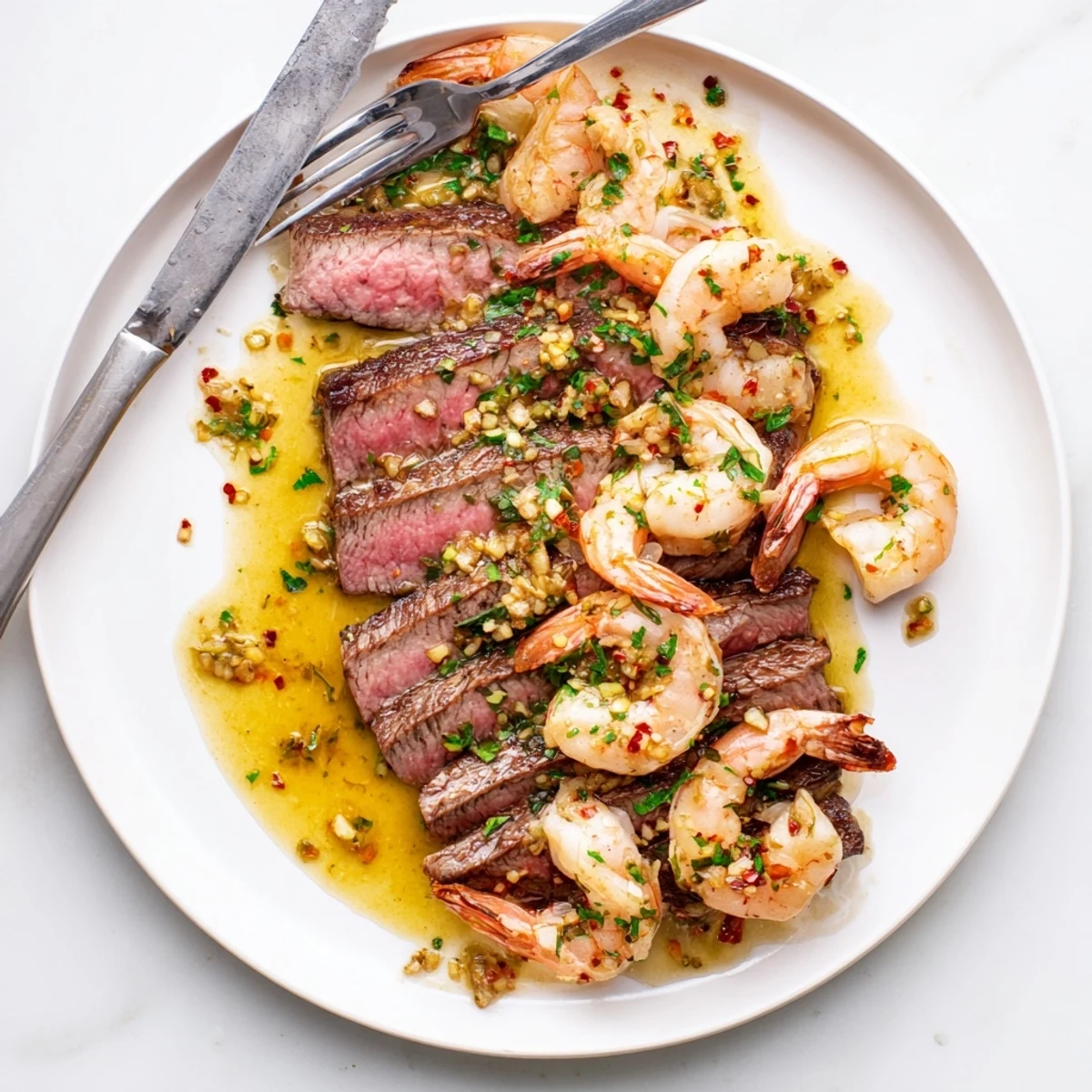
Save This surf and turf classic pairs perfectly seared ribeye steaks with plump, juicy shrimp bathed in a luscious garlic butter sauce. The steak is seasoned simply with salt and pepper, then seared in a cast iron skillet to achieve a beautiful crust.
The shrimp cook quickly in the same pan, absorbing all those incredible browned bits left behind. A generous splash of lemon juice, minced garlic, and melted butter brings everything together into a silky sauce that coats every bite.
Ready in just 35 minutes, this dish is impressive enough for date night yet straightforward enough for a satisfying weeknight dinner. Serve with roasted vegetables, mashed potatoes, or a crisp salad for a complete meal.
The sizzle of a ribeye hitting a cast iron skillet is one of those sounds that makes everyone in the house wander toward the kitchen with a questioning look on their face. My neighbor Dave once knocked on my door holding a bottle of Cabernet, claiming he could smell the garlic butter from his driveway. That was the night this surf and turf combination earned a permanent spot in my rotation. It transforms an ordinary evening into something worth remembering.
I made this for my parents' anniversary dinner one year when money was tight and a restaurant felt out of reach. My mother declared it better than any steakhouse she had been to, and she is not the type to hand out compliments freely. The shrimp were slightly overcooked that first attempt, but the garlic butter covered my tracks beautifully.
Ingredients
- Boneless ribeye steaks (4, about 6 oz each): Ribeye has the marbling that keeps things juicy in a hot skillet, and bringing them to room temperature before cooking makes a real difference in even cooking.
- Large shrimp, peeled and deveined (1 lb): Size matters here because smaller shrimp overcook by the time you flip them all, so aim for something substantial.
- Unsalted butter (4 tbsp): Unsalted gives you control over the seasoning, and the butter becomes the soul of this entire dish when it mingles with garlic and lemon.
- Garlic cloves, minced (4): Fresh garlic only, and mince it finer than you think you need so it melts into the butter without catching and turning bitter.
- Fresh lemon juice (2 tbsp): This brightens the richness and cuts through the butter in a way that makes the sauce addictive.
- Chopped fresh parsley (2 tbsp): Added at the very end so it stays vibrant and fresh looking, stirring it in earlier dulls both the color and the flavor.
- Crushed red pepper flakes (half tsp, optional): Just enough warmth to notice but not enough to call it spicy, and you can always add more at the table.
- Olive oil (2 tbsp): Used for searing the steaks and shrimp because butter alone burns at the high heat you need for a proper crust.
- Kosher salt and black pepper: Season generously on the steaks, as a thick cut needs more salt than your instincts might tell you.
Instructions
- Temper and season the steaks:
- Pull the ribeyes from the fridge a full thirty minutes before cooking so they lose their chill, then pat them thoroughly dry with paper towels and season both sides with kosher salt and pepper. That dry surface is what creates the deep brown crust you are after.
- Sear the steaks:
- Heat a tablespoon of olive oil in your cast iron skillet over medium high heat until you see the first wisp of smoke, then lay the steaks in without crowding and cook three to four minutes per side for medium rare. Move them to a plate, tent loosely with foil, and let them rest while you handle the shrimp.
- Cook the shrimp:
- In the same skillet with the remaining olive oil, spread the shrimp in a single layer and season them lightly, cooking just one to two minutes per side until they turn pink and curl. Take them out before you think they are fully done because they will cook a little more in the sauce.
- Build the garlic butter sauce:
- Turn the heat down to medium low and melt the butter, then add the minced garlic and stir for about thirty seconds until your kitchen smells incredible. Pour in the lemon juice and red pepper flakes, scraping up every browned bit stuck to the pan because that is concentrated flavor.
- Bring it all together:
- Return the shrimp to the skillet and toss them in the sauce until coated, then sprinkle the parsley over the top. Plate each steak with shrimp alongside it and spoon every last drop of that garlic butter over everything.
 Save
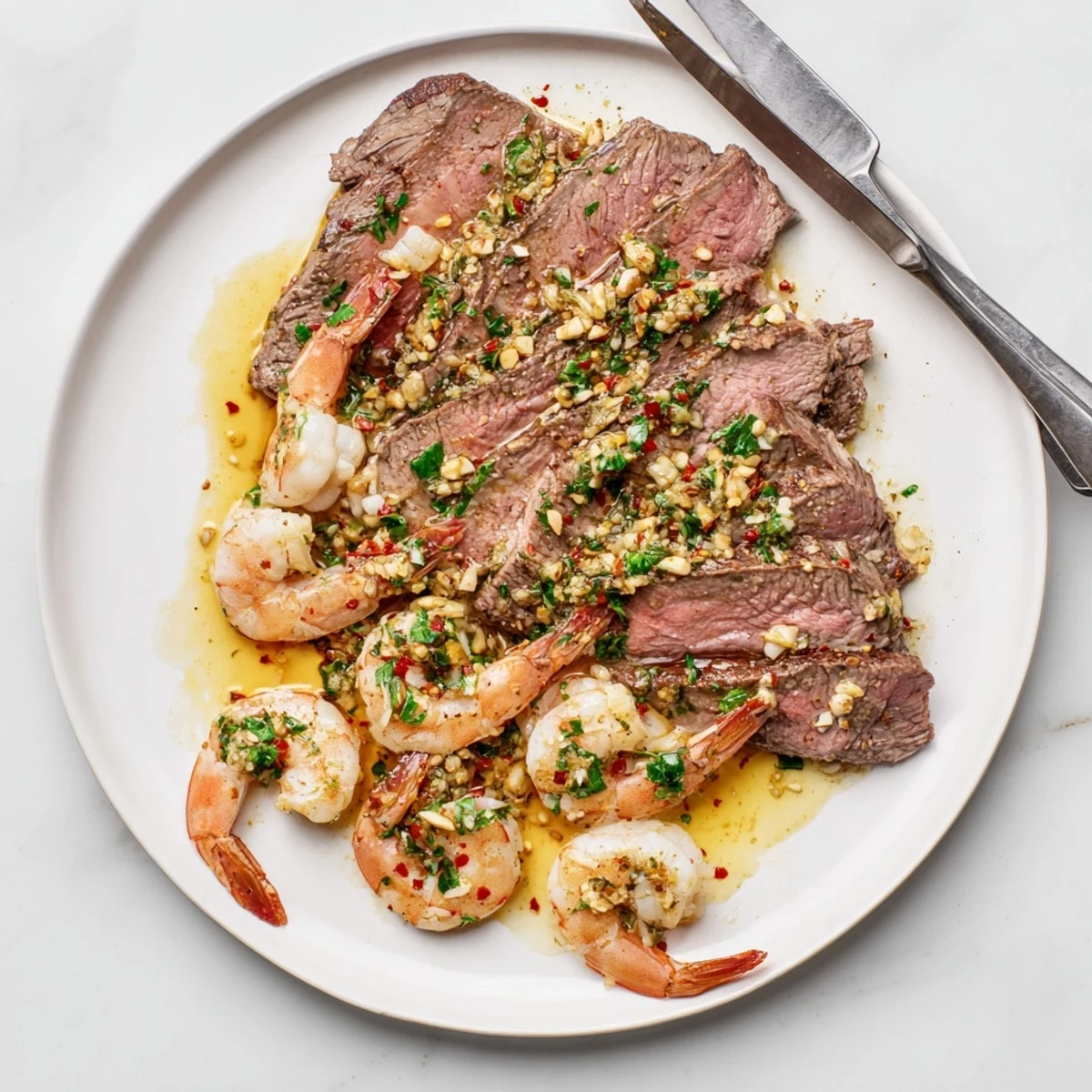
Save Somewhere between the garlic hitting the butter and the first bite of steak, this dish stopped being just dinner and started being the thing I cook when I want someone to feel genuinely taken care of.
Choosing the Right Steak
Ribeye is my go-to because the fat renders and bastes the meat from the inside, but I have used strip steak on nights when the store was picked clean and it worked beautifully. Sirloin is the budget friendly option that still delivers if you do not overcook it. The real secret is thickness, so aim for at least an inch thick because thin steaks overcook before they develop any crust.
What to Serve Alongside
Roasted asparagus or brussels sprouts are my usual companions because they roast in the oven at the same temperature I am doing everything else on the stove. Mashed potatoes are the indulgent route and soak up the extra garlic butter like nothing else. A simple arugula salad with lemon vinaigrette cuts through the richness when you want something lighter.
Wine and Beverage Pairings
A Cabernet Sauvignon stands up to the richness of the ribeye with its tannins and dark fruit, while a buttery Chardonnay plays beautifully with the garlic sauce on the shrimp. If wine is not your thing, a cold sparkling water with a squeeze of lemon works surprisingly well.
- Pop the wine open before you start cooking so it has time to breathe.
- Keep a glass of water nearby because tasting as you go is important with this dish.
- Pour a little wine into the pan after the shrimp for an instant deglaze that adds depth.
 Save
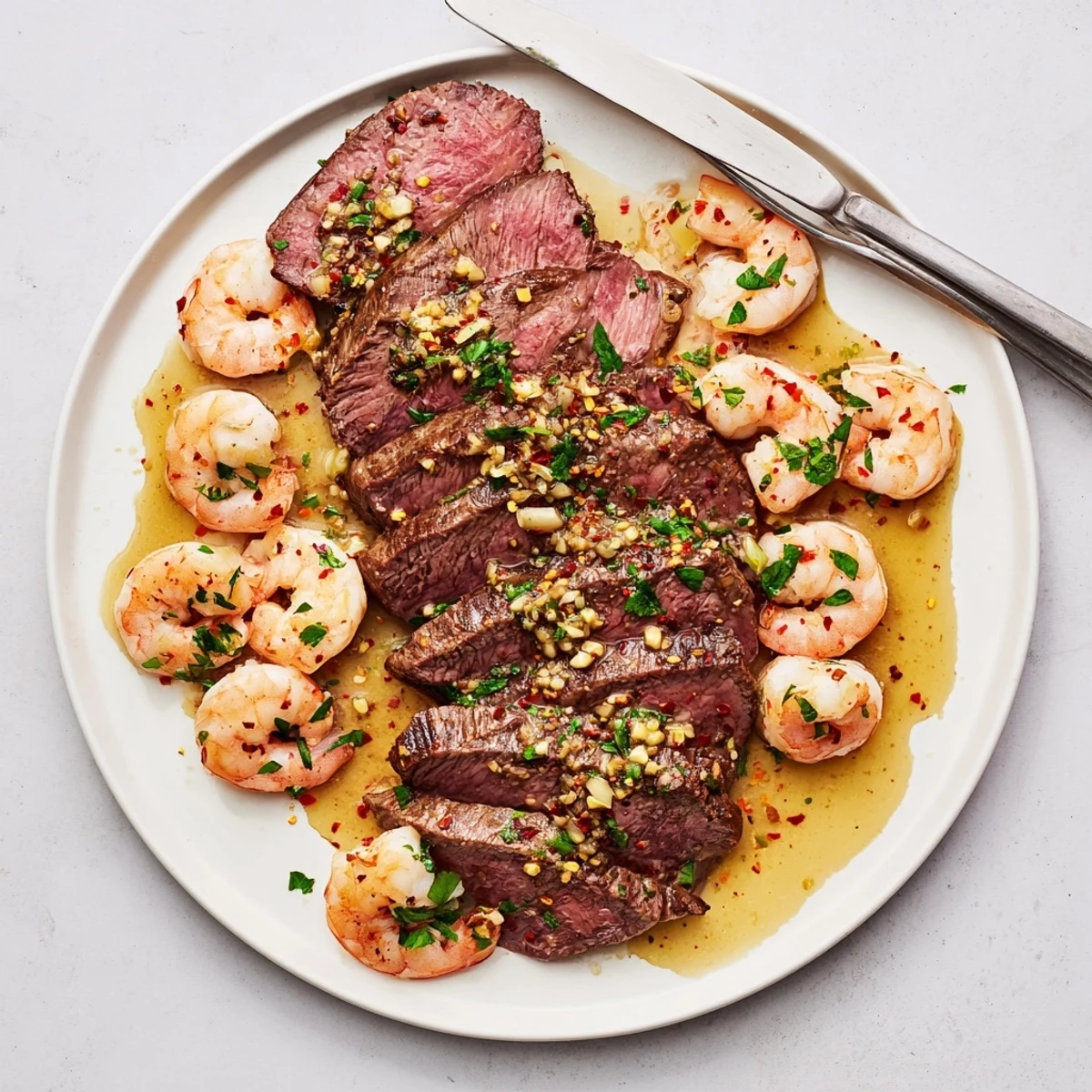
Save Light a candle, pour something good, and let the garlic butter do the talking. This is the kind of meal that turns a regular Tuesday into a celebration.
Recipe FAQs
- → What cut of steak works best for this dish?
-
Ribeye is ideal due to its rich marbling and tenderness, but sirloin or New York strip steak are excellent alternatives that also sear beautifully in a cast iron skillet.
- → How do I know when the shrimp are fully cooked?
-
Shrimp are done when they turn pink and curl into a loose 'C' shape. They should be just opaque throughout, which typically takes 1–2 minutes per side. Avoid overcooking as they become rubbery.
- → Can I use frozen shrimp for this dish?
-
Yes, just thaw them completely under cold running water or in the refrigerator overnight. Pat them dry thoroughly before cooking to ensure a good sear and prevent excess moisture in the pan.
- → What internal temperature should the steak reach?
-
For medium-rare, aim for 130–135°F (54–57°C). Medium is 135–145°F (57–63°C). Remember the steak continues cooking while resting, so remove it from the skillet just before reaching your target temperature.
- → Why do I need to let the steak rest after searing?
-
Resting allows the juices to redistribute throughout the meat. If you cut into it immediately, the juices run out and the steak ends up dry. A 5-minute rest under loose foil is sufficient for ribeye steaks.
- → What wine pairs well with steak and garlic butter shrimp?
-
A Chardonnay complements the garlic butter sauce beautifully, while a Cabernet Sauvignon stands up nicely to the richness of the ribeye. Either choice enhances the overall surf and turf experience.