
 Save
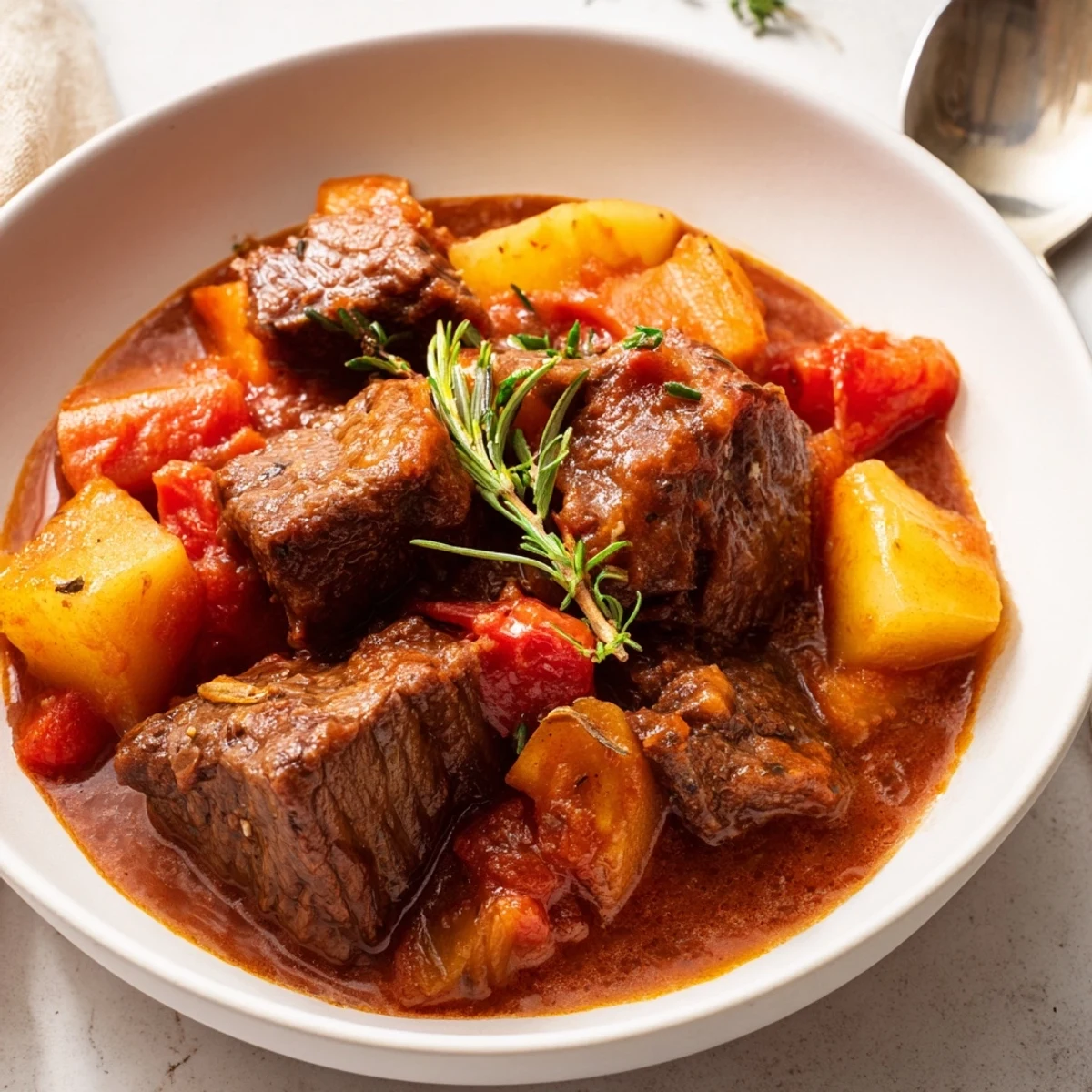
Save Spezzatino di manzo combines seared beef chuck, aromatic soffritto, tomatoes and red wine, simmered until meltingly tender. Brown the meat well, deglaze with wine, then add broth, herbs and canned tomatoes. Cook low and slow for about 2 hours, add potatoes for the final 30 minutes. Rest off heat, discard bay leaves, and serve with polenta or crusty bread for soaking up the sauce.
The rain was hammering against the kitchen window the evening I threw together my first spezzatino, more out of stubbornness than skill. I had a tough cut of chuck, half a bottle of wine left over from the weekend, and a pot that looked big enough to hold all my ambitions. Two hours later, the whole apartment smelled like a trattoria in Bologna, and I sat on the floor with the pot between my knees, eating straight from it with a wooden spoon.
I made this for my neighbor Luca once, a man who grew up outside Milan and claimed his mothers stew was untouchable. He went quiet after the first bite, then asked for seconds, which from Luca counts as a standing ovation.
Ingredients
- Beef chuck (800 g, cubed): Chuck is the undisputed king here because its connective tissue breaks down into collagen, giving you that melt in the mouth texture. Cut the cubes to about 3 cm so they brown properly without drying out.
- Carrots (2 medium, sliced): They add natural sweetness that balances the acidity of the tomatoes and wine. Slice them on a slight diagonal for even cooking and a nicer presentation.
- Celery (2 stalks, chopped): Celery is part of the classic soffritto base that gives Italian stews their savory depth. Do not skip it, even if you are tempted to.
- Yellow onion (1 large, finely chopped): One large onion creates the aromatic foundation. Cook it slowly until translucent before adding anything else.
- Potatoes (2 medium, cubed): They soak up the braising liquid and thicken the sauce naturally as they break down. Add them later in the cooking process so they do not turn to mush.
- Garlic (2 cloves, minced): Just two cloves is enough to perfume the whole pot without taking over. Add it after the vegetables have softened so it does not burn.
- Canned diced tomatoes (400 g): Good canned tomatoes often outperform fresh ones in a slow braise. Look for San Marzano if you can find them.
- Beef broth (500 ml): A rich broth amplifies the meaty flavor. If using store bought, check the salt content before adding extra seasoning.
- Dry red wine (120 ml): The wine deglazes the pan and adds a layer of complexity you cannot get any other way. Something like a Chianti works beautifully.
- Tomato paste (2 tbsp): This concentrates the umami and gives the sauce a deep, rusty color. Cook it for a couple of minutes to toast out the raw tomato taste.
- Extra virgin olive oil (2 tbsp): Use a decent one for browning the beef. It is the fat that carries flavor through every step of the dish.
- Bay leaves, thyme, and rosemary: These three herbs together create the classic Italian herb profile for stews. Fresh is ideal, but dried works well if that is what you have.
- Salt and black pepper: Season the beef before browning and adjust at the end. Freshly cracked pepper makes a real difference here.
Instructions
- Prep and season the beef:
- Pat the cubes completely dry with paper towels and season them generously with salt and pepper. Wet meat will steam instead of sear, and you deserve a proper crust on every side.
- Build the brown:
- Heat the olive oil in your heaviest pot over medium high heat until it shimmers. Work in batches, browning each cube on multiple sides until deeply caramelized, then set them aside on a plate to rest.
- Soften the base:
- In the same pot with all those leftover browned bits, toss in the onions, carrots, and celery with a pinch of salt. Let them cook down for about five minutes until they soften and smell sweet, then stir in the garlic for one more minute.
- Toast the paste and Deglaze:
- Stir in the tomato paste and let it cook for two minutes until it darkens slightly. Pour in the red wine and scrape the bottom of the pot with your spoon to lift every last bit of flavor stuck to the surface.
- Bring it all together:
- Return the beef and any juices that pooled on the plate back into the pot. Add the diced tomatoes, broth, bay leaves, thyme, and rosemary, stir everything well, and bring it to a gentle simmer.
- The Long Simmer:
- Cover the pot and reduce the heat to low. Let it bubble away quietly for an hour and a half, stirring every now and then to make sure nothing sticks to the bottom.
- Add Potatoes and Finish:
- Toss in the potato cubes, taste the liquid for salt, and cook uncovered for another thirty minutes until both the potatoes and beef are fork tender and the sauce has thickened to a glossy gravy.
- Rest and Serve:
- Fish out the bay leaves and any woody herb stems before ladling into bowls. Serve it steaming hot alongside crusty bread, soft polenta, or mashed potatoes.
 Save
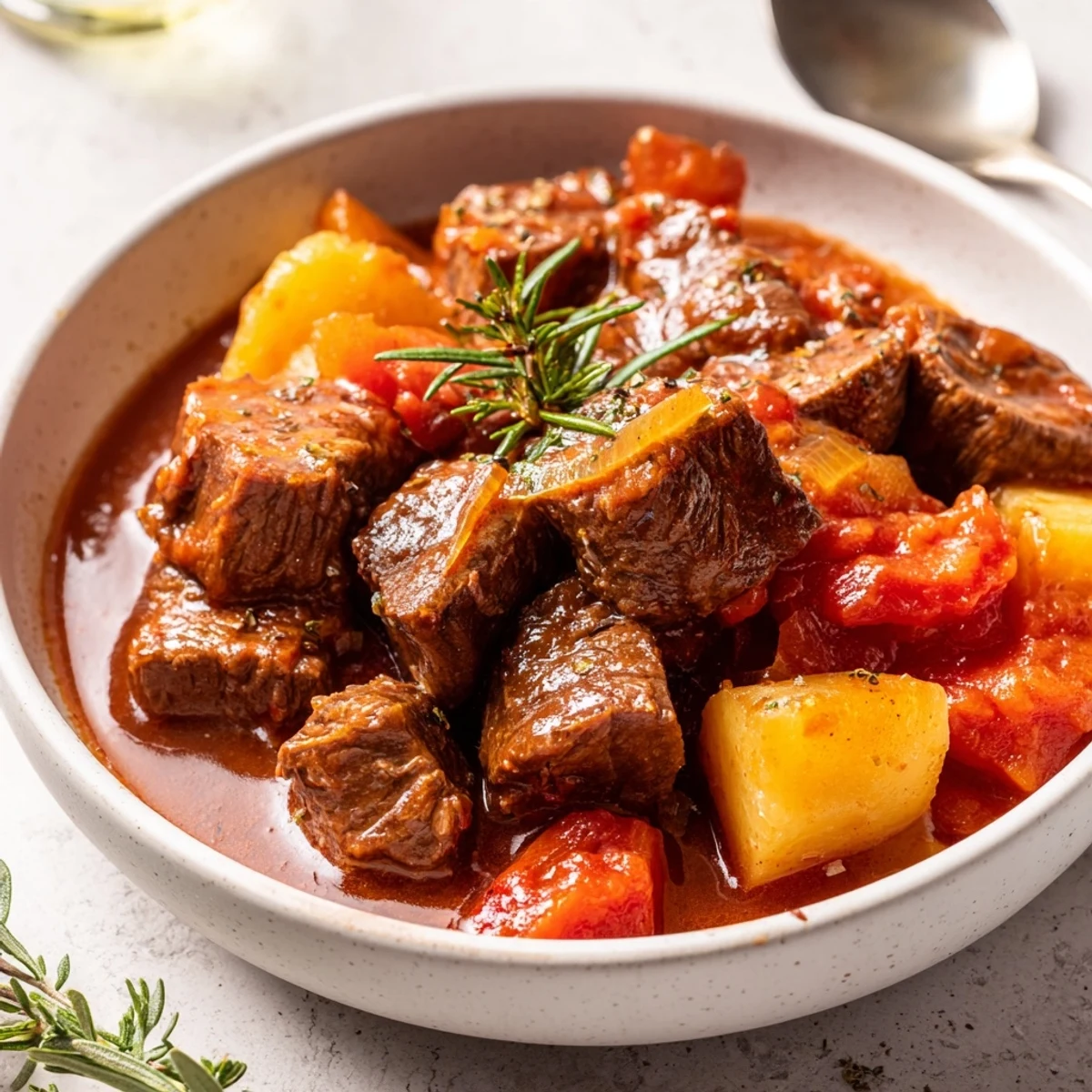
Save There is something about a pot of spezzatino cooling on the stove at midnight that makes you feel like you have taken care of yourself in a way that matters.
Choosing the Right Cut of Beef
Not all beef is built for slow braising, and this is one place where cheaper truly is better. Chuck has the perfect ratio of fat to connective tissue, which melts over time and keeps every bite succulent. Round or sirloin will leave you chewing long after the sauce has already won you over.
Wine Pairings Worth Pouring
A Chianti or Barbera in the pot should also be in your glass, and that is not laziness, it is strategy. The acidity in these wines cuts through the richness of the beef and echoes the tomatoes already simmering away. Pour generously in both places and the meal becomes an event.
Making It Your Own
Every cook who makes spezzatino regularly develops their own version, and that is exactly how it should be. Try adding peas in the last ten minutes for a pop of green, or throw in a handful of sliced mushrooms with the soffritto for an earthier depth. The recipe is a conversation, not a contract.
- A strip of orange peel simmered with the herbs adds a subtle brightness that surprises people in the best way.
- If you want a lighter version, skip the potatoes entirely and serve the stew over a bed of creamy white beans.
- Always make more than you think you need because this stew is even better the next day when the flavors have fully settled.
 Save
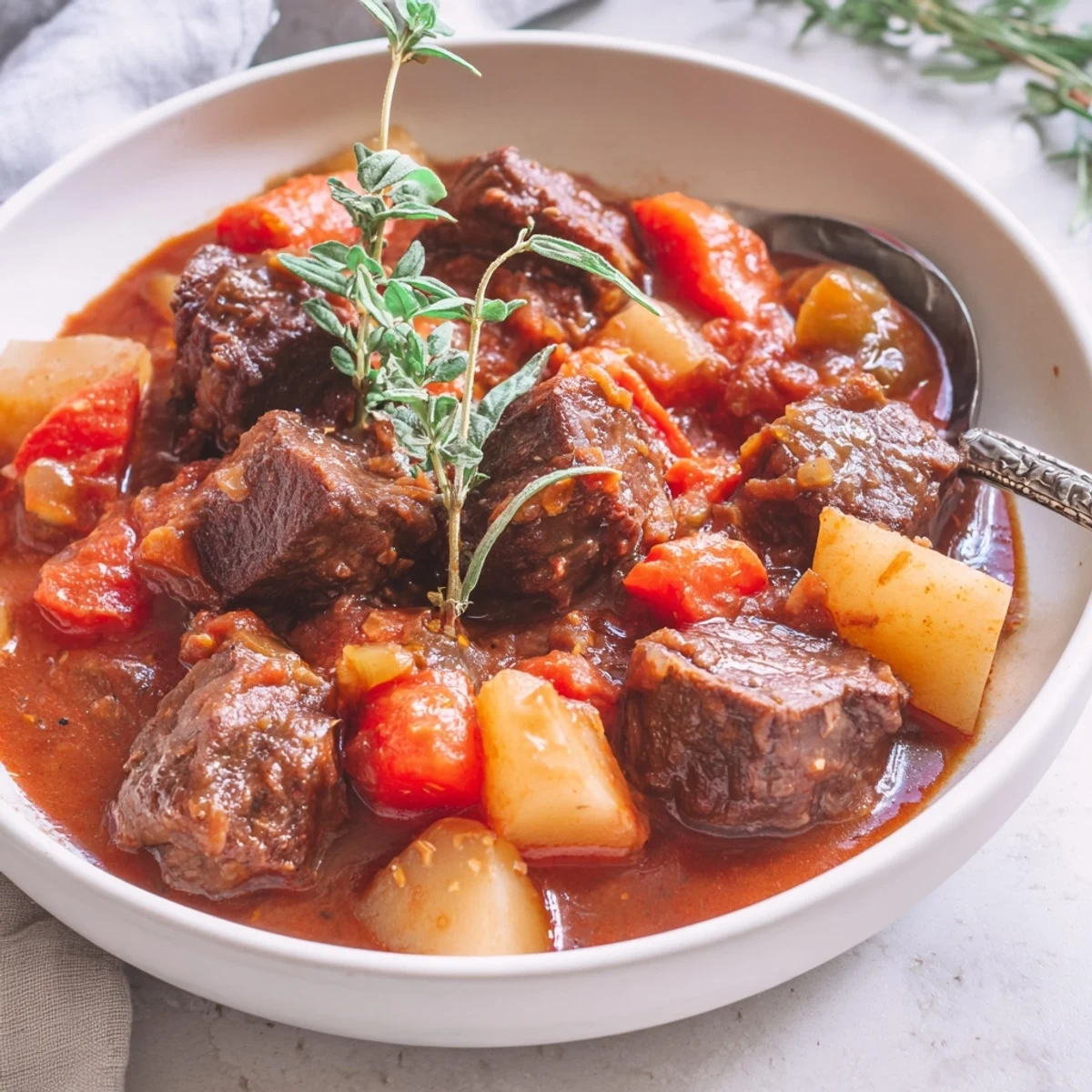
Save Some recipes feed you, and some recipes take care of you. This one does both, one spoonful at a time.
Recipe FAQs
- → What cut of beef works best?
-
Beef chuck is ideal for long braising — it develops gelatin and stays tender. Choose well-marbled pieces cut into even 3 cm cubes for consistent cooking.
- → Can I swap the red wine?
-
Use a full-bodied red like Chianti or Barbera for depth. To avoid alcohol, add extra beef broth and a splash of red wine vinegar for acidity and brightness.
- → How can I thicken the sauce naturally?
-
Reduce the sauce uncovered toward the end to concentrate flavors. Mash a few cooked potato pieces into the sauce or stir in an extra spoon of tomato paste for more body.
- → Is this suitable to make ahead?
-
Yes — it improves overnight as flavors meld. Cool, refrigerate, then gently reheat and loosen with a splash of broth if the sauce becomes too thick.
- → What should I serve alongside?
-
Polenta, mashed potatoes or crusty rustic bread are classic choices to soak up the sauce. A bright green side or simple salad balances the richness.
- → How do I ensure the meat becomes tender?
-
Brown the beef in batches to build flavor, then simmer gently rather than boiling. Cook until the meat is fork-tender and avoid over-stirring to preserve texture.