
 Save
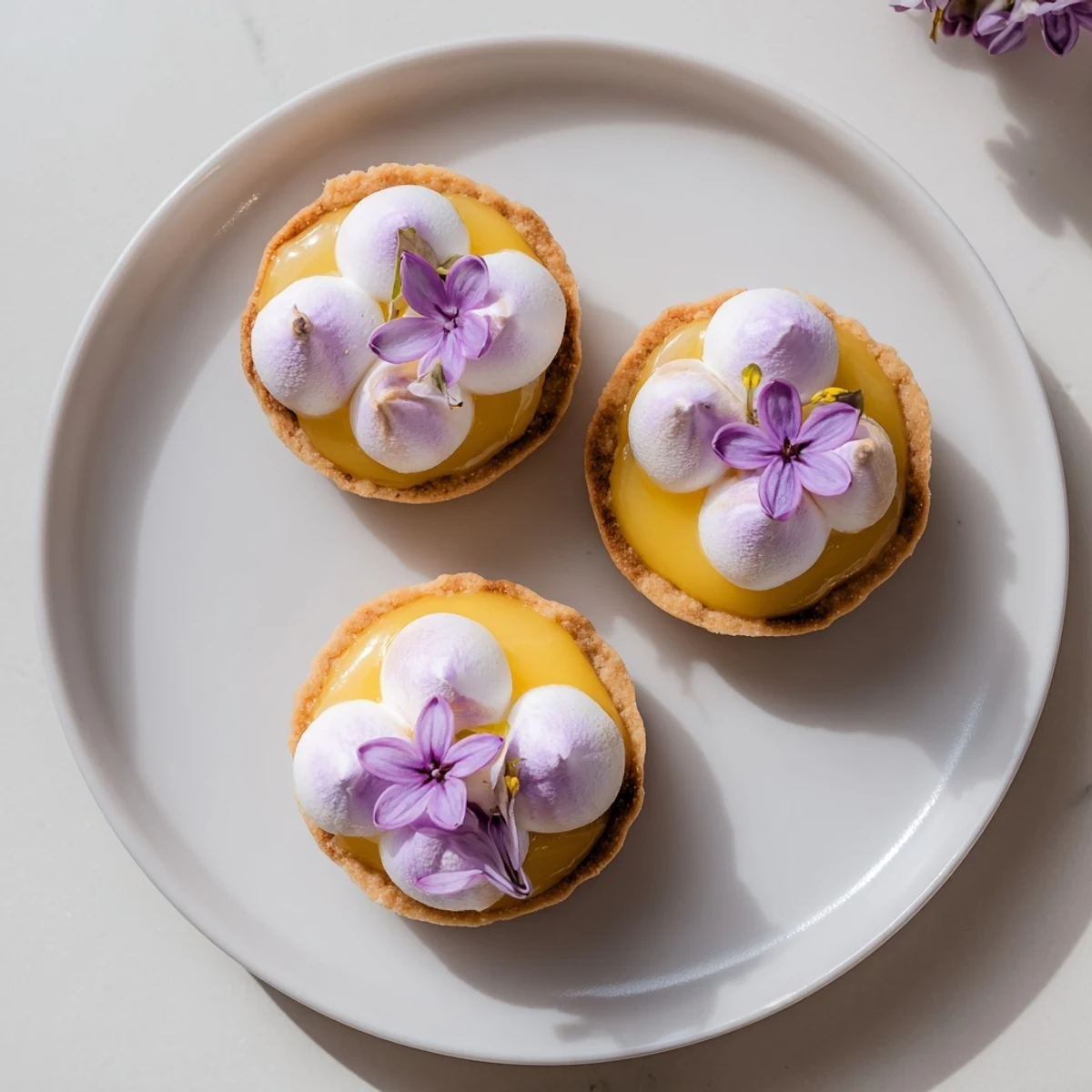
Save These exquisite individual desserts combine buttery pastry shells with vibrant lemon curd and light-as-air meringue infused with lilac syrup. The floral notes perfectly complement the bright citrus, creating a sophisticated dessert that captures the essence of spring. Each bite delivers crisp texture from the shells, creamy tang from the curd, and pillowy sweetness from the meringue.
The first time I smelled lilacs blooming outside my kitchen window, I wondered if those delicate purple flowers could somehow capture spring in a dessert. After several experiments that ended in either too much floral perfume or not enough magic, I discovered that a light touch of lilac syrup in meringue creates something ethereal without being overwhelming. These mini tarts became the centerpiece of my Mothers Day brunch last year, and my mother actually asked for the recipe instead of just politely complimenting it.
I made these again last weekend for a picnic in the park when the lilacs were at their peak bloom. Watching my friends take that first bite, the way their eyes widened at the unexpected floral note against the tangy lemon, reminded me why I fell in love with baking in the first place. Food creates moments like that, where something beautiful happens around the table.
Ingredients
- 1 1/4 cups (160 g) all-purpose flour: The foundation of a tender tart shell that bakes up golden and holds its shape beautifully
- 1/4 cup (30 g) powdered sugar: Creates a softer, more delicate crust than granulated sugar would achieve
- 1/2 cup (115 g) unsalted butter, cold, cubed: Keeping this icy cold is what produces those flaky layers we all want in a tart shell
- 1 large egg yolk: Adds richness and helps bind the dough together without making it tough
- 1–2 tbsp cold water: Start with one tablespoon and only add more if the dough absolutely refuses to come together
- Pinch of salt: Enhances all the flavors and balances the sweetness
- 2 large eggs plus 2 large egg yolks: The extra yolks create that silky, luscious texture that makes lemon curd so luxurious
- 2/3 cup (135 g) granulated sugar: Just enough to temper the lemons natural acidity without masking their bright personality
- 1/2 cup (120 ml) fresh lemon juice: About three lemons will give you this amount, and freshly squeezed is absolutely non-negotiable here
- 2 tsp finely grated lemon zest: This is where all those fragrant citrus oils live, so grate carefully and avoid the bitter white pith
- 1/3 cup (75 g) unsalted butter, cut into pieces: Whisked in at the end, this transforms the curd from something thin into something velvety and spoonable
- 2 large egg whites, at room temperature: Temperature matters here for achieving maximum volume when whipping
- 1/2 cup (100 g) granulated sugar: Added gradually, this stabilizes the meringue and creates that glossy finish we want
- 1/4 tsp cream of tartar: The secret weapon that keeps your meringue stable and prevents it from weeping
- 1 tbsp lilac syrup: Look for this at specialty stores or use elderflower syrup if lilac season has passed you by
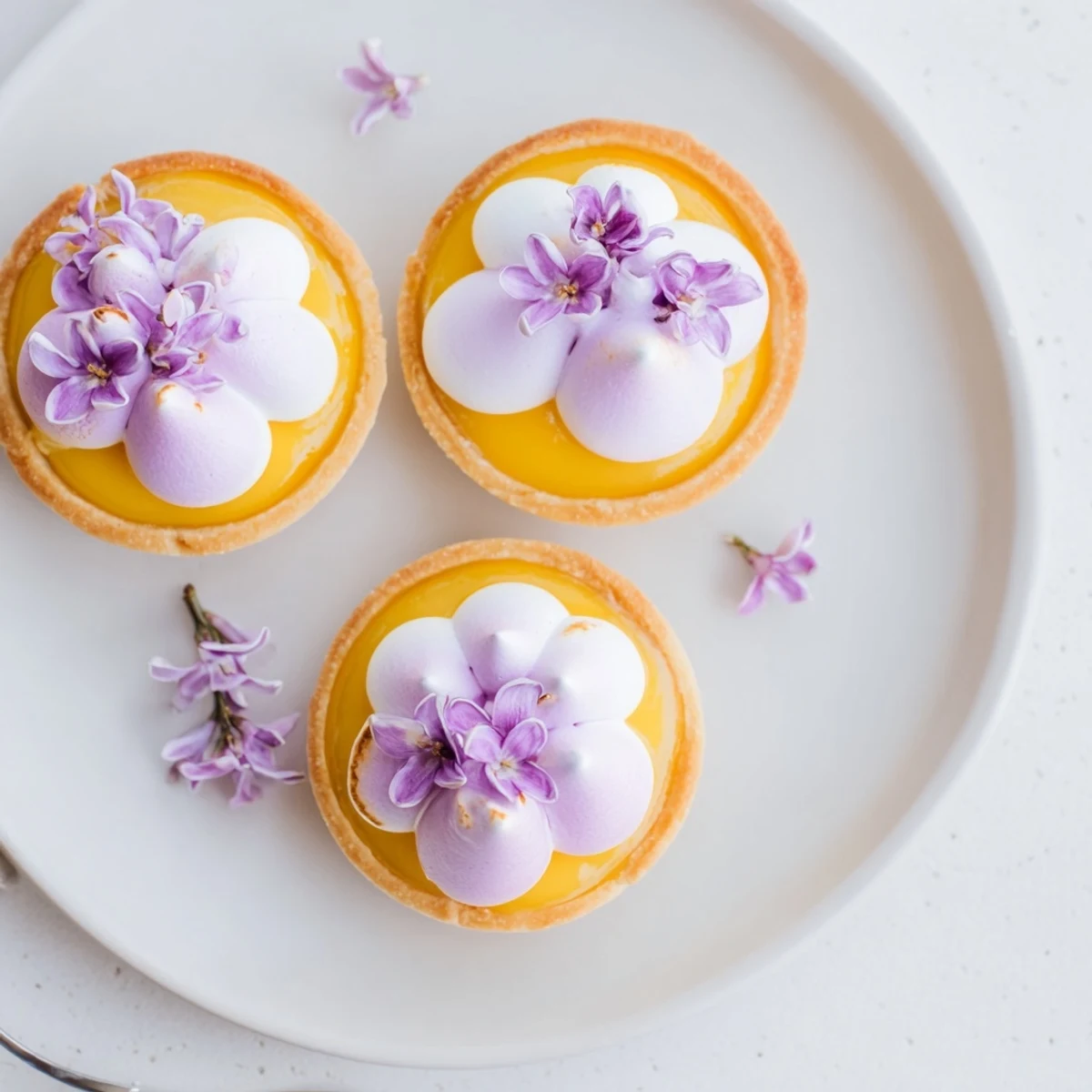
- Edible lilac blossoms: These are optional but they turn each tart into something that looks straight out of a French patisserie window
Instructions
- Crisp tart shells worth the effort:
- Preheat your oven to 350°F and whisk together the flour, powdered sugar, and salt until combined. Cut in that cold butter until the mixture looks like coarse crumbs, then work in the egg yolk and just enough cold water to make the dough hold together when squeezed. Press the dough into six mini tart pans, prick the bottoms with a fork, freeze for ten minutes, then bake until golden.
- Silky lemon curd that never fails:
- Whisk together the eggs, yolks, sugar, lemon juice, zest, and salt in your saucepan over medium-low heat. Keep stirring constantly until the mixture thickens enough to coat the back of a spoon, then remove from heat and whisk in those butter pieces one at a time until melted and glossy. Press plastic wrap directly onto the surface and chill until completely set, about an hour.
- Assemble with care:
- Spoon that chilled curd into your cooled tart shells, smoothing the tops with an offset spatula or the back of a spoon. Take your time here to make each one look neat.
- Ethereal lilac meringue:
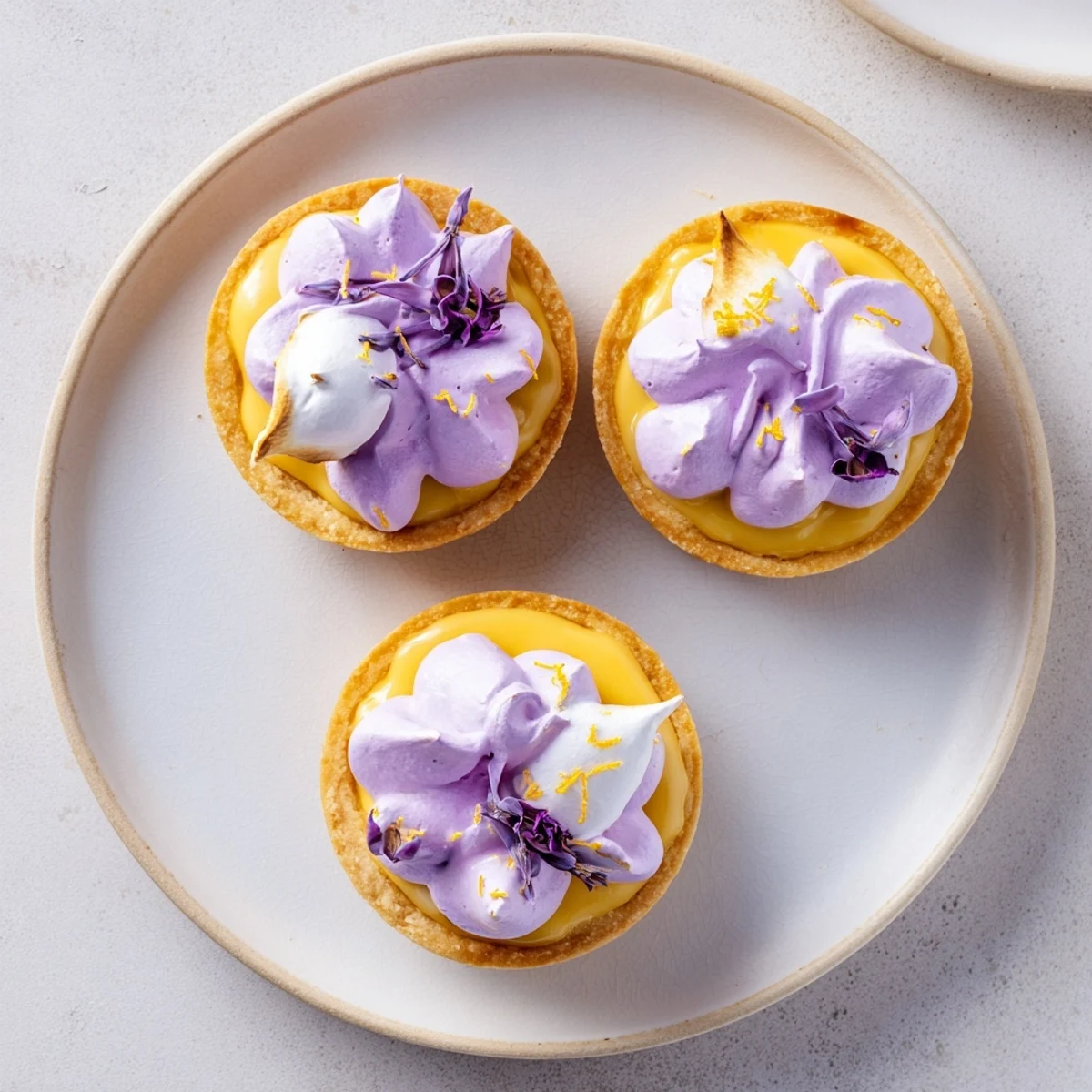
- Beat the egg whites and cream of tartar until soft peaks form, then gradually add the sugar while continuing to beat until stiff, glossy peaks form. Fold in the lilac syrup gently by hand until just incorporated.
- The finishing touch:
- Spoon or pipe the meringue onto each tart, then use a kitchen torch to lightly toast the edges until golden brown in spots. Garnish with fresh lilac blossoms if you have them and serve immediately while the meringue is still fluffy.
 Save
Save My neighbor Sarah, who claims she cannot bake anything beyond pre-made cookie dough, made these for her book club last month. She sent me a photo at midnight, looking exhausted but proud, with a text that said they licked the plates clean and asked for seconds. Sometimes the most satisfying part of sharing a recipe is watching someone else discover they are capable of creating something beautiful.
Working with Floral Flavors
Floral ingredients can be intimidating because we have all tasted something that tasted like soap rather than flowers. The key is restraint, starting with small amounts and tasting as you go. Lilac syrup specifically should be treated like a precious ingredient, adding just enough to whisper its presence without shouting over the lemon.
Make-Ahead Magic
The beauty of these tarts is that almost everything can be prepared in advance, leaving you with just the final assembly when guests arrive. The tart shells keep perfectly in an airtight container for two days, and the lemon curd actually improves after a night in the refrigerator as the flavors deepen and meld together.
Perfecting Your Tart Technique
Pressing dough into tart pans rather than rolling it out eliminates so much stress and guarantees your shells will fit perfectly every time. Use the bottom of a measuring cup to press the dough evenly up the sides, creating those beautifully neat edges that look so professional.
- Chill your tart pans in the freezer while the oven preheats to prevent the dough from shrinking during baking
- If your meringue starts to look grainy instead of glossy, you have probably added the sugar too quickly
- Leftover lemon curd, if you somehow have any, makes an excellent topping for toast or stirred into yogurt for breakfast
 Save
Save These tarts capture everything I love about spring baking, bright and elegant but not so precious that you cannot enjoy making them. May your kitchen smell of lemon and lilacs, and may everyone at your table ask for seconds.
Recipe FAQs
- → Can I make the components ahead of time?
-
Yes, prepare tart shells and lemon curd up to 24 hours in advance. Store shells at room temperature in an airtight container and refrigerate the curd. Assemble with fresh meringue just before serving for optimal texture.
- → What can I substitute for lilac syrup?
-
Elderflower syrup works beautifully as an alternative. For a different floral profile, use food-grade lavender extract sparingly, or simply omit the floral element for classic lemon meringue tarts.
- → How do I know when the lemon curd is thick enough?
-
The curd is ready when it coats the back of a wooden spoon and leaves a clear trail when you run your finger through it. It should reach approximately 170°F (77°C) on a kitchen thermometer.
- → Can I use regular-sized tart pans instead of mini ones?
-
Absolutely. This yields one 9-inch tart or four 4-inch tarts. Adjust baking time to 20-25 minutes for larger shells. The filling and meringue quantities remain sufficient.
- → Why must the egg whites be at room temperature?
-
Room temperature egg whites achieve greater volume when whipped, creating a more stable and airy meringue. Cold whites don't expand as fully, resulting in denser topping.
- → Is a kitchen torch necessary?
-
Not strictly required. The meringue can be left white for an elegant look, or browned under a broiler for 1-2 minutes watching closely. A torch provides the most control and classic toasted marshmallow appearance.