 Save
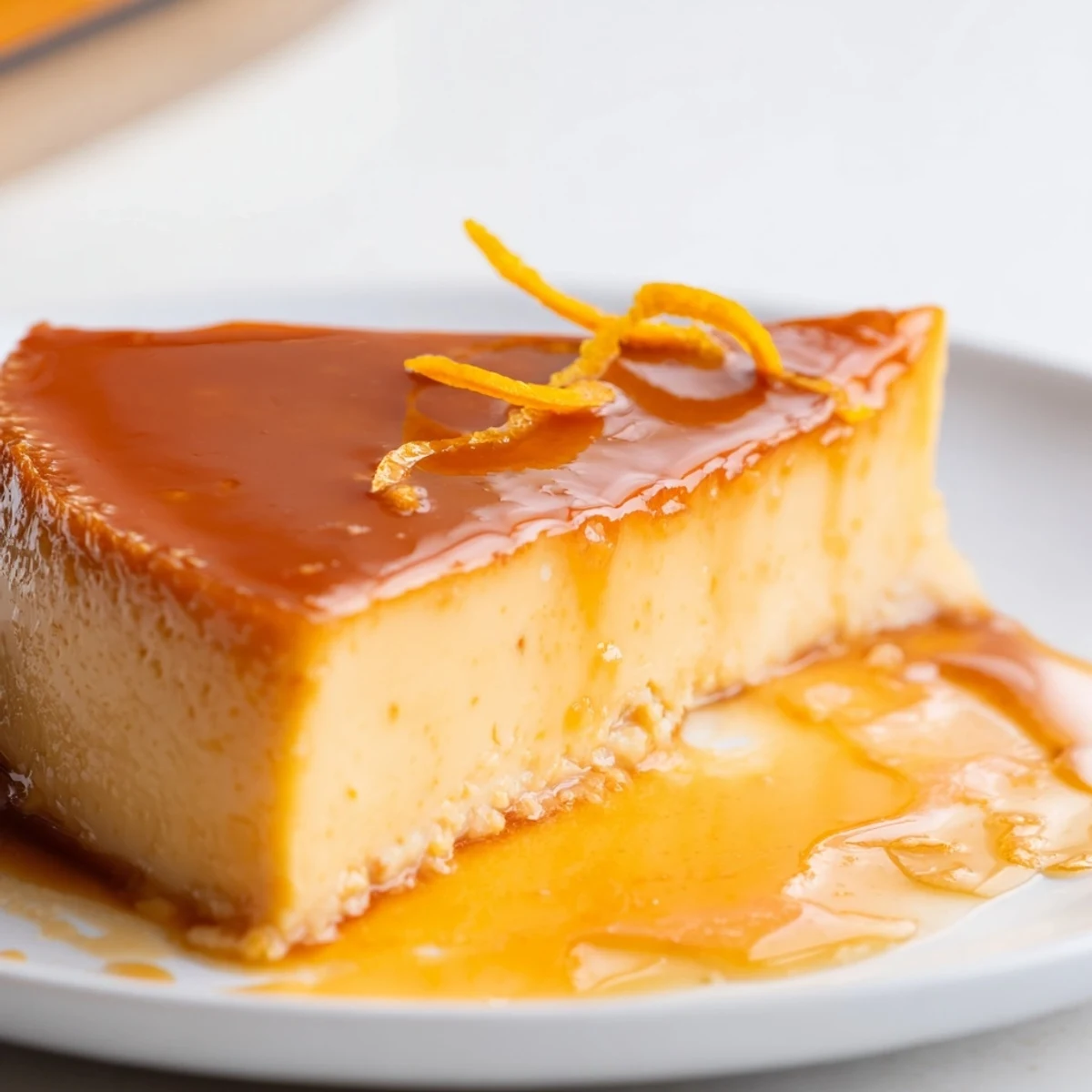
Save Make a golden amber caramel and coat a 9-inch mold. Whisk eggs, yolks, condensed and evaporated milk with whole milk, vanilla and optional orange zest; strain for silkiness. Pour into the caramel-lined dish, bake in a bain-marie at 350°F (180°C) until the center barely jiggles. Cool, refrigerate at least 3 hours, then run a knife around the edge and invert to release the glossy flan. Serve chilled with coffee or berries.
The smell of burning sugar still makes my heart race a little, and not in a bad way.
My neighbor Rosa brought one to a backyard gathering years ago and I spent twenty minutes trying to figure out how she got the caramel on top so perfectly before she finally told me it bakes on the bottom.
Ingredients
- Granulated sugar (1 cup): This becomes the caramel so use plain white sugar and resist the urge to stir it while it cooks.
- Water (1/4 cup): Just enough to help the sugar melt evenly before it starts browning.
- Sweetened condensed milk (1 can, 14 oz): The backbone of sweetness and richness so do not swap this out.
- Evaporated milk (1 can, 12 oz): Adds creamy depth without making the custard too heavy.
- Whole milk (1 cup): You can substitute half and half here for extra indulgence.
- Large eggs (4 whole plus 4 yolks): The extra yolks are what give flan its signature silky density.
- Vanilla extract (1 tbsp): A generous pour because the flavor really carries through baking.
- Salt (1/4 tsp): Just enough to keep the sweetness from becoming cloying.
- Orange zest (from 1 orange, optional): A whisper of citrus that lifts the whole dessert if you choose to add it.
Instructions
- Get the oven ready:
- Preheat to 350 degrees Fahrenheit and set a kettle of water on to boil for the water bath.
- Make the caramel:
- Combine sugar and water in a heavy saucepan over medium heat and do not stir, just swirl the pan gently until the liquid turns a deep golden amber, about 7 to 9 minutes.
- Coat the mold:
- Pour the hot caramel immediately into your 9 inch baking dish and tilt it around to cover the bottom before it hardens, which happens faster than you think.
- Build the custard:
- Whisk the eggs, yolks, and salt in a large bowl until blended, then pour in all three milks along with the vanilla and orange zest if using, whisking until everything is smooth and combined.
- Strain for silkiness:
- Pour the custard through a fine mesh sieve into the caramel lined dish to catch any stray bits of egg or zest.
- Set up the water bath:
- Place the flan dish inside a larger roasting pan and carefully pour hot water into the roasting pan until it reaches halfway up the sides of the flan dish.
- Bake until set:
- Slide the whole setup into the oven and bake for about 60 minutes, checking that the center barely jiggles like gelatin when you tap the dish.
- Cool and chill:
- Remove the flan from the water bath, let it come to room temperature, then refrigerate for at least 3 hours or preferably overnight.
- The big flip:
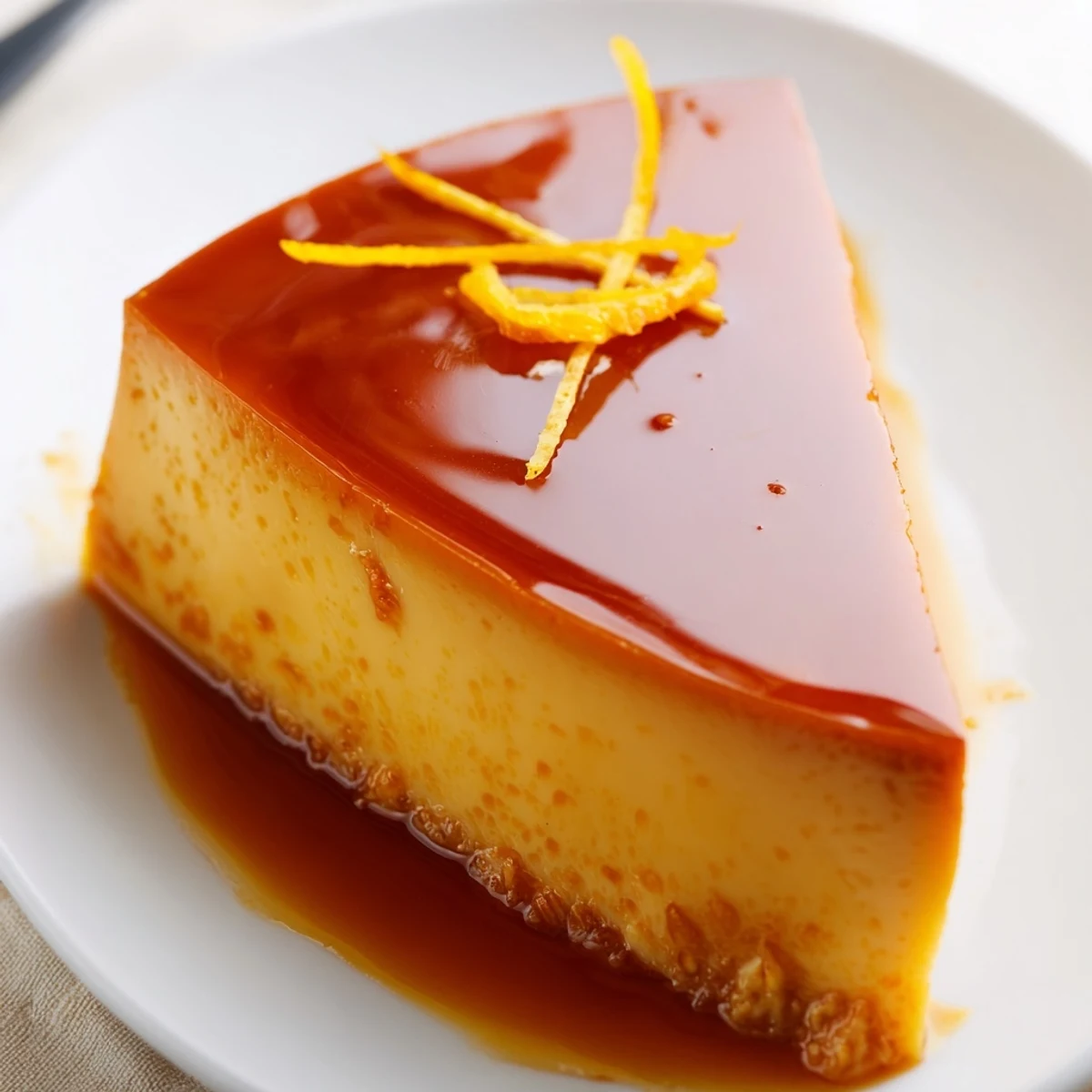
- Run a thin knife around the edge, place a large plate on top, take a breath, and invert in one confident motion so the caramel pools over the top beautifully.
 Save
Save The first time I successfully flipped a flan without cracking it I actually clapped for myself in an empty kitchen.
Serving Ideas That Elevate It
A handful of fresh raspberries or a sprinkle of toasted coconut on the plate turns a homey dessert into something restaurant worthy.
Pairing It Right
Strong black coffee cuts through the sweetness perfectly, and a glass of Moscato alongside makes it feel like a real occasion.
Tools Worth Having
A fine mesh sieve is the one tool people skip and it is the single thing that separates a lumpy flan from a velvet one.
- Use a heavy bottomed saucepan for caramel because thin pans create hot spots that burn sugar unevenly.
- A flat edged knife works better than a curved one for loosening the edges before flipping.
- Always place your roasting pan on the oven rack before adding the hot water to avoid spilling it everywhere.
 Save
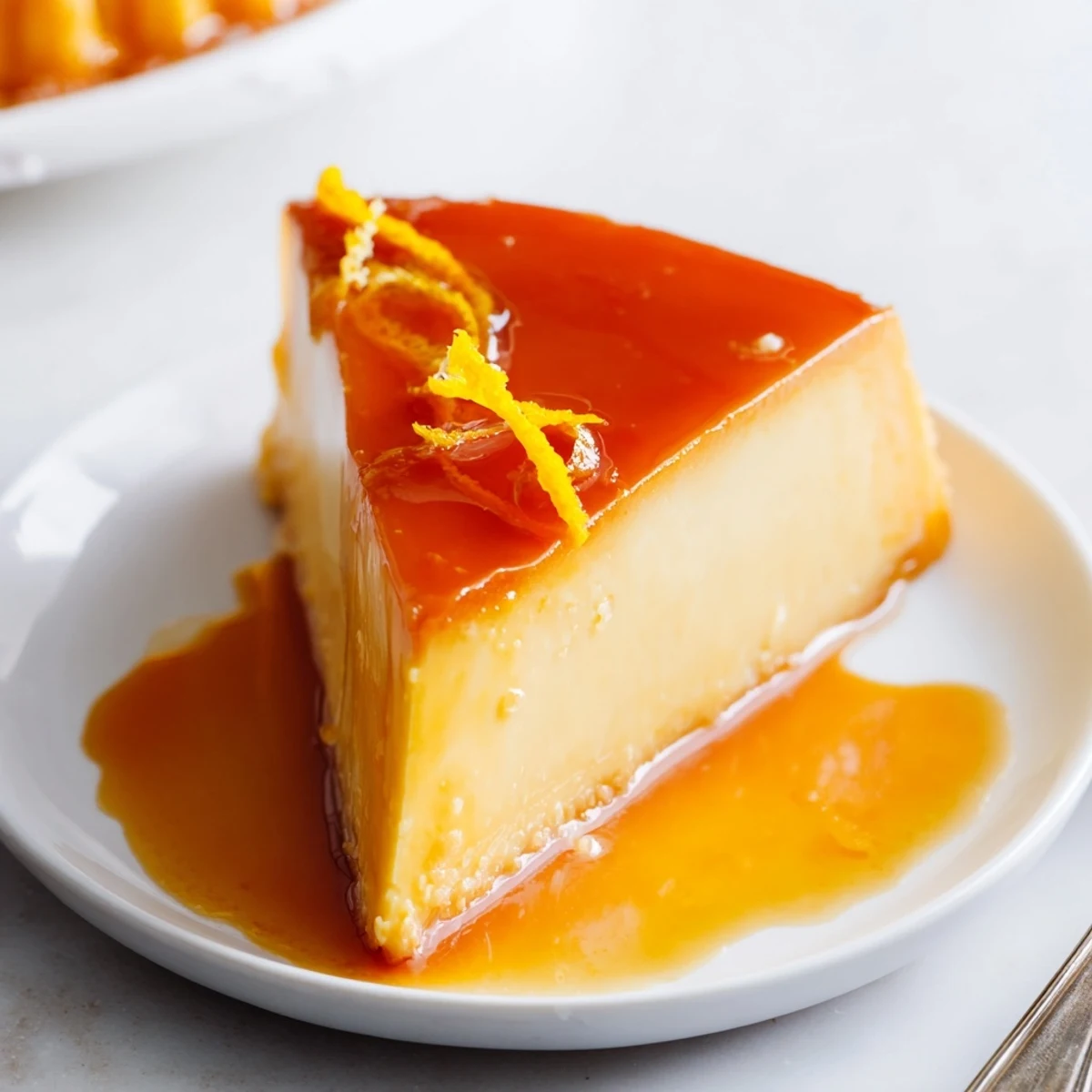
Save Every flan I make still feels a little like magic, and watching someone take that first bite never gets old.
Recipe FAQs
- → How can I tell when the flan is done?
-
The center should barely jiggle when you gently shake the pan; the edges will be set. A toothpick will come out mostly clean with a slight sheen. Avoid overbaking to keep the custard silky.
- → Why strain the custard before baking?
-
Straining removes any coagulated egg bits and ensures an ultra-smooth, creamy texture. Use a fine-mesh sieve and gently push the mixture through into the caramel-lined dish.
- → Can I substitute half-and-half or lower-fat milk?
-
Yes. Half-and-half adds richness and yields a creamier custard. Lower-fat milk will produce a lighter texture but may be less silky; adjust expectations and keep baking time similar.
- → How long should I chill before unmolding?
-
Chill at least 3 hours, preferably longer, to let the custard fully set and the caramel firm up. Thorough chilling makes unmolding easier and preserves the smooth texture.
- → What’s the best way to unmold without breaking it?
-
Run a thin knife around the edge to loosen, then invert a large plate over the mold and flip in one confident motion. If the caramel sticks, warm the base briefly to loosen it.
- → Any tips to prevent the caramel from burning?
-
Use medium heat, avoid stirring once sugar begins to color, and watch closely as it turns amber. Remove from heat promptly and tilt the pan to coat before the caramel darkens too far.