
 Save
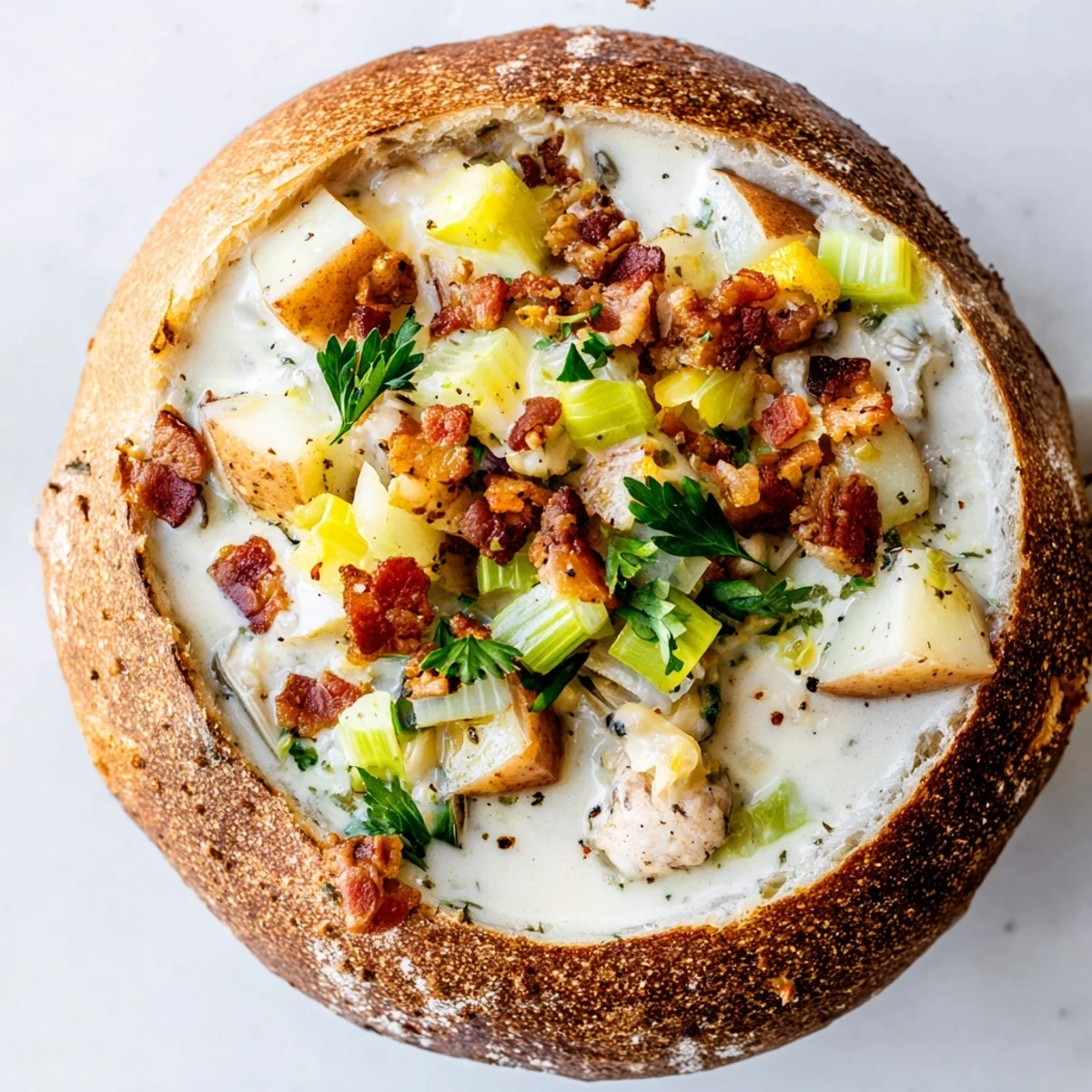
Save This satisfying New England-style chowder combines tender chopped clams with smoky bacon, russet potatoes, and aromatic vegetables in a velvety cream broth. The key to achieving the perfect consistency lies in creating a traditional roux with butter and flour, then gradually incorporating clam juices and dairy. After simmering until the potatoes are fork-tender, the clams and crispy bacon return to the pot for a final gentle warming.
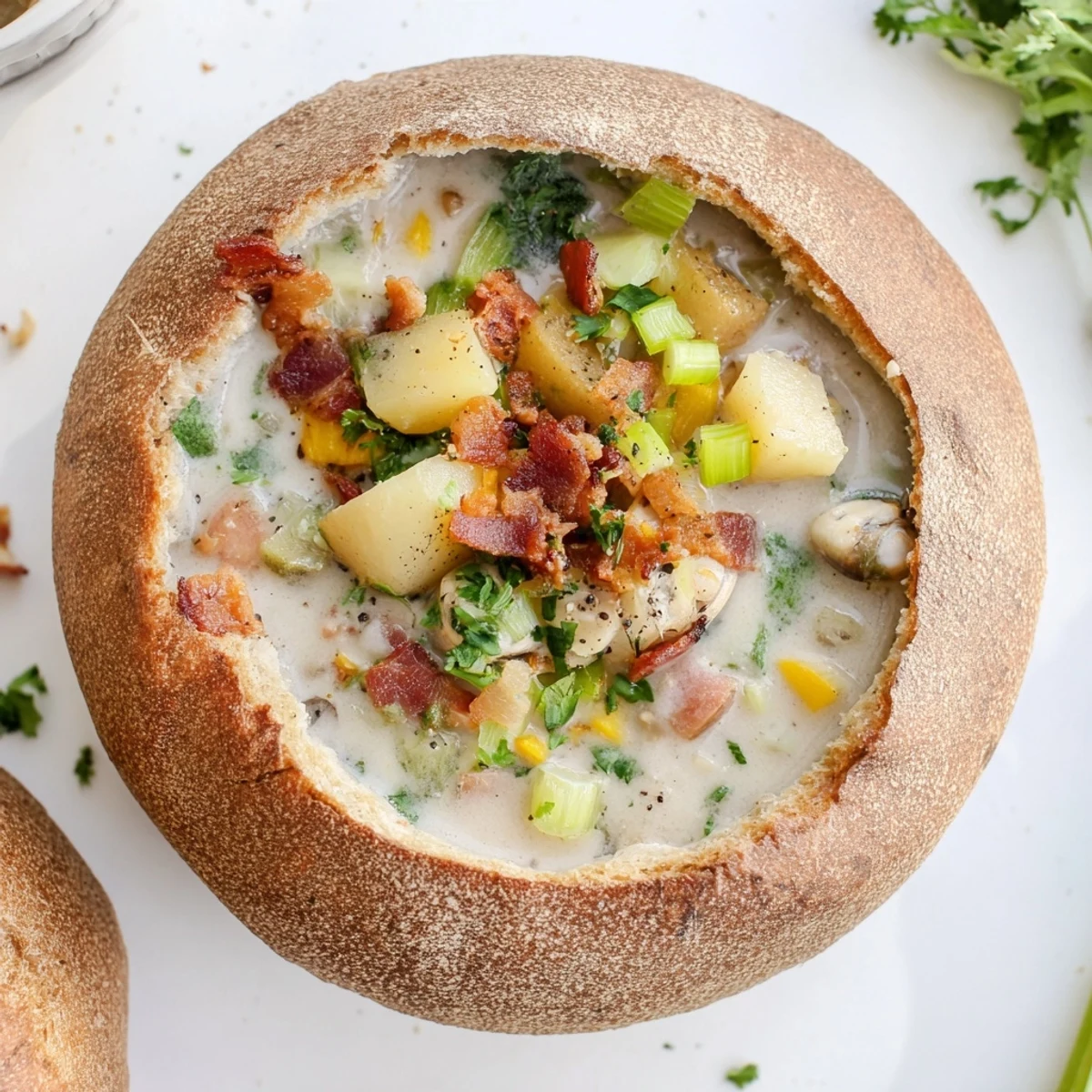
Served in hollowed-out sourdough loaves toasted until golden and crisp, each spoonful delivers the perfect balance of savory seafood, smoky meatiness, and creamy richness. The bread bowls become wonderfully soaked as you eat, making every bite comforting and satisfying.
The first snowfall of December had just started when my grandmother pulled her heavy enamel pot from the cabinet. She swore that clam chowder tasted better when watched through a window streaked with frost, and something about the ritual of hollowing out those sourdough bowls made the whole house feel like a restaurant tucked away from the cold.
Last winter I made this for friends who had just moved to New England and were experiencing their first real nor'easter. They sat around my kitchen table, steam rising from their bowls, and declared that this was exactly what they'd imagined cozy East Coast winters should taste like.
Ingredients
- Chopped clams: Reserve every drop of the clam juice from the cans, it is the liquid gold that gives the chowder its depth
- Bacon: Thick-cut bacon holds its texture better in the soup and renders more fat for cooking the vegetables
- Russet potatoes: These break down slightly during simmering, naturally thickening the broth without needing too much flour
- Heavy cream and whole milk: Using both gives you richness without making the chowder overwhelmingly heavy
- Sourdough bread bowls: Choose loaves with thick, sturdy walls that can stand up to hot soup without becoming mushy too quickly
Instructions
- Prep the bread bowls:
- Slice off the tops and scoop out the centers, leaving half-inch thick walls. Toast them at 350°F for 10 minutes so they develop a slight crust that will hold up against the soup.
- Cook the bacon:
- Crisp the diced bacon in a heavy pot over medium heat for about 5 minutes, then remove with a slotted spoon. Keep just 2 tablespoons of the rendered fat.
- Build the base:
- Add butter to the pot and sauté onion and celery until softened, about 5 minutes. Stir in garlic for just 1 minute until fragrant.
- Make the roux:
- Sprinkle flour over the vegetables and cook for 2 minutes, stirring constantly. This raw flour taste needs to cook out completely.
- Add liquids and potatoes:
- Gradually whisk in both the reserved clam juice and bottled clam juice, along with bay leaf and thyme. Add potatoes and simmer covered for 12 to 15 minutes until tender.
- Finish with cream:
- Reduce heat to low and stir in clams, bacon, milk, and cream. Simmer gently for 5 minutes without boiling, then season with salt and pepper.
- Serve in bowls:
- Ladle the chowder into your toasted bread bowls and garnish with fresh parsley and extra cracked pepper while still piping hot.
 Save
Save This became my go-to recipe after a particularly stressful week at work when I needed something that felt like a hug in a bowl. My roommate came home to find me happily stirring the pot, and we ended up eating standing up at the counter because neither of us wanted to wait to set the table.
Getting the Bread Right
I have learned the hard way that not all sourdough loaves make good bowls. Look for round loaves that feel heavy for their size, and avoid ones with huge air pockets that will let your soup leak right through the bottom.
Making It Your Own
Sometimes I add a splash of dry sherry right before stirring in the cream, which gives the chowder a restaurant quality depth. You could also substitute smoked ham for the bacon if you want something slightly less smoky.
The Fresh Clam Option
If you are feeling ambitious and live near good seafood, fresh clams transform this dish completely. Steam about 2 pounds of clams in a little white wine and garlic, then chop the meat and use that flavorful cooking liquid instead of bottled clam juice.
- The chowder tastes even better the next day
- Freeze leftover bread bowls for croutons
- Keep extra milk nearby for reheating
 Save
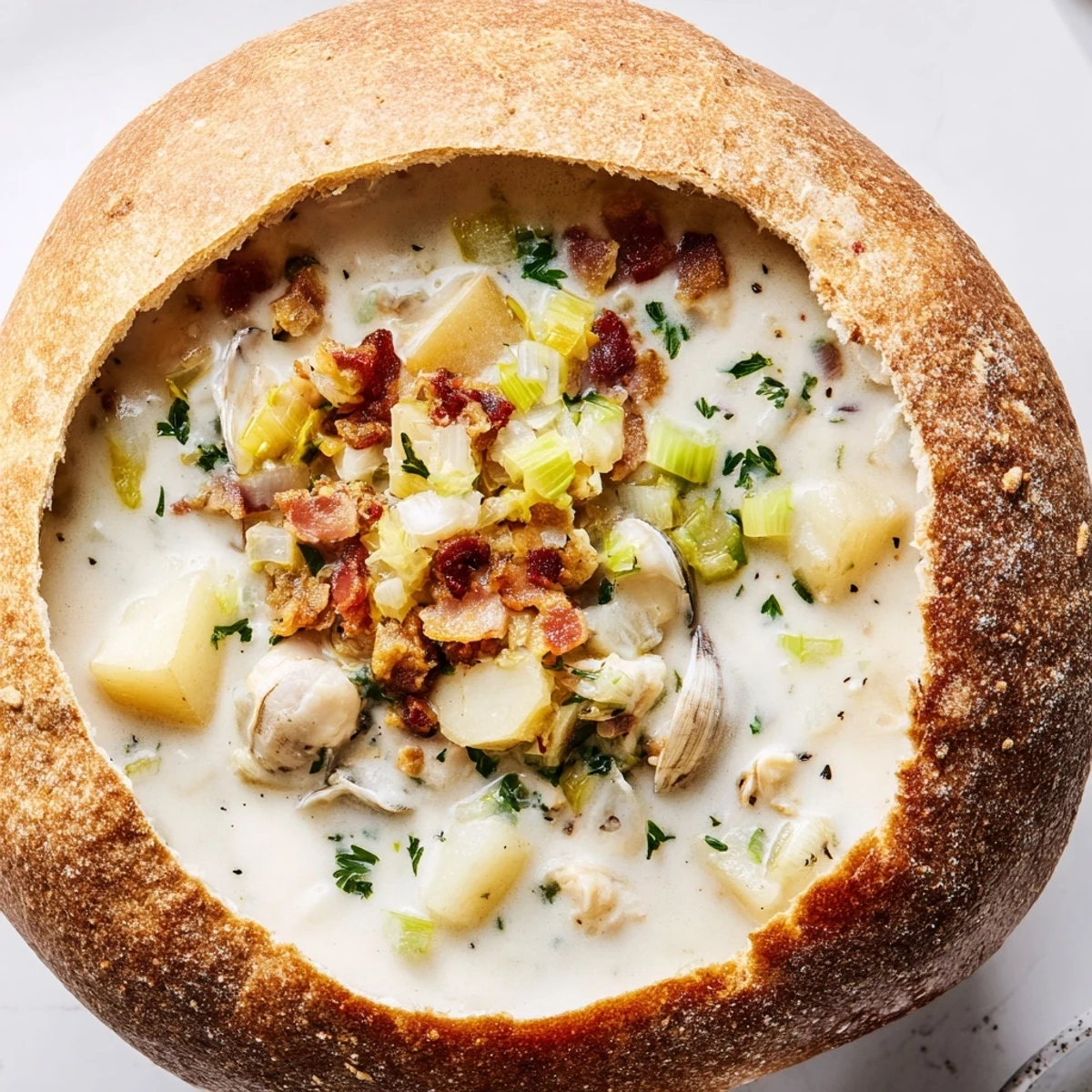
Save There is something deeply satisfying about eating the bowl after you have finished the soup, soppsing up that last bit of creamy broth with the sourdough you have been softening all meal long.
Recipe FAQs
- → What makes this clam chowder New England-style?
-
New England-style chowder is characterized by its creamy milk-based broth rather than the tomato-based version found in Manhattan chowder. This version uses both heavy cream and whole milk combined with a butter-flour roux to create that signature velvety, rich texture that clings to the potatoes and clams.
- → Can I use fresh clams instead of canned?
-
Absolutely. Steam approximately 2 pounds of fresh clams in a pot with a small amount of water until they open. Reserve the steaming liquid to use in place of bottled clam juice, and chop the clam meat before adding it during the final stages of cooking. Fresh clams will provide an even sweeter, more pronounced seafood flavor.
- → How do I prevent the dairy from curdling?
-
The most important rule is to never let the chowder boil after adding the milk and cream. Keep the heat at a gentle simmer and stir frequently. The roux also helps stabilize the dairy components. If you notice any separation, remove the pot from heat immediately and whisk vigorously.
- → Can I make the chowder ahead of time?
-
Yes, prepare the chowder up to 2 days in advance, but stop before adding the dairy. Store the base with potatoes and clams separately in the refrigerator. When ready to serve, reheat the base and whisk in the milk and cream at the very end. The bread bowls are best prepared and toasted just before serving to maintain their crisp texture.
- → What can I substitute for the bacon?
-
Smoked ham, pancetta, or even diced salt pork make excellent alternatives that provide similar smoky, savory depth. For a lighter version, omit the pork entirely and enhance the seafood flavor with additional clam juice or a splash of fish stock. Some traditional New England variations incorporate salt pork crackers for garnish instead.
- → How do I prevent the bread bowls from getting too soggy?
-
Toast the hollowed-out bread bowls in a 350°F oven for about 10 minutes until the interior surfaces are dry and lightly crisp. This creates a barrier that slows down absorption. Serve the chowder immediately after ladling, and expect the bottom portion of the bowl to soften naturally—that's part of the experience. Some diners enjoy tearing off the softened bread as they eat.