
 Save
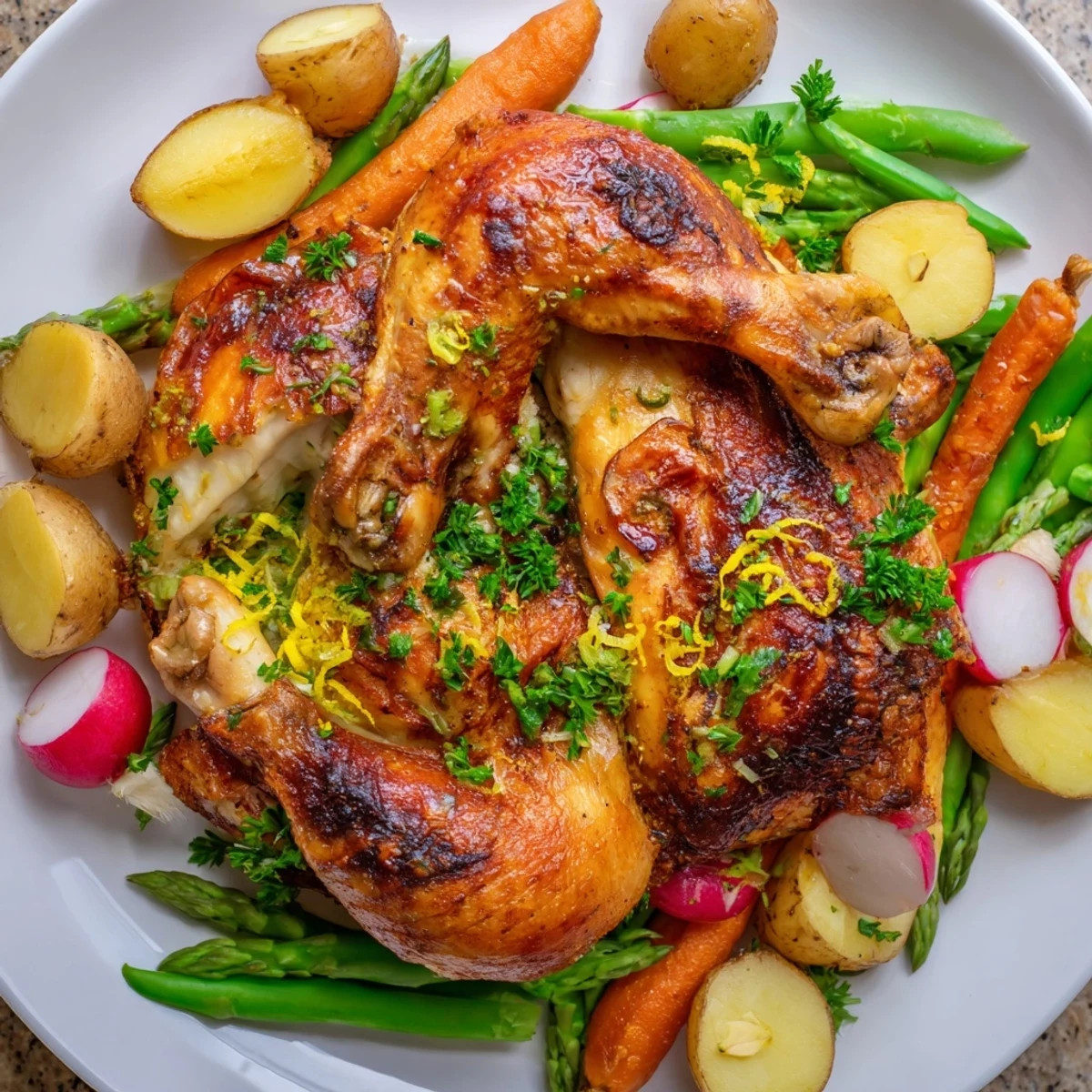
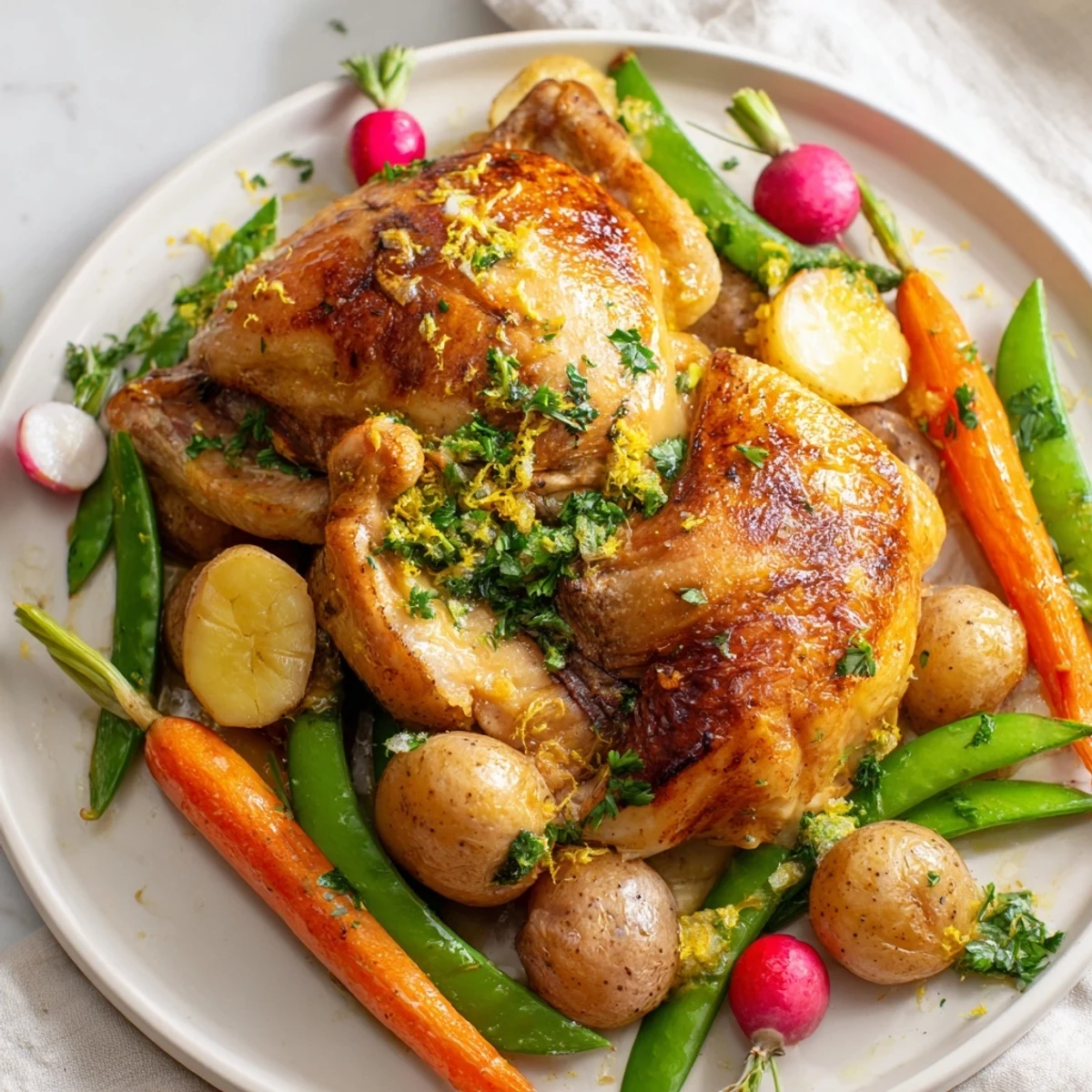
Save This dish features a whole chicken seasoned with olive oil, herbs, and lemon, roasted until golden and tender. Accompanied by a medley of baby potatoes, carrots, asparagus, sugar snap peas, and radishes, all roasted to complement the chicken's flavor. Fresh parsley and lemon zest add brightness to the final presentation. Ideal for an easy, satisfying family meal with gluten-free ingredients.
The first warm day of spring always makes me crave something bright and fresh, but still comforting enough for dinner. I made this roasted chicken on a whim when the farmers market had just started selling those tender baby carrots and bright green asparagus bundles. The way the chicken skin crisps up while the vegetables roast alongside in those rendered juices is pure magic.
Last Sunday my sister dropped by unexpectedly and I threw this in the oven. We sat around the kitchen table picking at the radishes and debating whether they were better roasted or raw, laughing when we both reached for the same crispy-skinned chicken piece at the same time.
Ingredients
- Whole chicken: Patting it completely dry is the secret to getting that irresistible crispy golden skin everyone fights over
- Olive oil: Helps the seasoning cling and promotes even browning
- Kosher salt: Use it generously to season both the outside and inside cavity
- Freshly ground black pepper: Freshly cracked makes a noticeable difference in depth of flavor
- Lemon: Stuffing halves inside releases citrusy steam that keeps the meat incredibly moist
- Garlic cloves: Smashed cloves mellow as they roast, infusing subtle sweetness throughout
- Fresh thyme and rosemary: These woody herbs hold up beautifully to high heat
- Baby potatoes: Halved they cook through while getting creamy inside and slightly crisp outside
- Carrots: Cut into sticks they caramelize at the edges while staying tender
- Asparagus: Adding them later prevents overcooking so they stay vibrant
- Sugar snap peas: They add a lovely sweet crunch and bright pop of green
- Radishes: Roasting transforms their sharp bite into something mellow and almost sweet
- Fresh parsley and lemon zest: This finishing touch wakes up all the rich roasted flavors
Instructions
- Preheat and prep:
- Get your oven to 220°C with plenty of time to heat up fully while you pat the chicken completely dry with paper towels
- Season the chicken:
- Rub olive oil all over then sprinkle salt and pepper generously, inside and out
- Stuff and tie:
- Fill the cavity with lemon halves, smashed garlic, and herb sprigs, then tie the legs together and tuck the wings under
- Arrange the bird:
- Place it breast side up in a large roasting pan where vegetables will fit comfortably around it
- Prep hearty vegetables:
- Toss baby potatoes and carrots with olive oil, salt, and pepper in a bowl then arrange them around the chicken
- Start roasting:
- Put everything in the oven for 35 minutes while you prep the remaining vegetables
- Add quick cooking vegetables:
- Toss asparagus, snap peas, and radishes with a little oil and seasoning, then add them to the pan
- Finish roasting:
- Cook another 20 minutes until the chicken is golden and juices run clear when you check the thickest part
- Rest and carve:
- Let the chicken rest 10 minutes on a cutting board so all those juices redistribute back into the meat
- Finish and serve:
- Pile the vegetables on a platter, carve the chicken over top, then sprinkle with parsley and lemon zest
 Save
Save This recipe has become my go-to when I want to feed people something that feels special without spending all day in the kitchen. My friend Sarah still talks about the roasted radishes she swore shed hate but ended up asking for seconds.
Getting The Perfect Roast
Starting with a completely dry chicken surface is crucial for that crispy skin we all love. I keep a roll of paper towels specifically for this step and really press into all the crevices and folds. The moisture on the skin creates steam which prevents proper browning, so be thorough and do not skip this seemingly tedious step.
Timing Your Vegetables
Not all vegetables roast at the same speed which is why the staged approach works so well here. The potatoes and carrots need that full 55 minutes to become tender and caramelized. Quick cooking vegetables like asparagus and snap peas only need about 20 minutes before they are perfectly done. Adding everything at once means you will either have raw potatoes or mushy asparagus.
Serving Suggestions
A crisp white wine like Sauvignon Blanc cuts through the richness beautifully while complementing the spring vegetables. For a casual dinner, I sometimes serve it directly from the roasting pan and let everyone help themselves. The presentation on a platter looks impressive enough for Easter dinner or Sunday lunch with guests.
- A simple arugula salad with lemon vinaigrette balances the meal
- Crusty bread is perfect for sopping up those pan juices
- Leftovers make excellent sandwiches the next day
 Save
Save There is something deeply satisfying about a whole roasted chicken bringing everyone to the table. This recipe turns ordinary ingredients into something worth gathering around.
Recipe FAQs
- → How do I ensure the chicken stays juicy while roasting?
-
Rub the chicken with olive oil, season well, and stuff the cavity with lemon, garlic, and fresh herbs before roasting to lock in moisture.
- → When should I add the more delicate vegetables during roasting?
-
Add quickly cooking vegetables like asparagus, sugar snap peas, and radishes halfway through the roasting process to avoid overcooking.
- → Can I substitute any vegetables based on availability?
-
Yes, seasonal swaps such as baby turnips or fennel work well and provide delicious variations.
- → What is the ideal internal temperature for the chicken?
-
Roast until the chicken reaches an internal temperature of 75°C (165°F) to ensure it is fully cooked and safe to eat.
- → How should the chicken rest after roasting?
-
Let the chicken rest for about 10 minutes after roasting to allow juices to redistribute for moist, tender meat.
- → What tools are recommended for roasting this dish?
-
A roasting pan, kitchen twine, sharp knife, cutting board, and a large mixing bowl are essential for prepping and cooking.