
 Save
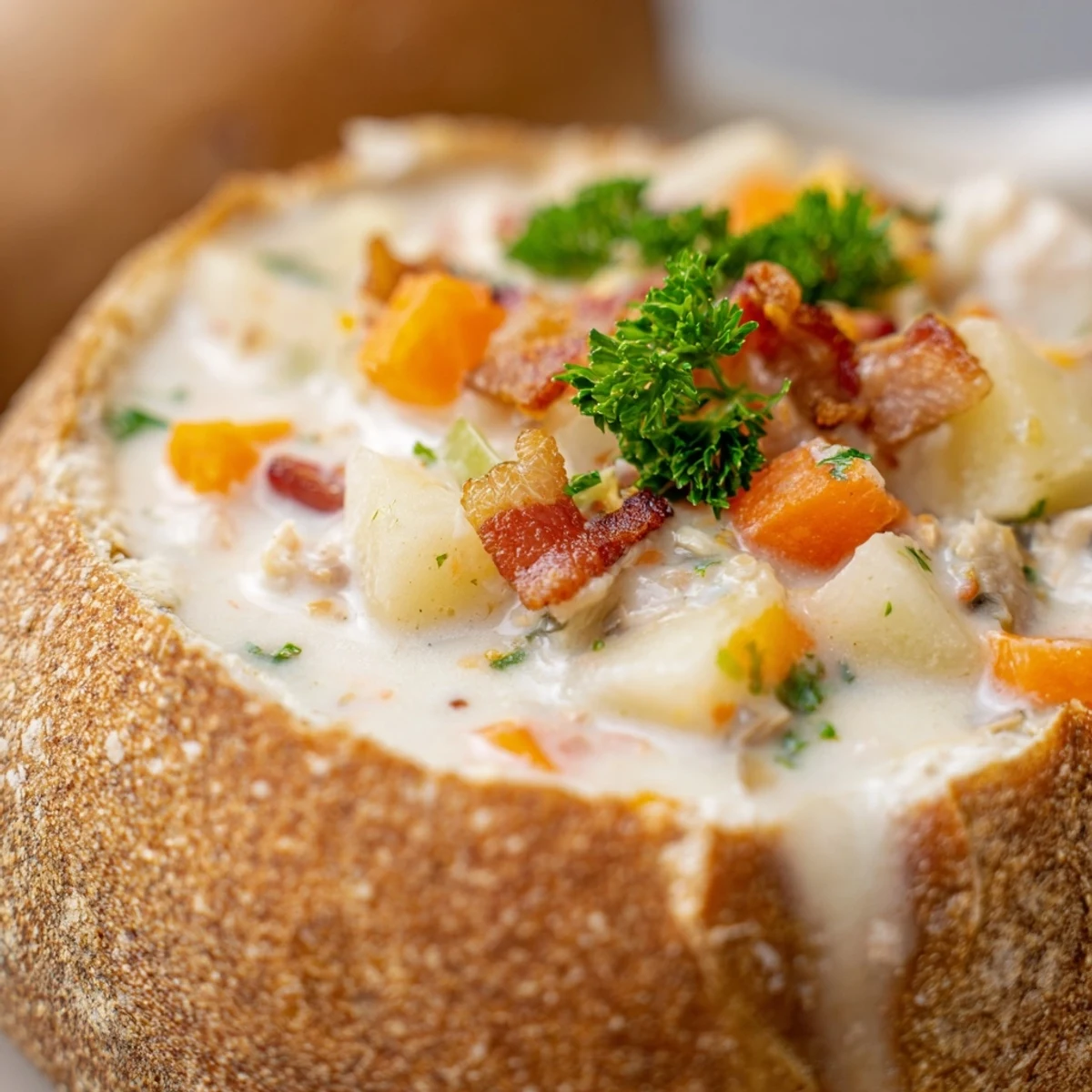
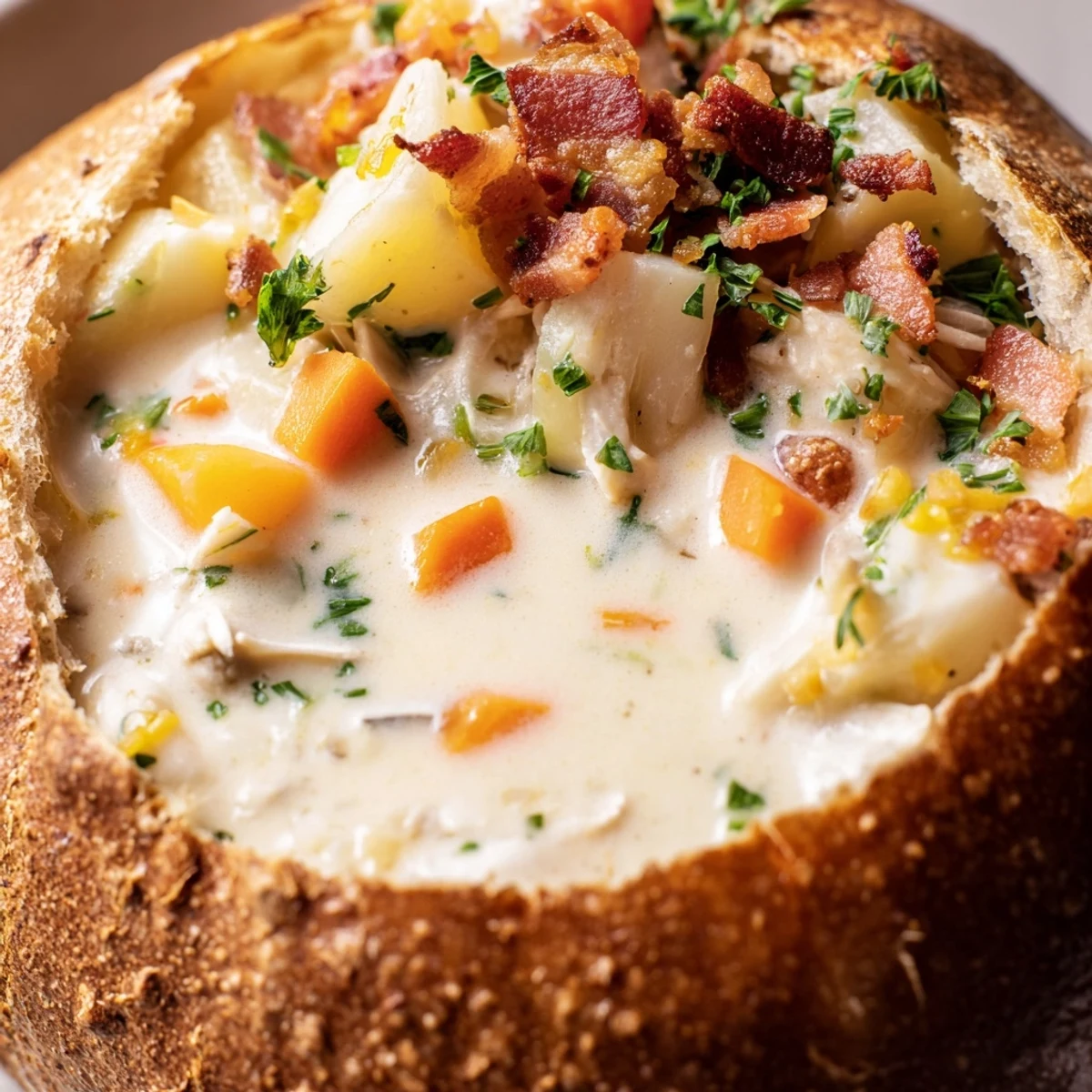
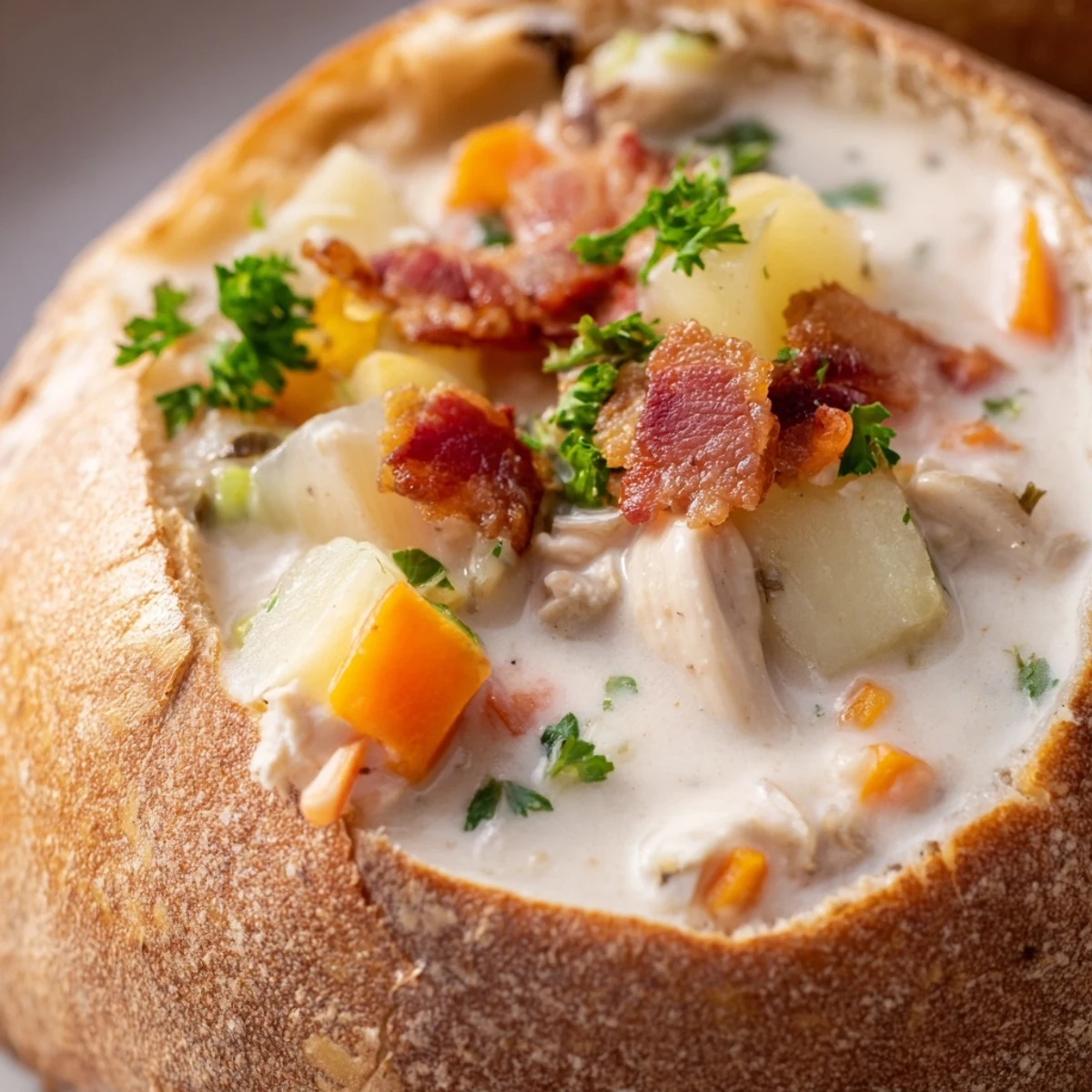
Save This creamy New England-style chowder combines tender clams with smoky bacon, diced potatoes, and aromatic vegetables. The broth is thickened with a roux and enriched by a blend of cream and milk, delivering a comforting coastal flavor. The chowder is presented in hollowed sourdough bread bowls, adding a crunchy, crusty texture complementing the creamy filling. Perfect for a satisfying meal, this dish balances savory seafood with fresh herbs and smoky elements for a warm, indulgent experience.
I discovered this recipe on a gray November afternoon when a friend texted asking if I could recreate the clam chowder we'd had at a tiny Boston seafood shack years ago. I stood in my kitchen, clams and bacon on the counter, suddenly remembering how that first spoonful tasted—rich, warm, impossibly comforting. The challenge wasn't just the flavors; it was capturing that feeling of being wrapped in something both elegant and utterly unpretentious. This sourdough bowl version became my answer to that craving.
I remember my sister's face the first time she tasted this—how she closed her eyes after that first spoonful and just sat there. She'd brought her new partner to dinner, and I was nervous about the whole thing, but this dish did the talking for me. Something about eating soup from a bowl you can actually tear into feels like permission to relax, to not worry so much about doing things right.
Ingredients
- Chopped clams and clam juice: This is where the soul of the chowder lives; reserve every drop of liquid because that briny essence is irreplaceable.
- Russet potatoes: They break down just enough to thicken the broth while staying tender, not turning to mush like waxy varieties would.
- Bacon: Crisp it until it's almost threatening to shatter, then crumble it; the fat is flavor.
- Heavy cream and whole milk: Using both gives you richness without that heavy, single-note feeling that all cream brings.
- Butter and flour: Your roux is the backbone; cook it gently so it thickens without any grainy texture.
- Fresh parsley: Add it at the end so it stays bright green and doesn't turn into pond scum.
- Sourdough bread boules: Choose ones with thick, sturdy walls or they'll collapse into the soup.
Instructions
- Hollow out your bread bowls first:
- Slice off the top of each sourdough boule and carefully scoop out the insides with a spoon, leaving about a 1-inch shell so it doesn't fall apart when you pour in the hot chowder. Toast the insides lightly if you want them to hold up better, though it's not required.
- Render the bacon slowly:
- Let it cook over medium heat until it's deeply golden and crisp, taking your time here because the rendered fat seasons the entire pot. Remove it with a slotted spoon and set it aside on a paper towel.
- Build your aromatics:
- Add butter to the bacon fat and then sauté the onion, celery, carrots, and garlic until they're soft and fragrant, about 5 minutes. This is where the depth starts, so don't rush it.
- Make the roux:
- Sprinkle in the flour and stir constantly for 2 minutes until you have a smooth, paste-like mixture that smells toasty, not raw. This cooks out the flour taste and thickens everything that comes next.
- Whisk in the clam juice:
- Pour it in slowly while whisking to avoid lumps, creating a silky base. If you feel confident, you can add it faster, but patience here prevents grainy soup.
- Simmer the potatoes:
- Add the diced russets along with thyme, bay leaf, salt, and pepper, bringing everything to a gentle simmer and cooking until the potatoes are completely tender, about 15 minutes. They should yield easily to a fork.
- Finish with cream and clams:
- Stir in the drained clams, bacon, milk, and heavy cream, then let it all warm through gently for about 5 minutes without boiling. High heat will make it separate and look broken.
- Season and garnish:
- Remove the bay leaf, taste for salt and pepper, then stir in fresh parsley just before serving. This final touch keeps its herbaceous brightness.
 Save
Save There's a moment in cooking when you smell the roux hit the clam juice and you just know something good is happening in that pot. That moment reminded me why I love cooking in the first place—not for perfection, but for that quiet alchemy of turning raw ingredients into something that brings people together.
The Art of the Bread Bowl
The sourdough bowl is more than just a serving vessel; it's an edible plate that absorbs the chowder as you eat, transforming from crispy to tender. Don't be afraid to press the bowl's walls into the soup—they're meant to be eaten, not left behind. Some people hollow out their bread too aggressively and end up with a fragile shell, so aim for that generous inch of bread around the sides.
Seasoning and Flavor Layers
Clam chowder is deceptively easy to oversalt because the clam juice already brings brininess, and that bacon adds its own savory punch. Taste as you go, starting conservative with salt and adding more only after you've combined everything. Thyme and bay leaf are your hidden depth—they create a subtle backbone that keeps the soup from tasting one-dimensional, so don't skip them even if you think you don't like those flavors.
Make It Your Own
This is the beauty of a foundational recipe—it welcomes improvisation without losing its soul. I've added a splash of dry white wine right when the clam juice goes in for brightness, experimented with smoked paprika instead of plain pepper, and even gone lighter with half-and-half when cream felt too heavy.
- A tablespoon of Old Bay seasoning swapped in for half the thyme transforms this into something with more coastal flair.
- If you're serving vegetarians, skip the bacon and add an extra tablespoon of butter to the aromatics for richness.
- The leftover bread from hollowing out your bowls makes incredible croutons or breadcrumbs—nothing goes to waste.
 Save
Save This chowder tastes like every good conversation I've had over a bowl of soup, every moment when food stopped being just food and became the reason people lingered at the table. Make it, serve it, and watch what happens.
Recipe FAQs
- → What type of clams work best?
-
Chopped canned clams with reserved juice provide the ideal balance of flavor and convenience for this chowder.
- → Can I use fresh clams instead?
-
Fresh clams can be used but require cleaning and steaming to extract juice; adjust cooking times accordingly.
- → Why use sourdough bread bowls?
-
Sourdough bread bowls offer a sturdy, tangy vessel that holds the chowder well and adds a crunchy texture contrast.
- → How is the chowder thickened?
-
A roux made from butter and flour creates a creamy base that thickens the broth without heaviness.
- → Can I substitute heavy cream?
-
Half-and-half may be used for a lighter option, though it will affect the chowder's richness.
- → What herbs enhance the flavor?
-
Dried thyme and fresh parsley add aromatic earthiness and brightness to the chowder’s profile.