
 Save
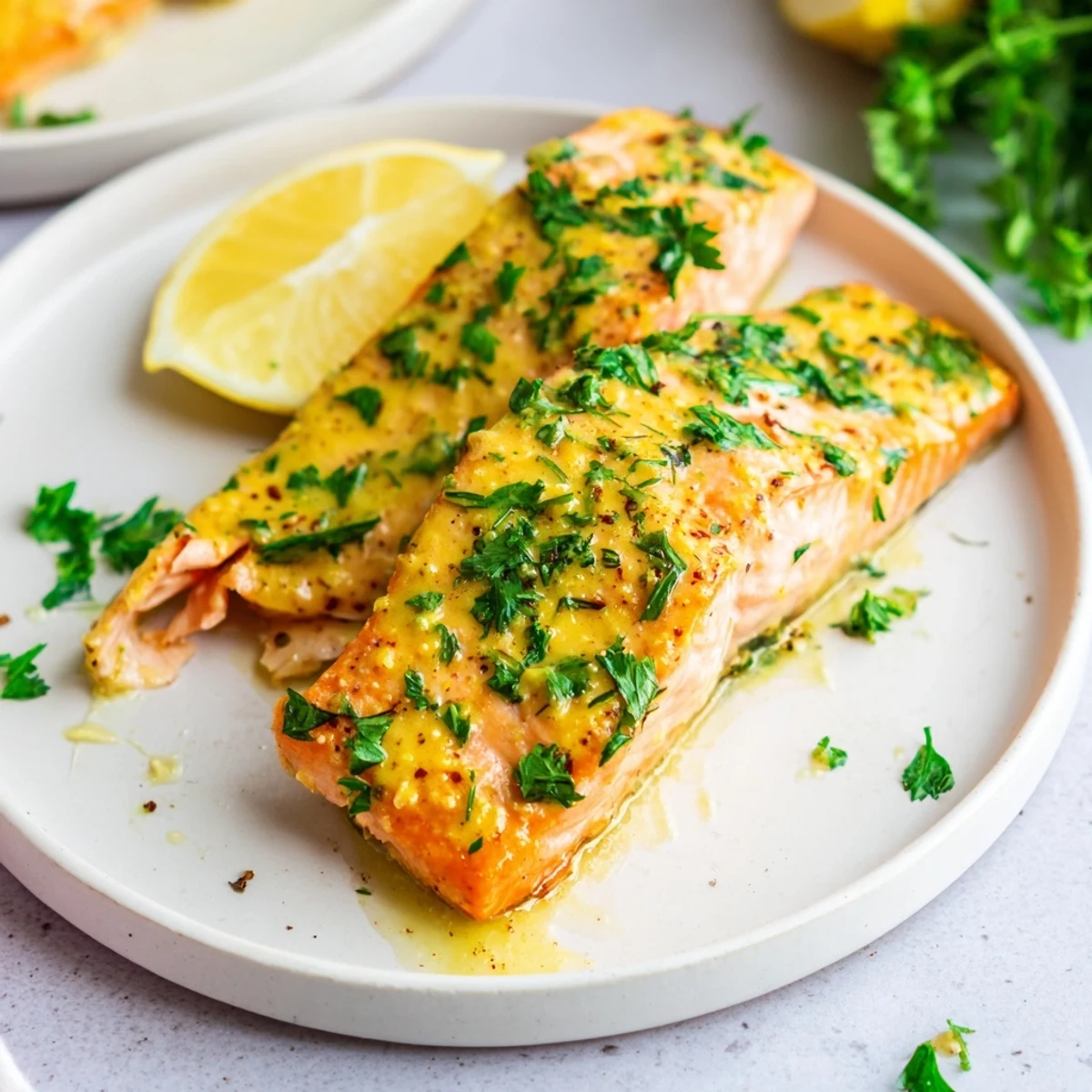
Save Create a delicious and healthy dinner in just 25 minutes with this honey mustard glazed salmon. Start by seasoning fresh fillets, then coat them in a zesty mixture of Dijon, whole-grain mustard, honey, and garlic. Bake until the fish is opaque and flakes easily. Serve with lemon wedges and fresh herbs for a complete pescatarian meal that fits perfectly into a gluten-free diet.
There's something about the sizzle of salmon hitting a hot baking sheet that just signals dinner is going to be good. I discovered this honey mustard glaze completely by accident one weeknight when I was trying to use up the last of a jar of whole-grain mustard and some honey that was sitting in my pantry. The combination of sweet and tangy worked so well that it became my go-to formula whenever I wanted salmon that felt special but didn't require fussing over a hot stove.
I made this for my sister's family on a Sunday afternoon, and my nephew asked for seconds before anyone else had finished their first bite. That moment when a kid voluntarily eats fish without being asked twice? That's when I knew this recipe was a keeper. Now whenever they visit, it's the first thing they ask for.
Ingredients
- Salmon fillets (4, about 6 oz each): Look for ones that feel firm and smell fresh like the ocean, not fishy. Skin-on keeps them moister, but skinless works just as well if that's your preference.
- Olive oil (1 tablespoon): This prevents sticking and helps the glaze caramelize into something golden and beautiful.
- Salt and freshly ground black pepper: Don't skip the freshly ground part; it makes a real difference in how the flavors come together.
- Dijon mustard (3 tablespoons): The sharp, slightly tangy backbone of the whole glaze.
- Honey (2 tablespoons): Balances the mustard's bite with sweetness and helps the glaze stick to the salmon.
- Whole-grain mustard (1 tablespoon): Those little seeds add texture and a subtle earthiness that regular mustard can't provide.
- Fresh lemon juice (1 tablespoon): Brightens everything and prevents the glaze from feeling too heavy.
- Garlic (1 clove, minced): Just enough to make you know it's there without overpowering the delicate fish.
- Fresh parsley or dill (1 tablespoon, chopped): Optional but recommended; it's the finishing touch that makes people think you tried harder than you actually did.
- Lemon wedges: For squeezing over the salmon right before eating, because that little burst of fresh acid is everything.
Instructions
- Get your oven ready:
- Heat it to 400°F and line a baking sheet with parchment paper. This takes two minutes and saves you from scrubbing fish residue later.
- Prepare the salmon:
- Pat the fillets dry with paper towels—this is the step that actually matters because moisture on the outside means the glaze won't stick properly. Arrange them skin-side down on your sheet, brush lightly with olive oil, and sprinkle with salt and pepper.
- Make the glaze:
- Whisk together the Dijon, honey, whole-grain mustard, lemon juice, and minced garlic in a small bowl until it's smooth and glossy. Taste it if you want; it should taste bright and balanced, not aggressively sharp or cloyingly sweet.
- Coat the salmon:
- Spoon or brush the glaze generously over each fillet. Don't hold back; this is where all the flavor lives.
- Bake until perfect:
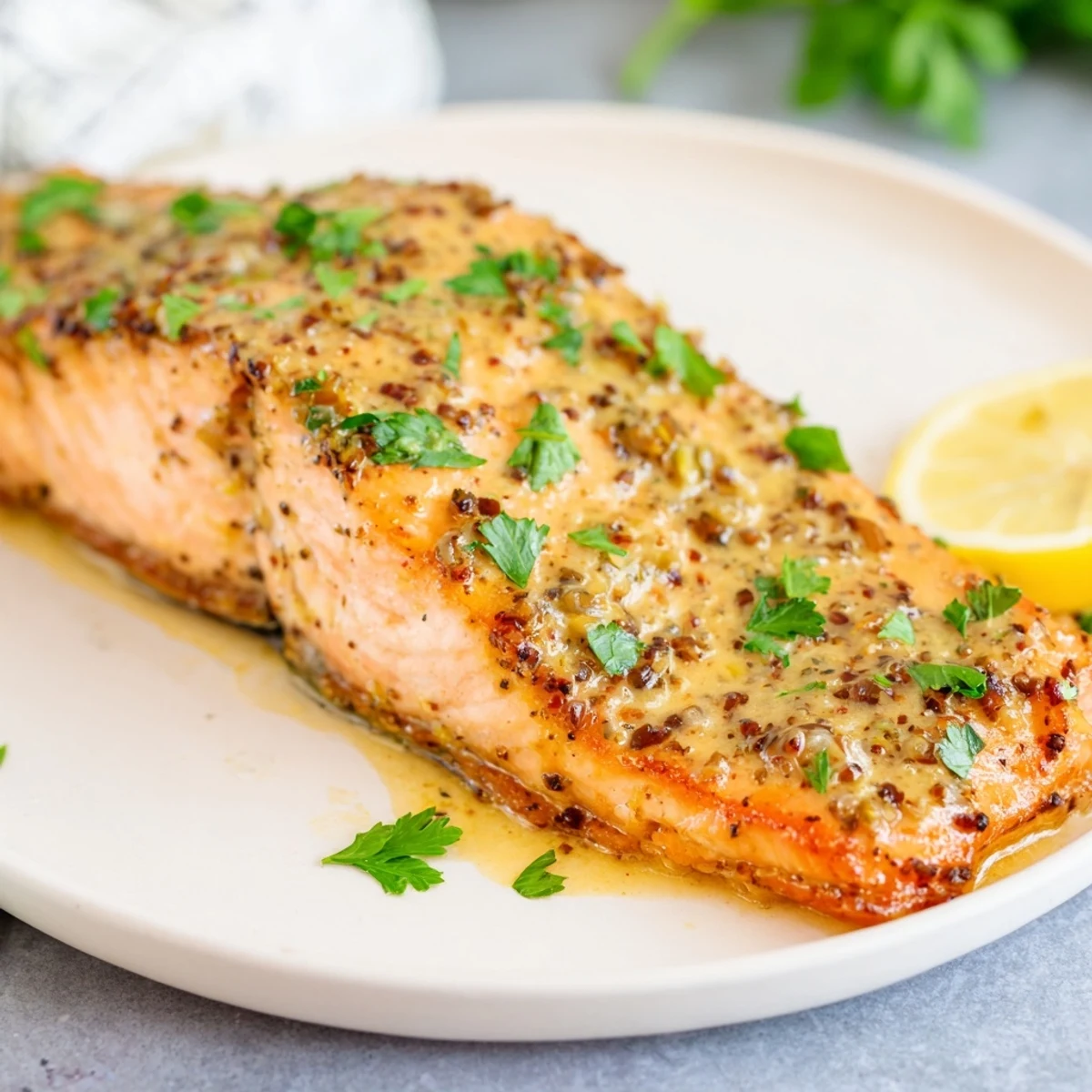
- Slide it into the oven for 12 to 15 minutes, depending on how thick your fillets are. The salmon is done when it flakes easily with a fork and looks opaque in the center. The glaze should be caramelized and slightly darker at the edges.
- Finish and serve:
- Take it out of the oven, scatter the fresh herbs on top, and serve with lemon wedges. The contrast between the warm, glazed salmon and the cold brightness of the lemon is what makes this feel like something you didn't just throw together on a weeknight.
 Save
Save I remember making this on a night when I was stressed about something at work, and just the smell of the salmon roasting with that honey and mustard filling the kitchen made everything feel a little less heavy. There's something grounding about a recipe that works reliably, that you can count on to turn out well.
Why This Glaze Works
The magic is in the balance. Dijon mustard brings sharp, complex flavor while whole-grain mustard adds texture and earthiness. Honey gives you sweetness that rounds everything out, and the lemon juice keeps it from becoming cloying. Together, they create a glaze that feels sophisticated without requiring any technique beyond whisking. The glaze also caramelizes slightly in the oven, creating depth that tastes like you spent way more time on this than you actually did.
Making It Your Own
This recipe is a framework, not a rule. If you like heat, stir in a pinch of cayenne or a dash of hot sauce into the glaze. If you're someone who loves fresh herbs, add minced dill or tarragon to the mixture. Some nights I add a tiny bit of soy sauce for umami depth, or swap the honey for maple syrup for a different kind of sweetness. The beauty of a simple recipe is that it's easy to tweak.
Serving and Timing
Serve this salmon immediately after it comes out of the oven while the glaze is still warm and glossy. Roasted vegetables like broccoli or Brussels sprouts are perfect alongside, or if you want something lighter, a fresh salad works beautifully. The salmon is moist and delicate, so it doesn't need anything heavy to make it feel like a complete meal.
- If you have time, marinate the salmon in the glaze for 30 minutes before baking for even more flavor intensity.
- Leftover salmon keeps well in the refrigerator for a day or two and makes excellent cold salad the next day.
- This recipe doubles easily if you're feeding more people; just make sure your salmon fillets are roughly the same thickness so they cook evenly.
 Save
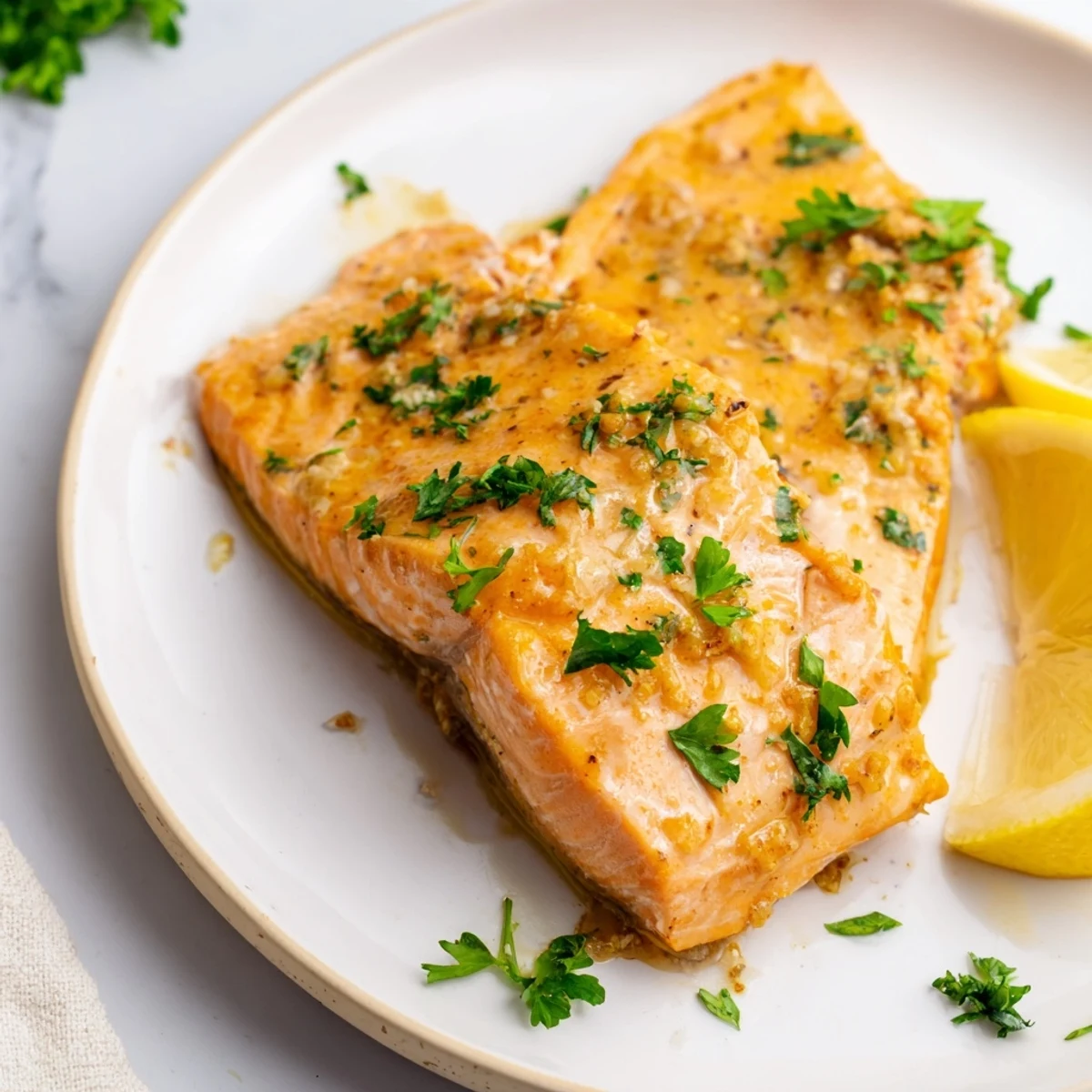
Save This is the kind of recipe that becomes your default when you want dinner to feel like you made an effort without actually spending the whole evening in the kitchen. It's reliable, it's delicious, and it works.
Recipe FAQs
- → How do I know when the salmon is done?
-
The salmon is done when it flakes easily with a fork and the flesh is opaque throughout the center.
- → Can I use skinless salmon fillets?
-
Yes, both skin-on and skinless fillets work well for this preparation. Just ensure the baking sheet is greased or lined.
- → Is this dish gluten-free?
-
Yes, the ingredients used are naturally gluten-free, but always check labels on your mustard and condiments to be sure.
- → Can I broil the salmon instead of baking?
-
Broiling is a great option to caramelize the glaze. Watch closely to prevent burning, as it takes only a few minutes.
- → What sides go best with this salmon?
-
Roasted vegetables, steamed rice, or a fresh green salad pair perfectly with the sweet and tangy flavors of the fish.
- → Can I add spice to the glaze?
-
Absolutely. Add a pinch of cayenne pepper or a dash of hot sauce to the honey mustard mixture for extra heat.