
 Save
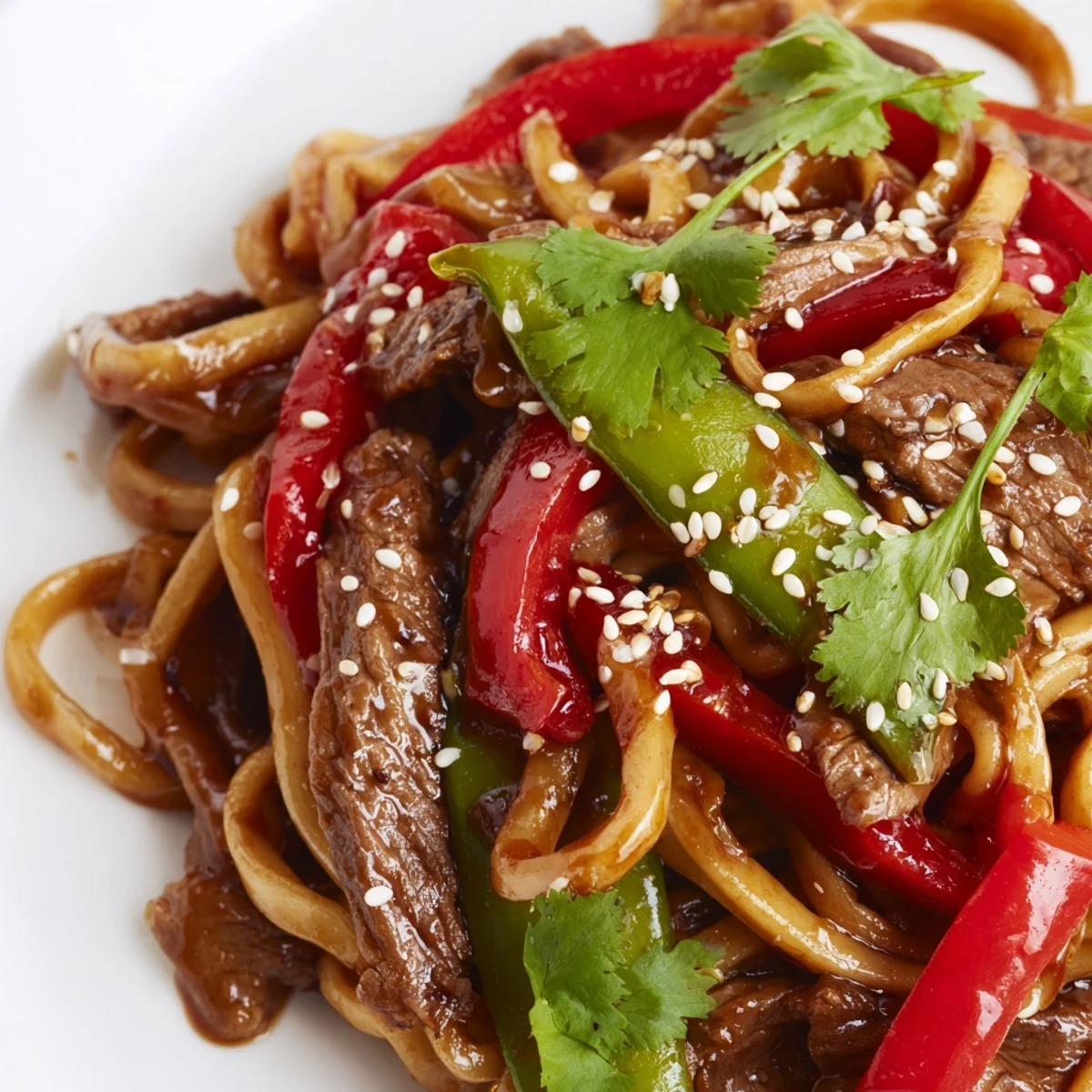
Save This savory dish features tender marinated beef and chewy udon noodles stir-fried with crisp vegetables in a spicy sauce. Start by slicing the flank steak thinly and marinating it in soy sauce and cornstarch for maximum tenderness. While the noodles boil, prepare the aromatic blend of garlic, ginger, and chili. Flash fry the beef over high heat until browned, then set it aside. Toss the crisp bell pepper, carrots, and snap peas into the wok, return the beef, add the noodles, and coat everything in the rich, spicy glaze for a satisfying meal.
I discovered this stir fry on a Tuesday night when my roommate came home with a bag of fresh udon noodles and challenged me to make something that didn't taste like takeout. The sizzle of beef hitting hot oil, the way the sauce clung to every strand of noodle, and that first bite of crisp vegetables against tender meat—it proved you didn't need fancy equipment or hours of time to create something genuinely craveable. Now it's my go-to when I want restaurant-quality food without leaving the kitchen.
I made this for friends who were skeptical about stir fry being restaurant-quality, and the moment the aroma hit as I was tossing it all together, they stopped talking and just watched. Something about cooking with confidence in front of people who underestimated you makes the food taste even better.
Ingredients
- Flank steak or sirloin, thinly sliced: The key is cutting against the grain, which I learned the hard way after one attempt with the grain left me chewing like I was working for my dinner. Partial freezing for 15 minutes makes slicing cleaner.
- Soy sauce: This appears twice—once for the marinade to tenderize the beef, once in the sauce for depth. Don't skip the first one thinking it's redundant.
- Cornstarch: This creates a silky coating on the beef that traps moisture and makes it tender even under high heat.
- Sesame oil: Use it sparingly in the marinade—a tablespoon is enough to add nutty richness without overpowering.
- Chili garlic sauce: This is where your spice level lives. Sriracha or gochujang paste work too if that's what you have.
- Oyster sauce: It adds umami depth that plain soy can't quite reach, though vegetarian stir-fry sauce is a fine swap.
- Fresh udon noodles: They're chewier and more forgiving than dried, but if you only have dried, soak them first to shorten cooking time.
- Bell pepper, carrot, and snap peas: The trio of textures and colors keeps this visually alive and nutritionally balanced. Feel free to swap in whatever is crisp and in season.
- Garlic and ginger: Fresh is non-negotiable here; they perfume the oil and become the flavor foundation for everything else.
- Rice vinegar: A tablespoon of acid brightens the sauce so it doesn't sit heavy on the palate.
- Toasted sesame seeds and cilantro: These feel like finishing touches but they completely change how the dish tastes, adding nuttiness and freshness in the final moment.
Instructions
- Coat and rest the beef:
- Toss your sliced beef with soy sauce, cornstarch, and sesame oil in a bowl and let it sit. This 10-minute rest isn't just tradition—the cornstarch hydrates and creates a protective layer that keeps the meat tender when it hits the hot pan.
- Mix your sauce while you wait:
- Whisk soy, oyster sauce, chili garlic, rice vinegar, sugar, and water together until the sugar dissolves. Setting this aside now means you won't be juggling bowls when the pan is screaming hot.
- Cook the noodles early:
- Boil udon according to package directions, then rinse them under cold water to stop the cooking and prevent them from sticking together. This step kills one variable before the actual cooking begins.
- Sear the beef hard and fast:
- Heat oil in your wok or skillet until it shimmers, then lay beef in a single layer without moving it around. Let it sit for 2 to 3 minutes until a brown crust forms—this is where flavor comes from. Remove and set aside.
- Bloom the aromatics:
- Add more oil to the pan, then immediately toss in garlic, ginger, and the white parts of spring onions. The sizzle means the pan is hot enough; 30 seconds is all they need before they start to brown.
- Cook vegetables until they resist the bite:
- Add peppers, carrots, and snap peas, keeping the heat high. You want them soft enough to enjoy but still with a subtle snap when you bite down. This takes about 2 to 3 minutes of constant stirring.
- Bring it all together:
- Return the beef, add the noodles, pour in your sauce, and toss for 2 to 3 minutes until the noodles are heated through and coated. The sauce should cling to everything, not pool at the bottom.
- Finish and serve immediately:
- Top with sesame seeds, cilantro, and green onion tops. Serve while the noodles still have a slight chew and the vegetables are still warm.
 Save
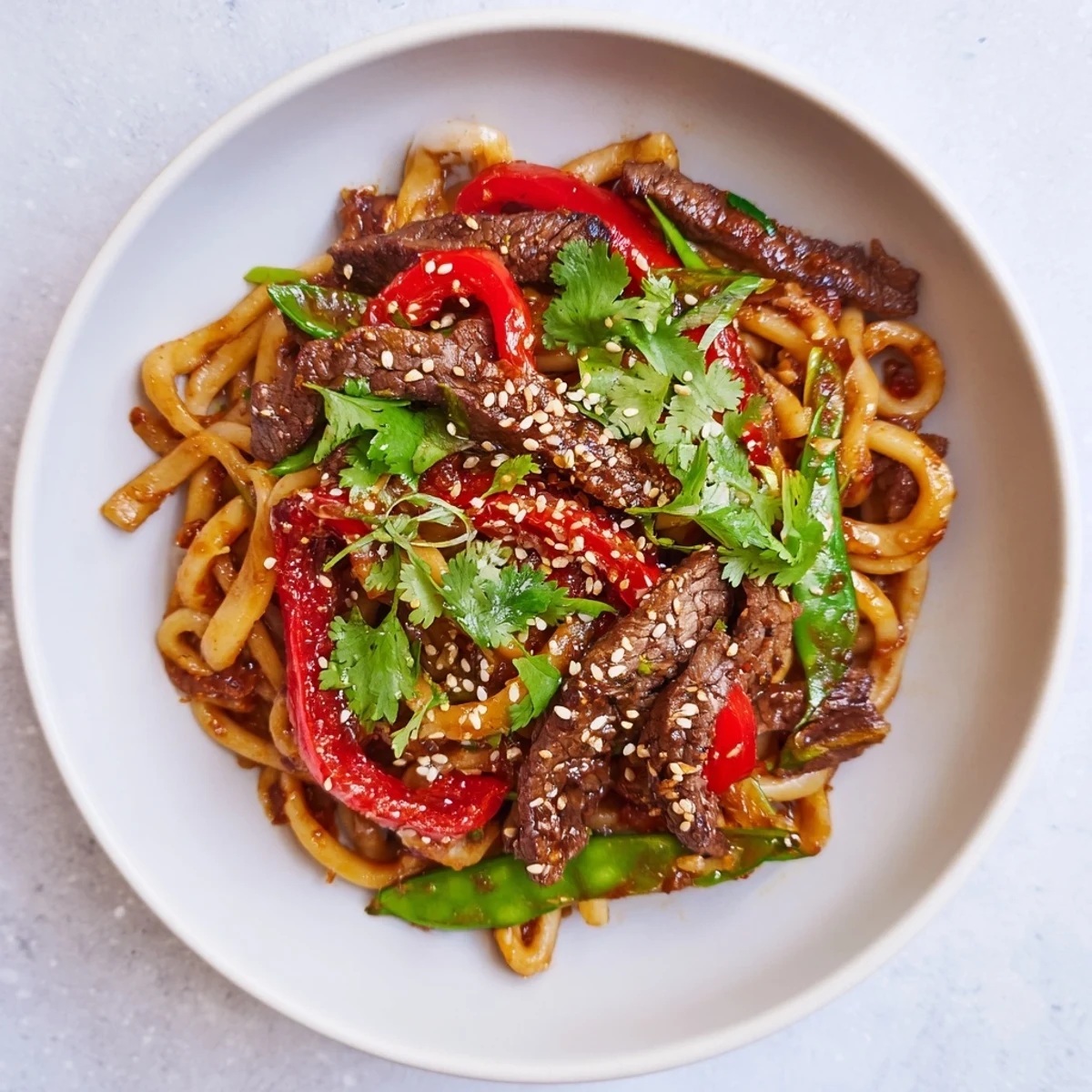
Save The first time I nailed this dish was when I stopped thinking about each step separately and started thinking about it as one continuous motion. The sizzle, the aroma, the colors shifting—it stopped feeling like following instructions and felt like dancing.
Why the Sauce Matters
A good stir fry sauce isn't just something you dump in at the end; it's the spine of the entire dish. The balance of salty, sweet, spicy, and acidic is what transforms simple ingredients into something memorable. I've learned that if your sauce tastes a little too strong or a little too sharp in the bowl before you add it, it will mellow and marry perfectly once it coats the hot noodles and beef.
Texture Layering
The magic of this stir fry lives in contrasts—the chew of udon against the snap of vegetables, the tenderness of beef against the crunch of sesame seeds, the heat of the sauce against the cooling freshness of cilantro. This is what keeps your mouth interested through every bite. Never skip the garnish, and never add the vegetables all at once; stagger them so they finish at slightly different times.
Custom Flavor Adjustments
I've made this recipe so many times that I now adjust it without thinking. If I'm feeling adventurous, I add a splash of Shaoxing wine or a pinch of five-spice powder. If I want it lighter, I reduce the oil and oyster sauce. The skeleton of the recipe is strong enough to hold whatever flavors you want to emphasize.
- For extra depth, add a teaspoon of fish sauce to the sauce mixture—it won't taste fishy, just fuller and rounder.
- If you prefer less spice, use half the chili garlic sauce and add more rice vinegar for brightness instead.
- Leftover stir fry tastes great cold the next day, so don't hesitate to make a double batch.
 Save
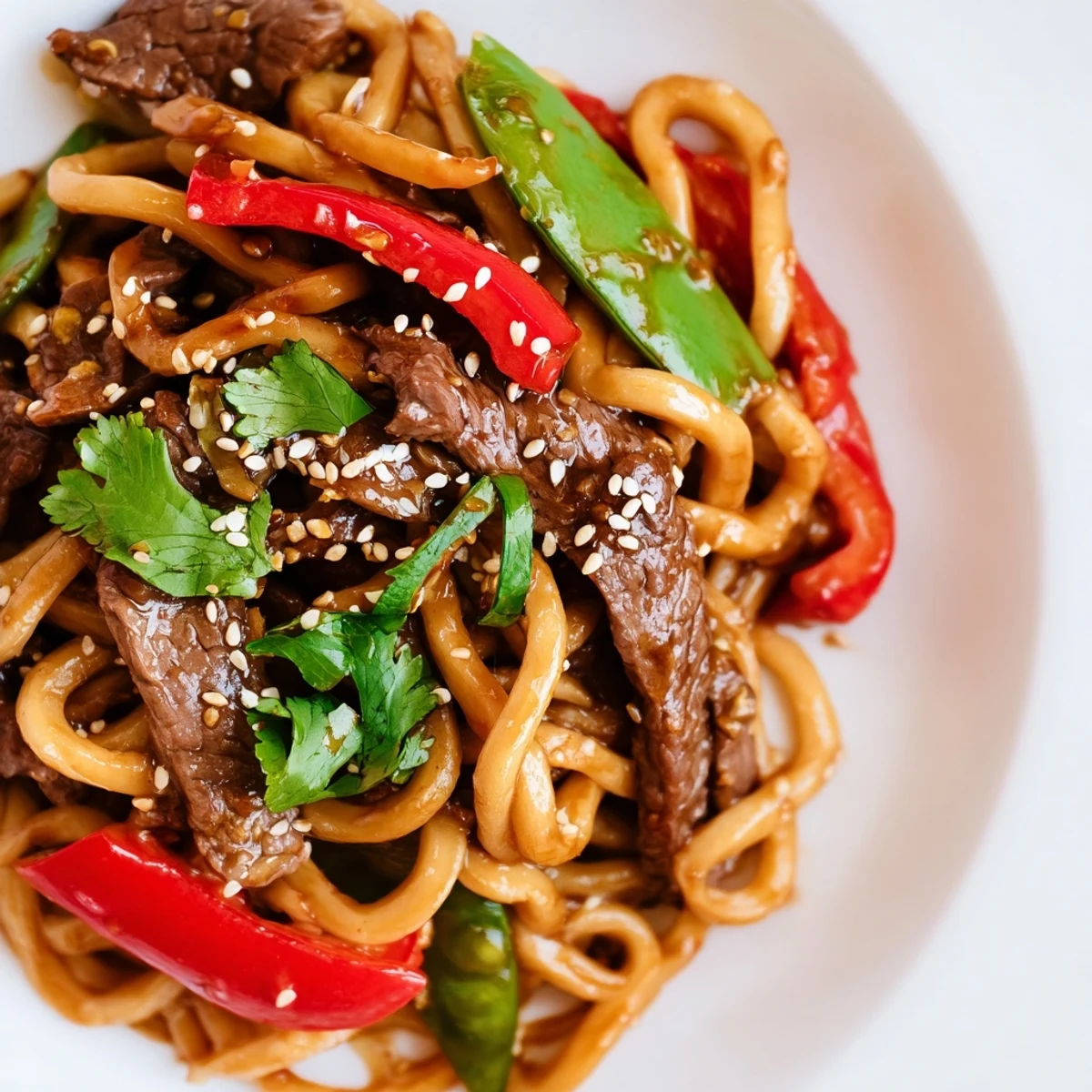
Save This stir fry has become my answer to the question "what should we make tonight?" when everyone is tired and hungry and doesn't want to wait. It tastes like care even though it's quick, which might be the most valuable thing a recipe can do.
Recipe FAQs
- → How do I slice the beef correctly?
-
Always slice the flank steak or sirloin thinly against the grain. This breaks up muscle fibers, ensuring the meat remains tender during the quick stir-frying process.
- → Can I use dry udon noodles instead of fresh?
-
Yes, you can use dried udon noodles. Just boil them according to the package instructions, usually a few minutes longer than fresh, and rinse thoroughly with cold water before tossing.
- → How can I adjust the spice level?
-
The heat is controlled by the chili garlic sauce. Start with one tablespoon and add more to taste if you prefer it hotter. For a milder version, reduce the amount or omit it entirely.
- → Is this dish gluten-free?
-
Traditionally, it is not due to soy sauce and wheat udon. To make it gluten-free, substitute regular soy sauce with tamari and use gluten-free udon or rice noodles.
- → What other proteins work well here?
-
Sliced chicken breast, shrimp, or firm tofu work excellently as substitutes for the beef. Adjust cooking times slightly, as shrimp and tofu cook faster than steak.