
 Save
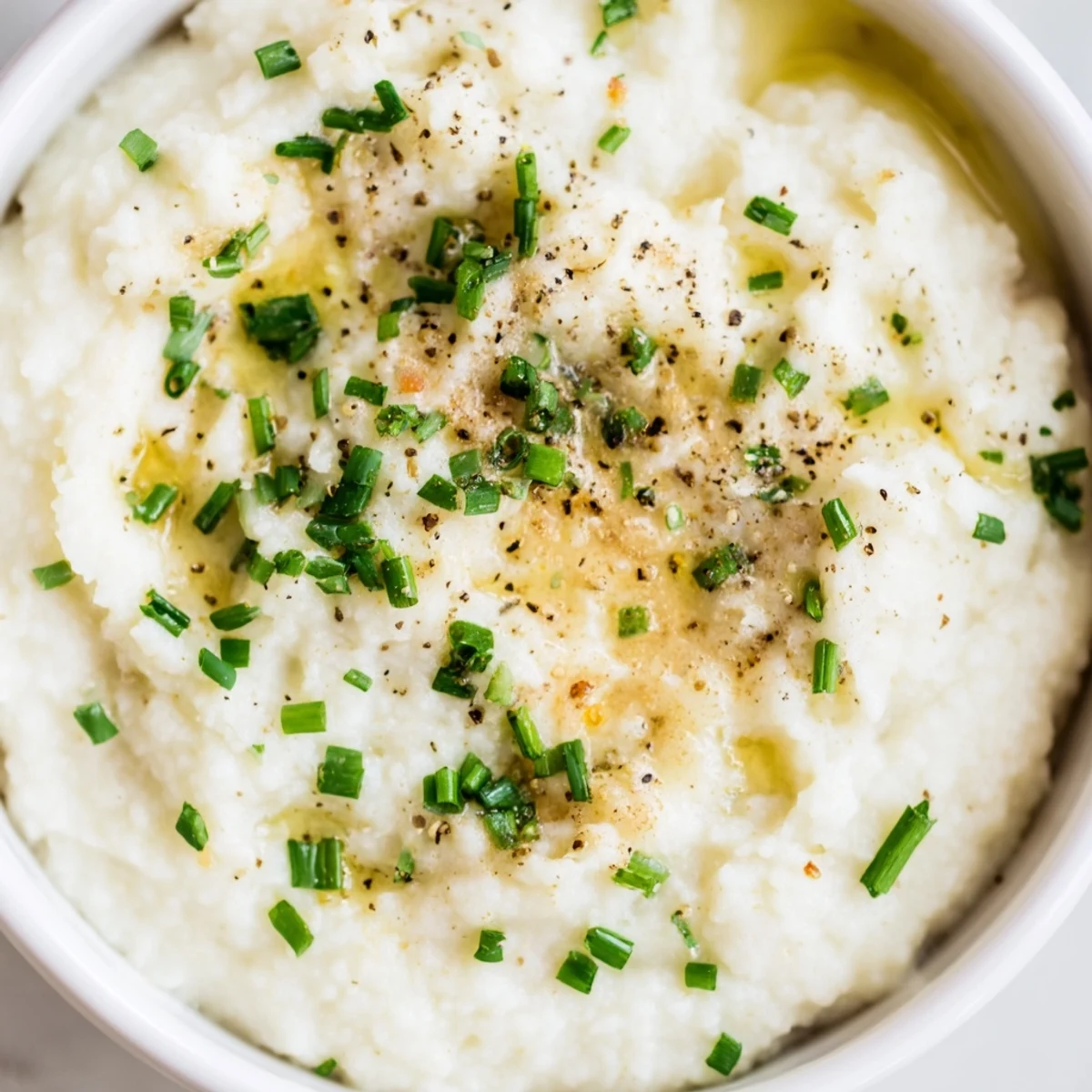
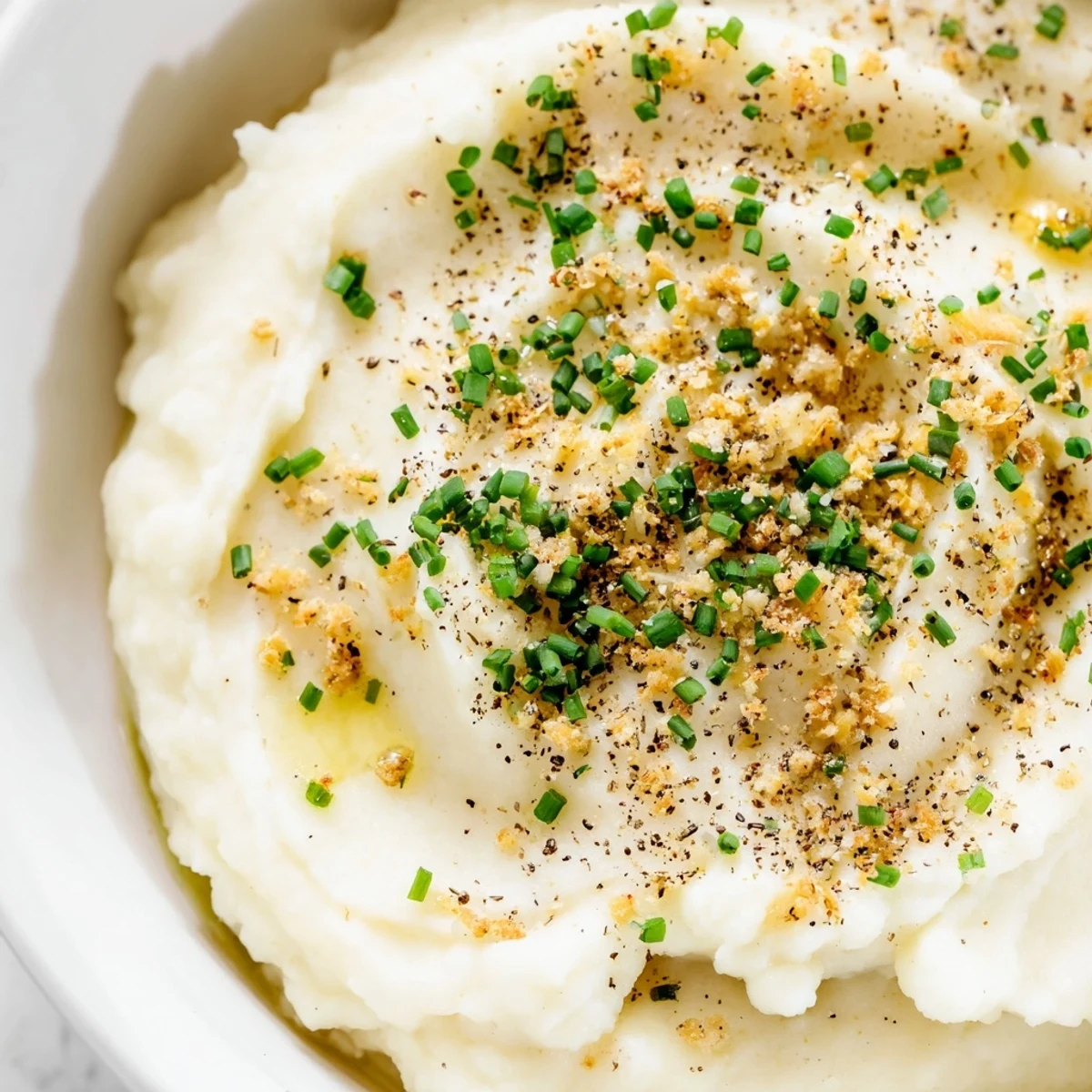
Save This creamy mashed cauliflower features tender steamed florets blended with rich roasted garlic, butter, and sour cream for smooth texture and savory depth. Fresh chives add a mild oniony finish, creating a delicate yet flavorful side dish that pairs well with roasted meats or grilled fish. Simple to prepare, it offers a light, low-carb alternative to traditional mashed potatoes, suitable for vegetarian and gluten-free diets.
I discovered this dish by accident one winter evening when I had cauliflower in the crisper and roasted garlic cloves left over from Sunday dinner. My mom always insisted mashed potatoes were non-negotiable at the table, but when I served this creamy, golden alternative instead, she actually came back for seconds. Now I make it constantly, and it's become the side dish I'm known for bringing to dinners.
I remember my sister's surprised face when she tasted this at a family gathering and asked if there were actual potatoes in it. When I told her it was just cauliflower, she demanded the recipe immediately, and now she makes it for her own dinner parties. That moment taught me not to underestimate how good vegetables can taste when you treat them with respect.
Ingredients
- 1 large head cauliflower, cut into florets: Fresh, firm florets steam more evenly, so choose a head that feels dense and heavy for its size.
- 1 whole garlic bulb: Roasting mellows garlic's sharp bite into something sweet and almost nutty, which is the heart of this dish's flavor.
- 3 tablespoons unsalted butter: Unsalted lets you control the salt level, and the richness is essential for that mashed potato texture.
- 1/4 cup sour cream or Greek yogurt: Sour cream adds tang and creaminess, while Greek yogurt keeps things lighter if that matters to you.
- 1/4 cup whole milk or unsweetened plant milk: This adjusts the consistency to creamy without making it soupy, and plant milk works beautifully here.
- 2 tablespoons fresh chives, finely chopped: Fresh chives add a delicate onion note and a pop of color at the end.
- 1/2 teaspoon salt and 1/4 teaspoon freshly ground black pepper: Taste as you go because these seasonings are your final adjustment.
Instructions
- Prep and roast the garlic:
- Heat your oven to 400°F and slice the very top off your garlic bulb so the cloves peek through. A light drizzle of olive oil, a foil wrap, and 30-35 minutes of roasting transforms the whole bulb into soft, golden, squeezable cloves.
- Steam the cauliflower:
- While garlic roasts, cut your cauliflower into bite-sized florets and steam them over boiling water for 12-15 minutes until completely tender. The key is draining them well and letting them sit for a minute so they release excess moisture, which keeps your final dish creamy instead of watery.
- Combine everything:
- Squeeze the cooled roasted garlic from its papery skins into a food processor with the drained cauliflower, butter, sour cream, milk, salt, and pepper. Pulse or blend until it reaches your preferred texture, whether smooth and luxurious or slightly chunky.
- Taste and season:
- This is the moment that matters most. Add more salt, pepper, or even a pinch of nutmeg if it needs it, tasting after each adjustment.
- Finish with chives:
- Stir in half the fresh chives into the warm mixture, then transfer to your serving bowl and scatter the remaining chives on top for color and flavor.
 Save
Save There was a moment at my neighbor's table when she served this alongside roasted chicken, and three generations of her family all reached for second helpings. She told me later that her teenage son, who usually resists vegetables, asked her to make it again. That's when I realized this dish works because it doesn't pretend to be anything it's not, and people respect honesty in food.
Why This Replaces Mashed Potatoes
Cauliflower has a naturally creamy texture when cooked and mashed, so it absorbs butter and dairy beautifully without becoming dense like potatoes sometimes do. The roasted garlic adds a depth that makes you forget you're not eating traditional mashed potatoes, but the final result is lighter on your stomach and your carb count. It's genuinely not a compromise or a substitute; it's a different dish entirely that happens to occupy the same place on the plate.
Customizing for Your Taste
This recipe is forgiving and flexible, which is exactly why it works for so many different tables. A tiny pinch of nutmeg or freshly grated Parmesan elevates it instantly, while a touch of horseradish brings sharpness if you prefer more bite. Some people add roasted thyme or a whisper of smoked paprika, and every addition feels natural.
Serving and Storage
Serve this warm alongside grilled fish, roasted chicken, or beef, where its creamy richness balances the main protein beautifully. Leftovers keep in the refrigerator for up to four days and reheat gently in a pot with a splash of milk to restore the silky texture.
- Make it dairy-free by swapping butter for olive oil and using plant-based sour cream and milk.
- Prep the garlic and cauliflower the morning of, then roast and cook everything together just before dinner.
- If you're feeding people with allergies, always check product labels and be ready to explain what's in your dish.
 Save
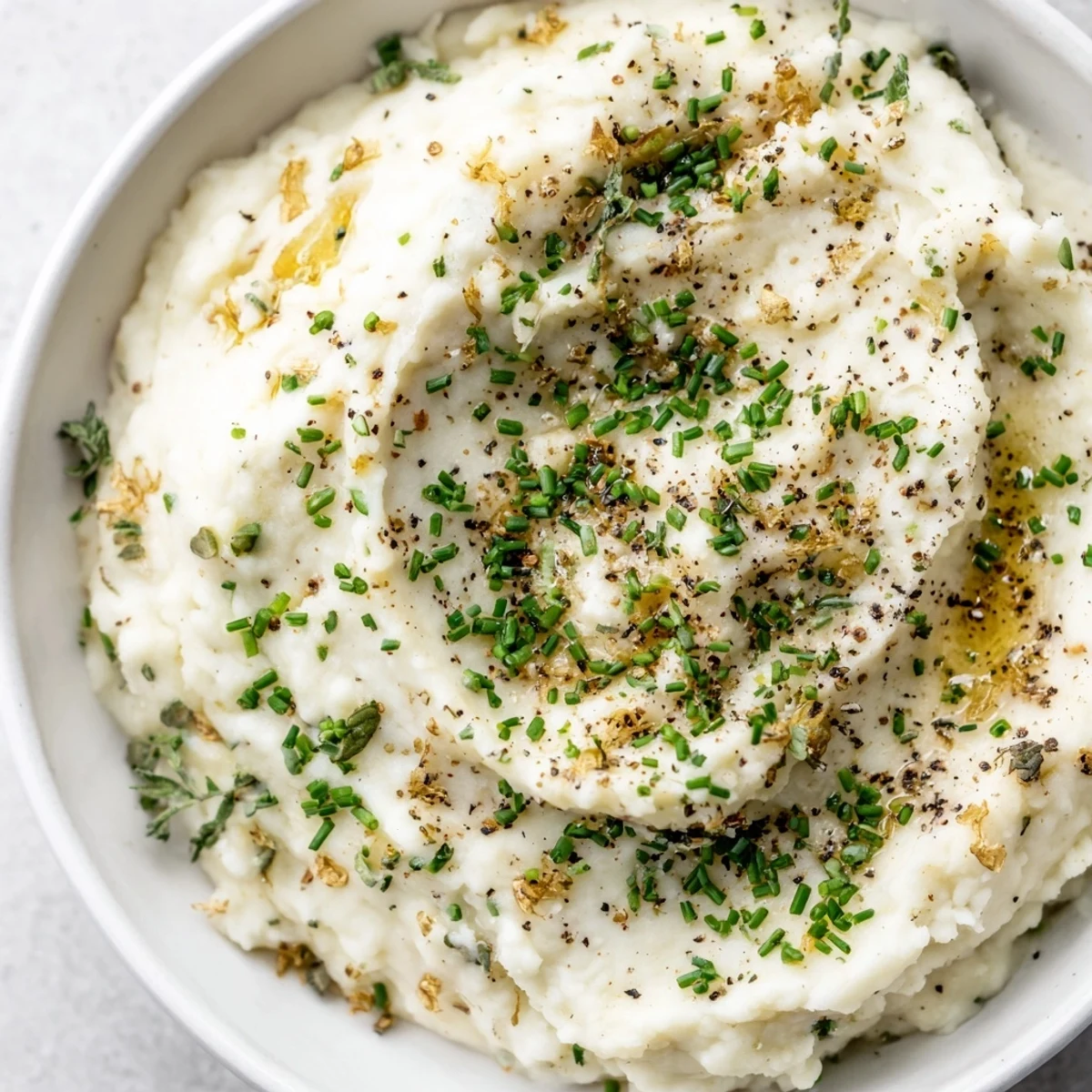
Save This is the kind of dish that quietly becomes a tradition once you've made it a few times. Serve it with confidence and watch people taste something they didn't expect to love.
Recipe FAQs
- → How do you roast garlic for this dish?
-
Slice the garlic bulb’s top to expose cloves, drizzle with olive oil, wrap in foil, and roast at 400°F for 30-35 minutes until soft and golden.
- → Can I use a dairy-free option?
-
Yes, substitute butter and sour cream with olive oil and plant-based milk or yogurt for a dairy-free version.
- → How should cauliflower be cooked?
-
Steam cauliflower florets until very tender, about 12-15 minutes, then drain well to remove excess moisture before mashing.
- → What is the role of chives in this preparation?
-
Chives provide a fresh, mild onion flavor that brightens the creamy texture and balances the roasted garlic’s richness.
- → How to adjust the seasoning for taste?
-
After mashing, taste and season with salt and pepper as desired; optional nutmeg or Parmesan can enhance flavor further.