
 Save
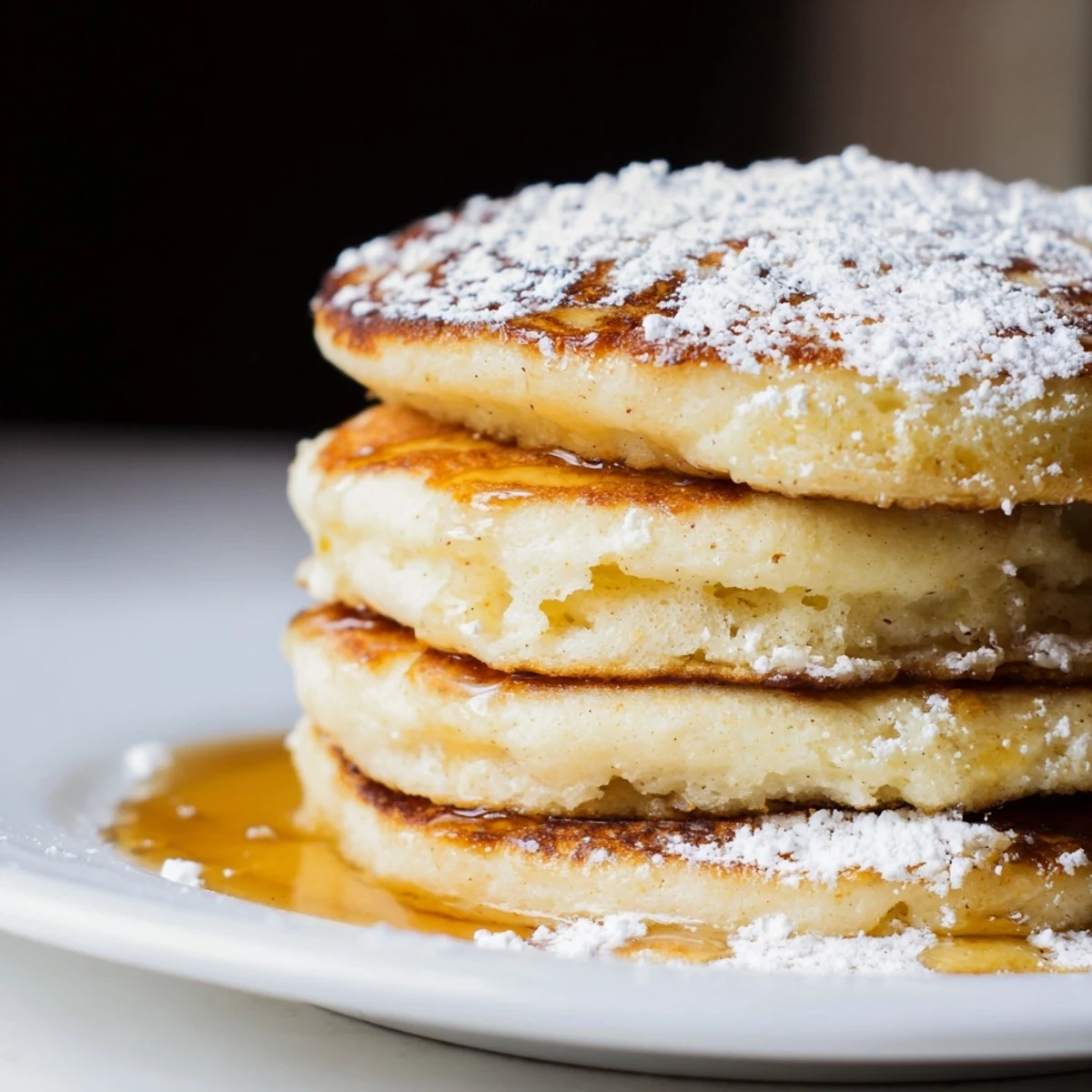
Save These pancakes combine creamy ricotta cheese with bright lemon zest and juice to create a tender, fluffy texture. Lightly sweetened and gently folded with whipped egg whites, they cook to golden perfection on a greased skillet. Finished with warm maple syrup and optional fresh berries or powdered sugar, they offer a refreshing twist on classic breakfast pancakes. Simple techniques and common ingredients make them an easy, delightful start to your day.
There's something about a Sunday morning when my sister called to say she was bringing her new boyfriend over for breakfast that made me want to do something special. I'd been experimenting with ricotta in unexpected places, and when I combined it with bright lemon and fluffy egg whites, something clicked. These pancakes arrived at the table golden and impossibly tender, and I watched their faces light up—that moment when food becomes a conversation starter.
I remember standing at the stove on a quiet Tuesday morning, the kitchen still half-dark, letting the smell of lemon and melting butter wake me up. By the time my partner wandered in, I had a stack on the plate and their first bite turned into a long, appreciative silence. That's when I knew this recipe was staying in rotation permanently.
Ingredients
- Ricotta cheese (1 cup): This is your secret to that impossibly tender crumb—it adds moisture and richness that regular batter can't touch, so don't skip it or substitute light versions.
- All-purpose flour (1 cup): Measure by spooning and leveling, not scooping, or you'll end up with dense pancakes that fight you.
- Granulated sugar (2 tbsp) and baking powder (1 tsp): These work together to give you lift and slight sweetness without making the batter cloyingly sugary.
- Baking soda (1/4 tsp) and fine sea salt (1/4 tsp): The soda reacts with the lemon juice for extra lift, while salt brings out the lemon brightness.
- Eggs, separated (2 large): This is the move that changes everything—whipped whites give you serious air and structure without being heavy.
- Whole milk (3/4 cup): It creates the right consistency when mixed with ricotta and won't make the batter thin or overly loose.
- Unsalted butter, melted (2 tbsp): Melt and cool it slightly so it doesn't scramble the egg yolks when you mix them in.
- Lemon zest (1 tbsp): Use a fine microplane and don't be shy—this is where the flavor character lives, and you can always add more.
- Fresh lemon juice (2 tbsp): Freshly squeezed makes a real difference; bottled juice tastes a bit flat by comparison.
- Vanilla extract (1 tsp): A small amount rounds out the flavor without making them taste vanilla-forward.
- Butter or neutral oil for the pan: Butter tastes better but oils smoke less, so choose based on your stove personality.
Instructions
- Combine the dry ingredients:
- Whisk flour, sugar, baking powder, baking soda, and salt in a large bowl until everything is evenly distributed. This prevents lumps from hiding in your batter.
- Mix the ricotta mixture:
- In a separate bowl, combine ricotta, egg yolks, milk, melted butter, lemon zest, lemon juice, and vanilla, stirring until the ricotta breaks down into a mostly smooth texture. A few small lumps are fine—don't overmix.
- Bring wet and dry together gently:
- Add the wet mixture to the dry and stir just until combined, leaving some streaks of flour visible. This restraint is what keeps them tender instead of tough.
- Fold in the egg whites carefully:
- Beat egg whites in a clean bowl until stiff peaks form, which takes about 2 minutes with an electric mixer. Fold them in gently in two batches, using a spatula to preserve all that air you just worked to create.
- Heat the pan properly:
- Set a nonstick skillet or griddle over medium heat and let it warm for a minute or two until a drop of water sizzles gently and rolls around. Lightly grease with butter or oil—too much makes them greasy, too little makes them stick.
- Cook the first side:
- Pour about 1/4 cup batter per pancake and let it cook undisturbed for 2 to 3 minutes until the surface is dotted with bubbles and the edges look set and slightly dry. This is when you know they're ready to flip.
- Finish cooking:
- Flip gently and cook the second side for 1 to 2 minutes until golden and cooked through. They should feel firm but still give slightly when pressed.
- Keep the batch warm:
- Transfer finished pancakes to a warm plate or oven set to 200°F while you cook the rest, greasing the pan between batches.
 Save
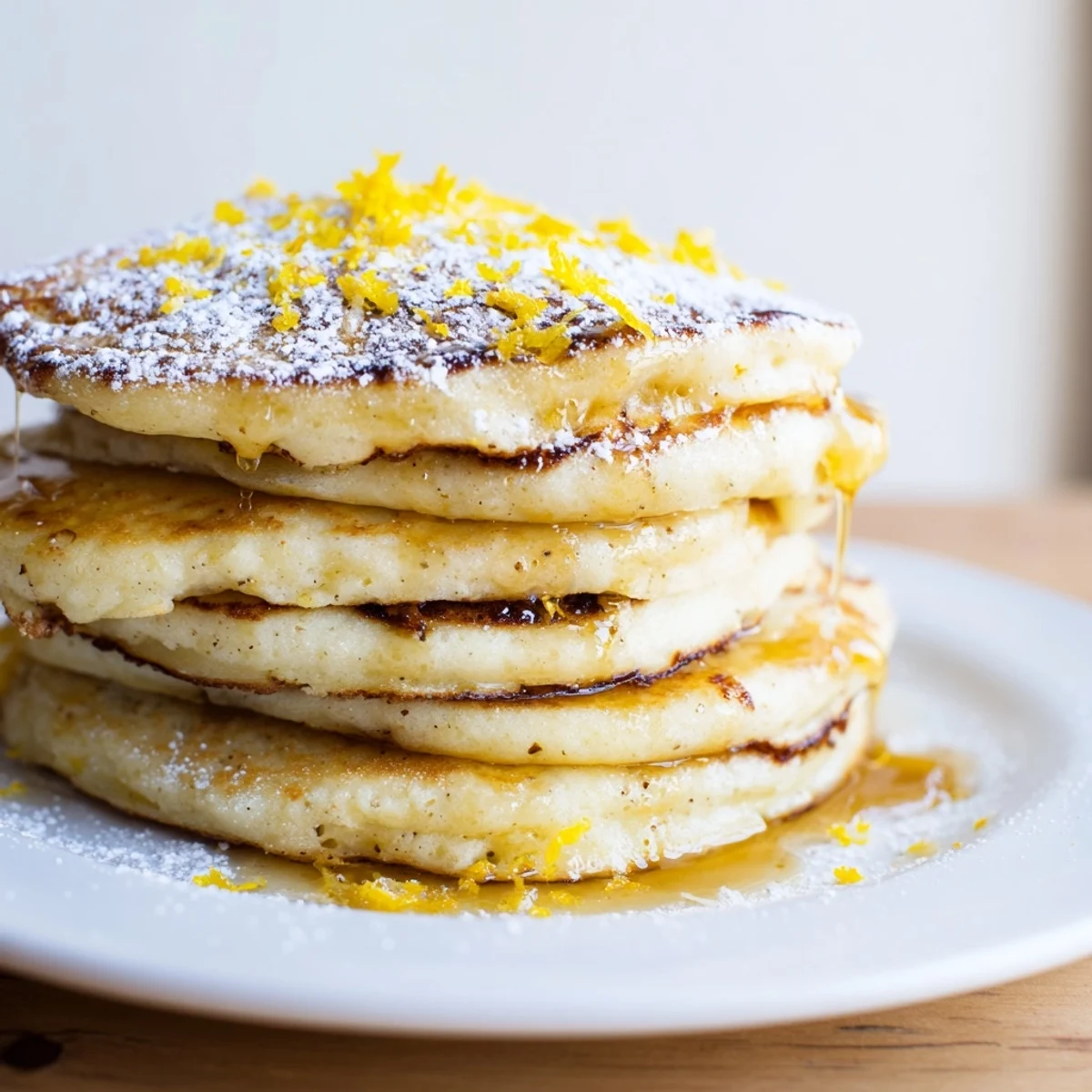
Save The real magic moment was watching someone take a second pancake without asking, and then a third, asking between bites what made them different. It felt like I'd discovered something rather than just followed a recipe, which is exactly how the best kitchen moments feel.
The Ricotta Difference
Ricotta isn't just a dairy ingredient here—it's a structural component that does something dairy-free or lower-fat alternatives can't quite match. When I tried cottage cheese once out of curiosity, the pancakes had a grainier texture that wasn't bad, just distinctly different. The creaminess of ricotta creates a tender crumb that holds together without being dense, which is why this recipe specifically calls for it.
Lemon: The Star Ingredient
The lemon isn't a supporting player here—it defines the entire dish, and getting it right changes everything. I learned this the hard way when I used zest from a lemon that had been sitting in my crisper for two weeks and wondered why the flavor felt muted. Fresh lemon, especially zest from fruit that still has fragrant skin, brings a brightness and energy that bottled juice simply cannot deliver. The juice itself balances the richness of the ricotta while the zest adds aroma and subtle texture.
Serving and Pairing
These pancakes are rich enough that you don't need a heavy hand with syrup—in fact, restraint is your friend here. Warm maple syrup pools beautifully between the stacked pancakes, and fresh berries add color and tartness that plays nicely against the lemon and ricotta. I've also finished them with a light dusting of powdered sugar and a drizzle of lemon curd, which feels almost luxurious for a weekday breakfast.
- Fresh blueberries or raspberries add tartness that complements the lemon without competing with it.
- A small pour of warm maple syrup (not drowning them) lets the lemon flavor stay front and center.
- If you make lemon curd at home, a spoonful on top turns these into something celebration-worthy.
 Save
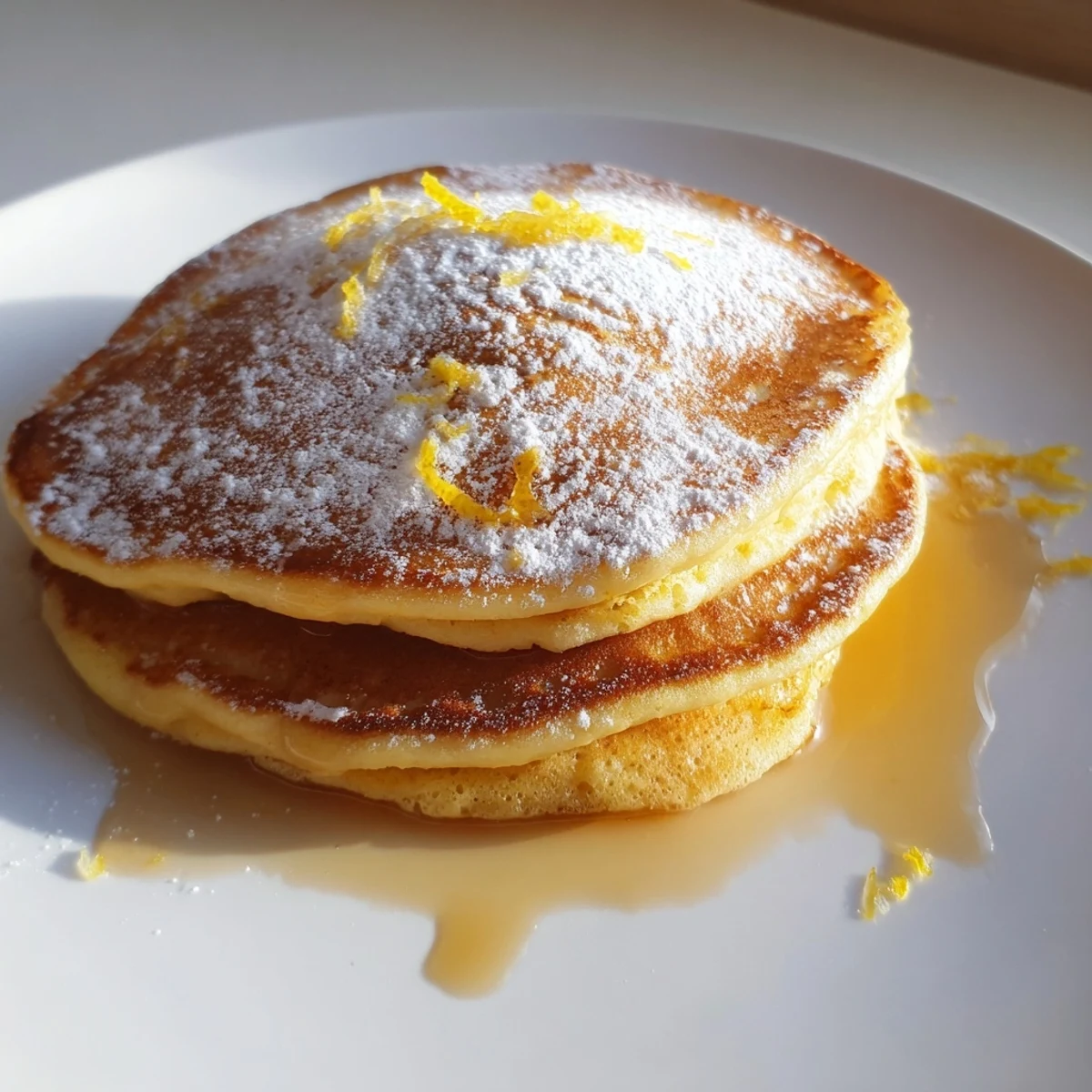
Save These pancakes have become my answer when someone asks what I'm making for a special breakfast, and they've never disappointed. There's something about the combination of technique, fresh ingredients, and that perfect balance of tangy and rich that makes them worth the small extra effort.
Recipe FAQs
- → How does ricotta affect pancake texture?
-
Ricotta adds moisture and creaminess, resulting in tender, fluffy pancakes with a slight richness that complements the lemon zest.
- → Can I substitute lemon juice with another citrus?
-
Yes, lime or orange juice can be used to add a different citrus brightness, though lemon provides the most balanced tang.
- → Why fold whipped egg whites into the batter?
-
Folding in whipped egg whites introduces air, making the pancakes lighter and fluffier without heaviness.
- → What’s the best way to cook these pancakes evenly?
-
Use a medium-heat nonstick skillet, lightly greased, and cook until bubbles form before flipping to achieve even golden browning.
- → Are there any good alternatives for all-purpose flour?
-
Gluten-free flour blends can replace all-purpose flour for a gluten-free version, though texture may vary slightly.
- → Can these pancakes be made ahead?
-
Yes, you can prepare the batter in advance and store it briefly in the refrigerator, though folding egg whites just before cooking yields best fluffiness.