
 Save
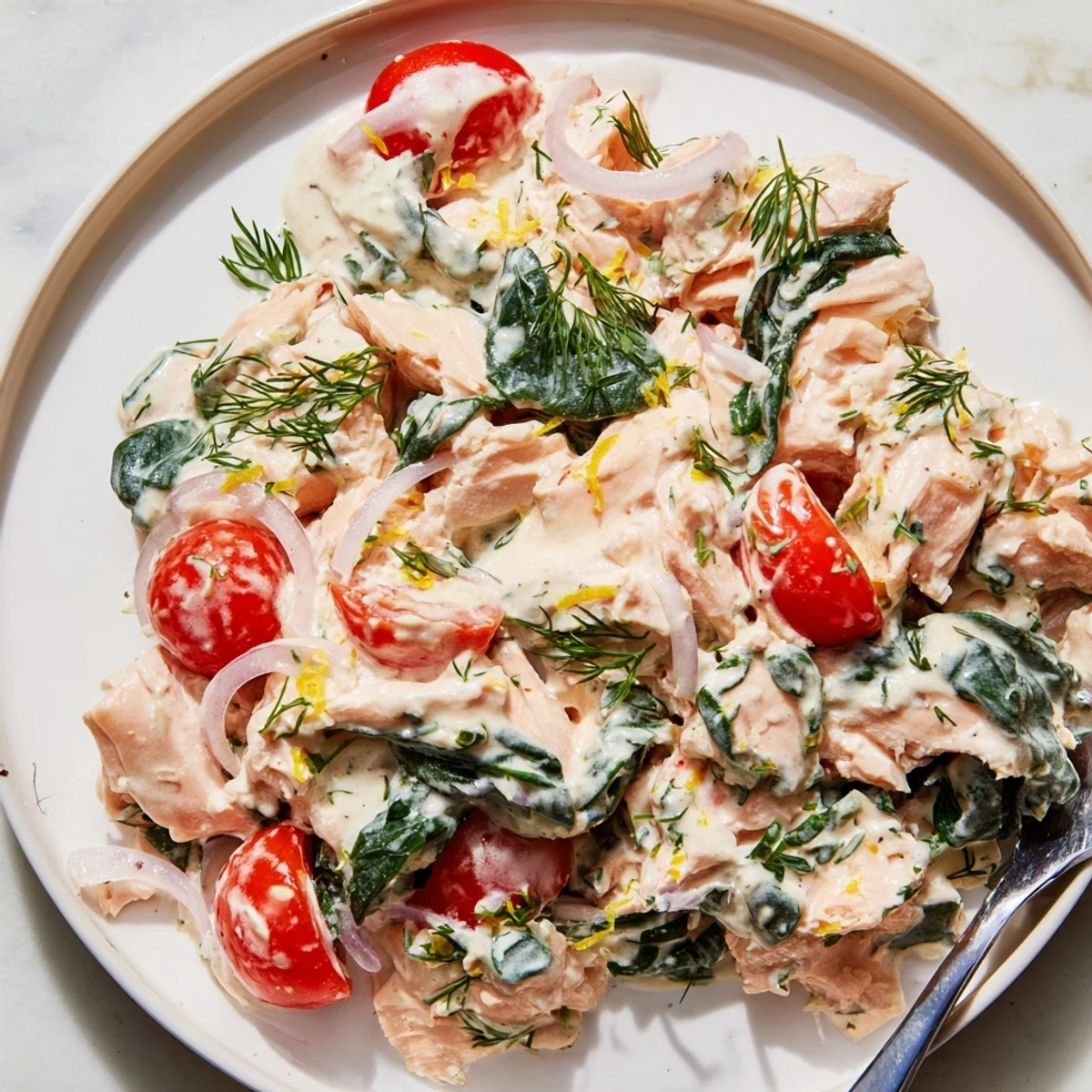
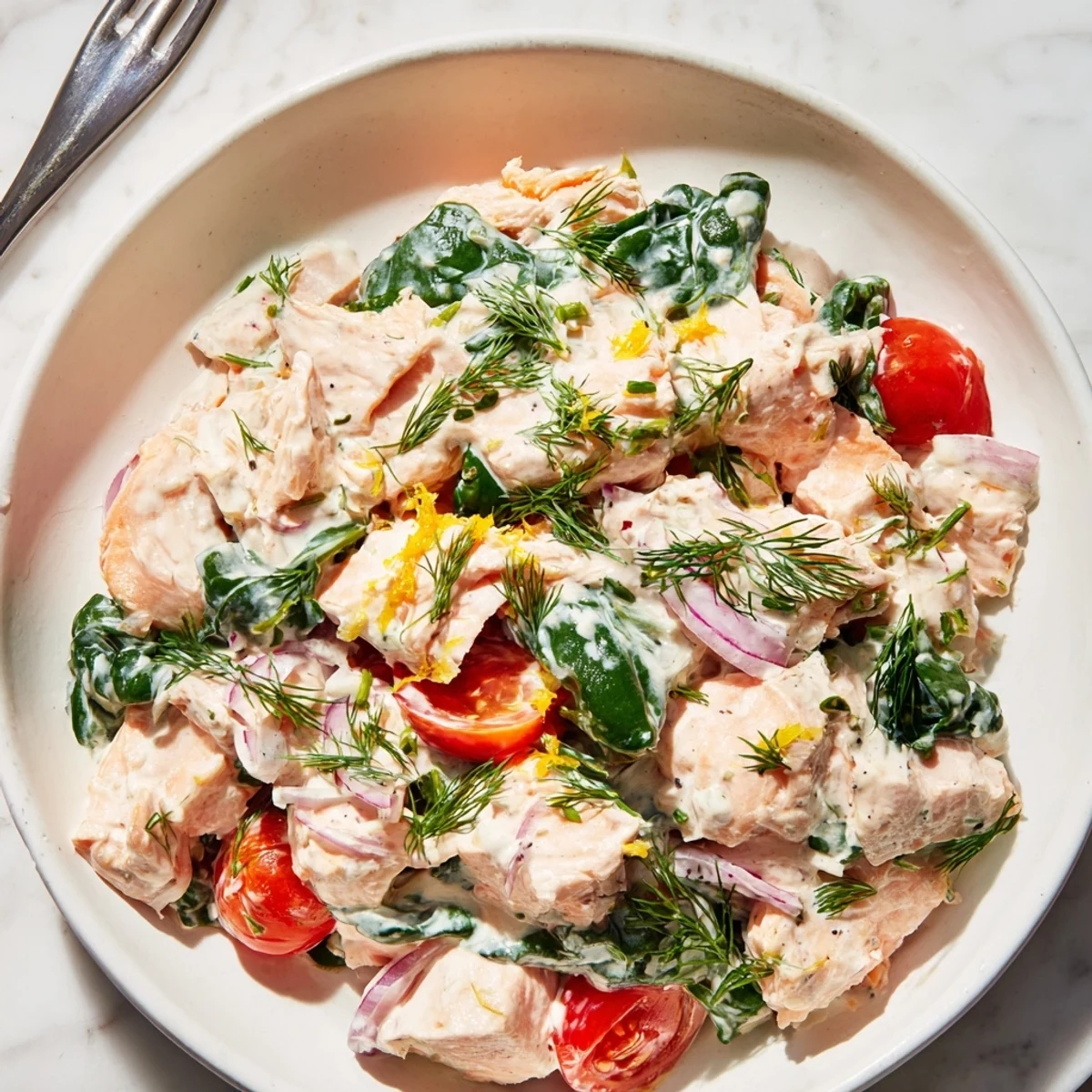
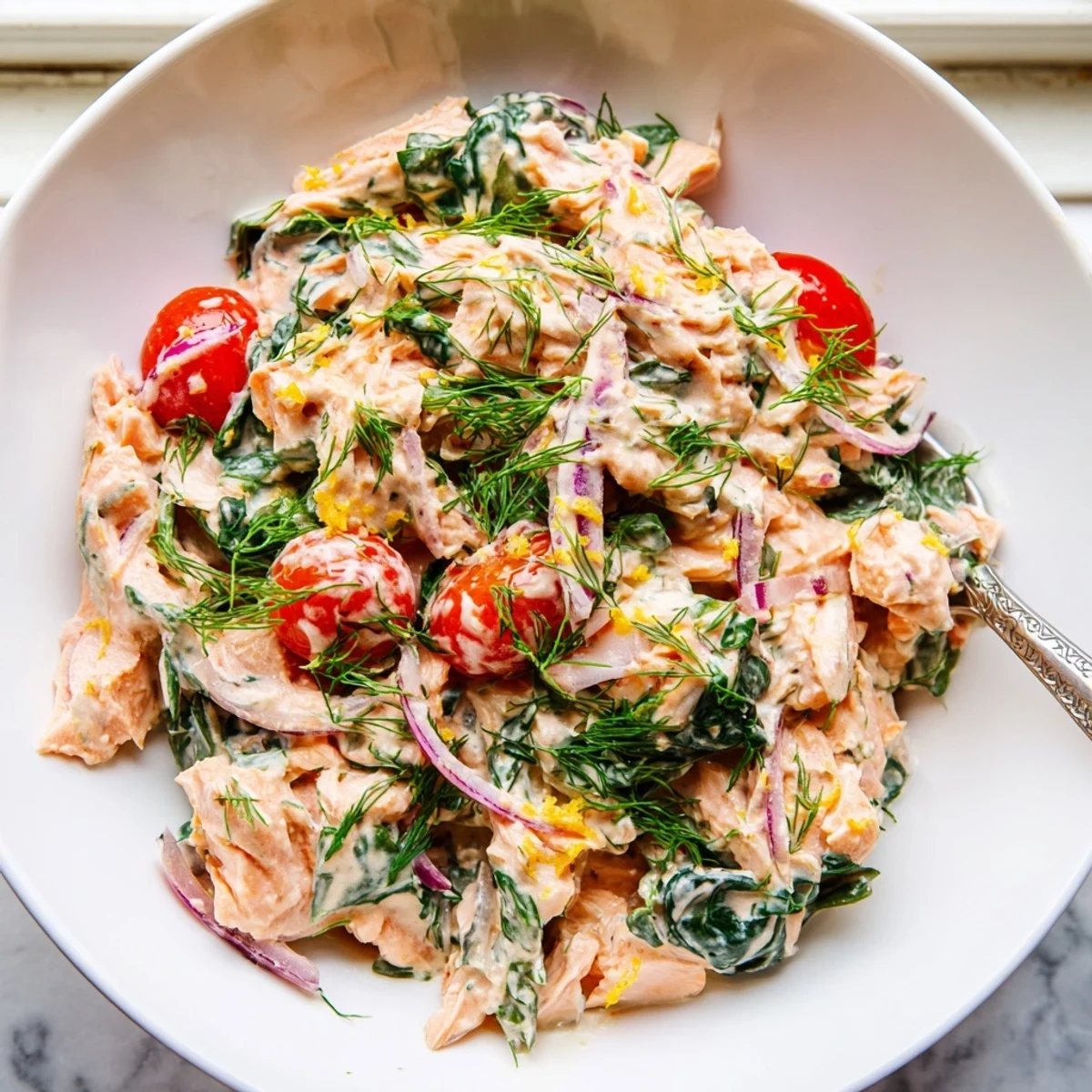
Save This healthy creamy salmon skillet turns yesterday's cooked salmon into a fresh, satisfying meal in just 25 minutes. Flaked salmon is gently warmed in a luscious sauce made from Greek yogurt and light cream cheese, then brightened with fresh dill and lemon.
Baby spinach and cherry tomatoes add color and nutrients, while keeping the dish low in carbs and high in protein at 32 grams per serving. It's an easy, one-pan meal that works beautifully for both lunch and dinner.
Serve it on its own for a light pescatarian-friendly dish, or ladle it over quinoa, rice, or whole-grain pasta for something more filling. At just 290 calories per portion, it's as wholesome as it is delicious.
There is something deeply satisfying about opening the fridge the day after a big salmon dinner and realizing the leftovers are begging for a second act. My friend Clara once declared that leftover fish is a tragedy, so I made this creamy skillet dish purely out of stubbornness to prove her wrong. She took one bite, went quiet, and asked for the recipe before her plate was empty. Now it shows up in my kitchen every time I have extra salmon sitting around.
I started making this on busy weeknights when my kids were small and I needed dinner on the table fast without complaints. The sizzle of onion hitting the pan would pull them into the kitchen every time, hovering over the stove and asking if it was ready yet.
Ingredients
- 2 cups cooked salmon (flaked, skin and bones removed): Leftover grilled or baked salmon works beautifully here, and flaking it into chunky pieces keeps the texture from turning mushy in the sauce.
- 1/2 cup Greek yogurt (or reduced-fat creme fraiche): This is the creamy base that replaces heavy cream, and full-fat Greek yogurt gives the richest result without the guilt.
- 1/4 cup light cream cheese (softened): Letting it come to room temperature before stirring prevents ugly lumps in your sauce.
- 1 cup baby spinach (chopped): A quick rough chop helps it wilt evenly and distribute throughout every bite.
- 1 cup cherry tomatoes (halved): Their natural sweetness balances the tang of lemon and yogurt perfectly.
- 1/2 small red onion (thinly sliced): Red onion adds a mild bite and pretty color contrast against the pink salmon.
- 1 clove garlic (minced): One clove is enough here since you want it as background notes, not the main event.
- 1/2 cup low-sodium chicken or vegetable broth: This thins the sauce just enough to coat everything without becoming soupy.
- 1 tablespoon fresh dill (chopped, or 1 teaspoon dried dill): Dill and salmon are a classic pairing for good reason, they bring out the best in each other.
- 1/2 teaspoon lemon zest: The oils in the zest give a brightness that juice alone cannot replicate.
- Juice of 1/2 lemon: A squeeze at the end wakes up every flavor in the pan.
- 1/4 teaspoon black pepper: Freshly cracked makes a real difference here.
- 1/4 teaspoon salt (to taste): Start light since the salmon and broth already carry salt.
- 2 tablespoons chives (chopped): A scatter of chives on top adds a gentle onion freshness and a pop of green.
- Cooked quinoa, rice, or whole-grain pasta (optional, for serving): A bed of grains turns this from a light lunch into a proper dinner.
Instructions
- Soften the aromatics:
- Heat your non-stick skillet over medium heat with a splash of oil or broth, then add the sliced red onion and minced garlic. Stir gently for about 2 to 3 minutes until the kitchen smells warm and inviting and the onion turns translucent at the edges.
- Wilt the greens and tomatoes:
- Toss in the chopped spinach and halved cherry tomatoes, stirring just until the spinach collapses and the tomatoes soften and release a bit of their juices. This should only take another 2 to 3 minutes, so keep an eye on it.
- Build the creamy sauce:
- Pour in the broth, then add the softened cream cheese and Greek yogurt, stirring constantly until everything melts together into a silky, unified sauce. It takes about 2 minutes and feels almost magical when it suddenly comes together.
- Fold in the salmon and seasonings:
- Gently add the flaked salmon along with the dill, lemon zest, lemon juice, salt, and pepper, folding carefully so the salmon chunks stay intact. Cook for 2 to 3 more minutes just until everything is heated through and fragrant.
- Taste, adjust, and serve:
- Give it a quick taste and add more salt or lemon if it needs a lift, then serve hot with chopped chives scattered over the top. Spoon it over quinoa, rice, or pasta if you want something more filling.
 Save
Save One rainy Tuesday I packed the leftovers of this into a thermos for a coworker who always skipped lunch, and she stopped me in the hallway the next morning to tell me it was the best thing she had eaten all month.
Swaps and Variations That Actually Work
Kale or Swiss chard can stand in for spinach if you want something heartier with a slightly bitter edge that plays well against the creamy sauce. Throwing in leftover roasted vegetables like broccoli or bell peppers from the night before adds fiber and turns this into more of a complete one-pan meal.
What to Serve Alongside
A glass of crisp Sauvignon Blanc cuts through the richness of the cream sauce and echoes the lemon in the dish beautifully. A simple side salad with vinaigrette also works if wine is not your thing.
Storage and Reheating Advice
This keeps well in an airtight container in the refrigerator for up to two days, though the spinach does lose some of its bright color by day two. Reheat gently on the stove over low heat rather than using the microwave, which can make the sauce separate.
- Stir in a tiny splash of broth while reheating to bring the sauce back to life.
- Dairy-free versions using plant-based yogurt and cream cheese freeze surprisingly well for up to a month.
- Always label your containers with the date because fish dishes do not last as long as you think they will.
 Save
Save This dish is proof that the best recipes are not always planned, sometimes they are born from whatever is sitting in your fridge waiting for a second chance. Keep it in your back pocket for those nights when cooking feels like a chore but eating well still matters.
Recipe FAQs
- → Can I use canned salmon instead of leftover cooked salmon?
-
Yes, drained canned salmon works well in this dish. Remove any skin and bones before flaking, and reduce the added salt slightly since canned salmon tends to be saltier than fresh cooked salmon.
- → How do I store and reheat leftovers?
-
Store any remaining salmon in an airtight container in the refrigerator for up to 2 days. Reheat gently in a skillet over low heat, adding a splash of broth to loosen the sauce. Avoid microwaving on high, as this can cause the yogurt sauce to separate.
- → What can I substitute for Greek yogurt?
-
Reduced-fat crème fraîche is a great alternative. For a dairy-free version, use an unflavored plant-based yogurt combined with a tablespoon of nutritional yeast for added richness and depth of flavor.
- → Can I add more vegetables to this dish?
-
Absolutely. Leftover roasted vegetables, sautéed mushrooms, zucchini, or bell peppers all pair nicely. Add heartier vegetables during step 2 so they have time to soften, and fold in delicate greens like arugula at the very end.
- → Is this dish suitable for meal prep?
-
This dish is best enjoyed fresh, as the creamy yogurt-based sauce can thin out after prolonged storage. If meal prepping, consider cooking the vegetables and sauce base ahead of time, then adding and warming the salmon just before serving.
- → What wine pairs well with creamy salmon?
-
A dry white wine like Sauvignon Blanc complements the creamy sauce and lemony notes beautifully. Pinot Grigio or an unoaked Chardonnay also work well. For a non-alcoholic option, try sparkling water with a squeeze of fresh lemon.