
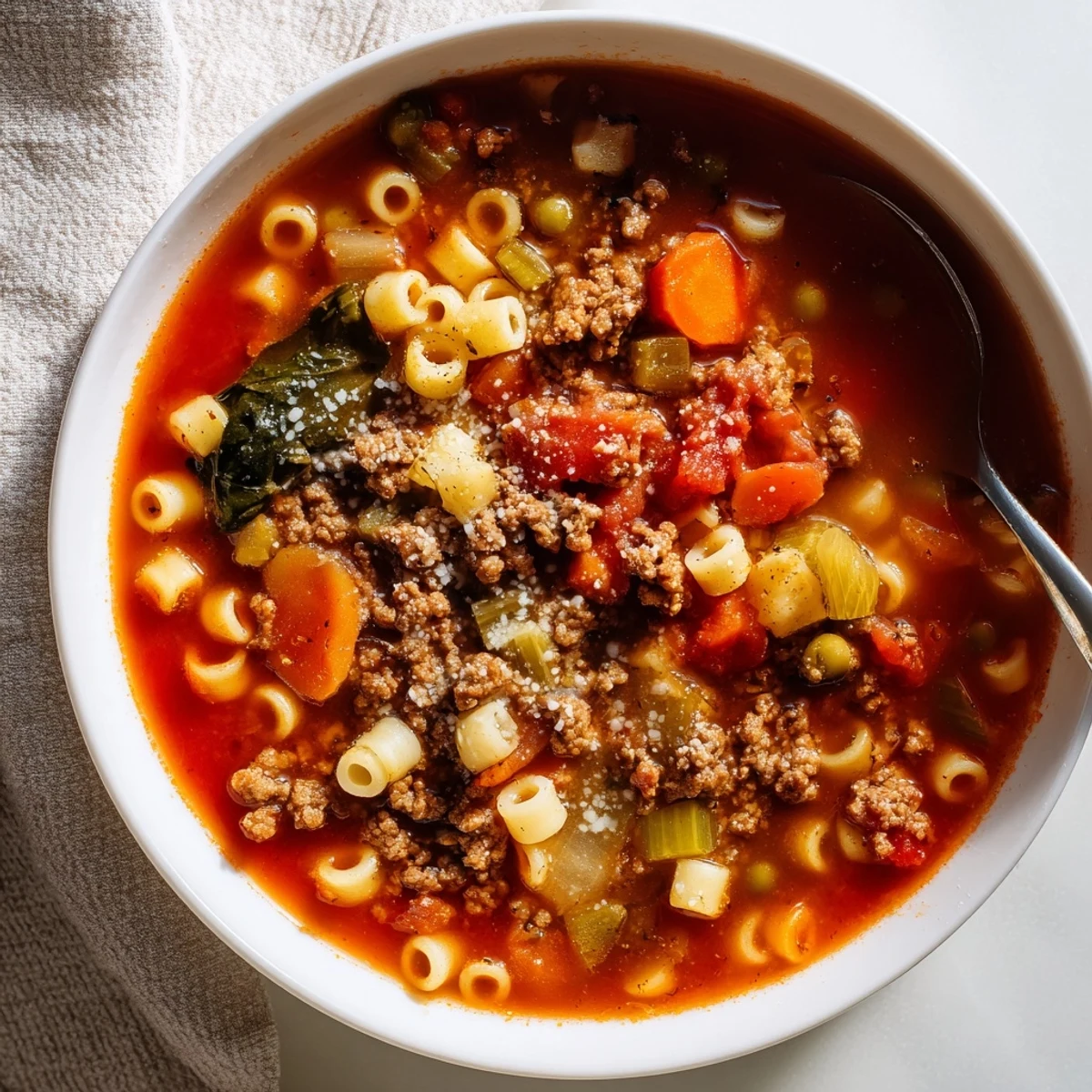
 Save
Save Brown ground beef in olive oil, then sauté onion, carrots and celery until softened. Add garlic and dried basil, oregano and thyme, stir in diced tomatoes, tomato sauce and beef broth and bring to a simmer. Add small pasta and cook until tender, stirring occasionally. Fold in frozen peas and baby spinach near the end. Season with salt and pepper, finish with grated Parmesan and serve hot with crusty bread. Ready in about 45 minutes for six servings.
The sound of onion sizzling in olive oil drew in my curious neighbor the other afternoon, beckoning him to peek and ask what was bubbling on my stove. That was the day I decided comfort would look like a pot full of ground beef pasta soup—thick with veggies, rich in aroma, nothing fussy. Sometimes all it takes is a cozy soup to transform a regular Tuesday. This recipe came together as a spontaneous effort to chase away the bite of winter.
I still laugh about the time I made this in a rush for a friend who dropped by, and we ended up arguing about who got the last bowl. There’s something about stirring pasta shells into simmering broth while swapping stories that makes me feel like I’m cooking at home, no matter where I am.
Ingredients
- Ground beef: Go for 80/20 if you want a hearty, beefy flavor—browning until just crisp boosts savory depth.
- Onion: Dice it small for sweetness that melts into the broth and doesn’t stand out if you have picky eaters.
- Carrots: Sliced thin, they soften perfectly without losing their color or becoming mushy.
- Celery: Adds the best background crunch, so I always slice on the bias to keep pieces tender yet interesting.
- Garlic: Freshly minced garlic gives the soup earthy deliciousness—wait to add it until the veggies have sweated down.
- Canned diced tomatoes: For convenience and acid balance; use fire-roasted for a stronger flavor if you like.
- Frozen peas: Toss these in at the end for little bursts of sweetness and bright green pings.
- Baby spinach (optional): A soft handful wilts down without drama, sneaking in nutrients without changing texture much.
- Pasta shells or ditalini: Their small size means each spoonful is packed with pasta and they hold up during reheating.
- Beef broth: Choose low-sodium broth so you can control the final seasoning and get just enough savoriness.
- Tomato sauce: Marries the soup base so it’s velvety, with a subtle tang—no need to simmer all day.
- Dried basil, oregano, thyme: Sprinkle these in to echo the classic “Italian beef soup” vibe but tweak amounts to your taste.
- Salt and pepper: Save these for the finish—they tie everything together and let you fine-tune the flavor.
- Olive oil: The first ingredient to hit the pot, it melts the aromatics and makes a world of difference in richness.
- Grated Parmesan (optional): Right at the table, a generous pinch ties the bowl together with creamy salt—skip it if you’re dairy-free, the soup stands on its own.
Instructions
- Brown the beef:
- Heat olive oil in your largest soup pot over medium. Add ground beef and cook until it smells deeply savory and the edges are crisping; break it up with a wooden spoon and spoon off extra fat if needed.
- Sauté the veggies:
- Tip in onion, carrots, and celery. Stir and let them soften for 4-5 minutes—the kitchen will start to smell gently sweet.
- Add garlic and herbs:
- Stir in minced garlic, basil, oregano, and thyme; let them bloom just until fragrant, about a minute, so you catch the scent before anything browns.
- Simmer with tomatoes and broth:
- Pour in diced tomatoes, tomato sauce, and beef broth, then bring everything to a gentle simmer. You’ll see the broth deepen in color and tiny bubbles at the edge of the pot.
- Cook the pasta:
- Stir in your pasta, making sure none stick to the bottom. Simmer uncovered for 10 minutes—test a few for doneness around minute 8 so you catch them while tender.
- Finish with peas and spinach:
- In the last 2-3 minutes, drop in peas and the optional spinach. Cook until the spinach wilts and vegetables are just soft but still bright.
- Season and serve:
- Check the salt and pepper, then adjust as needed. Ladle into bowls and top with a generous grating of Parmesan if you like before diving in while it’s steamy.
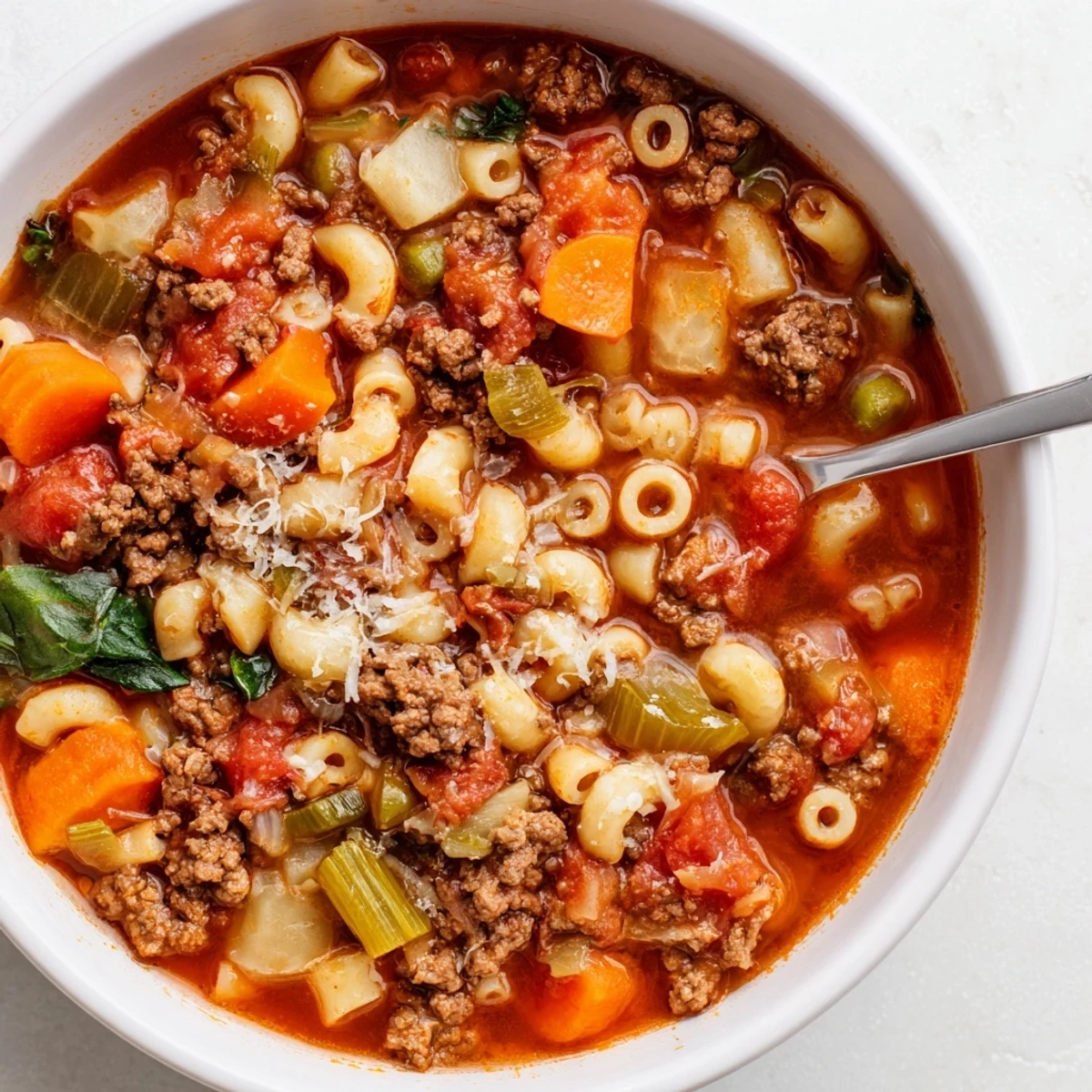 Save
Save Sharing this soup at a noisy table last autumn, I realized it’s my failsafe for bringing everyone together. There’s something disarming about passing around hot bowls and letting the world slow down for just a moment.
Choosing Your Pasta Shapes
I’ve tried this with everything from elbows to broken spaghetti, but small pasta just scoops up more flavor in each bite. If you’re out of shells or ditalini, orzo even works—just watch the cook time and stop before they become mushy.
Making It Ahead and Reheating
This soup absolutely gets deeper and richer after a night in the fridge. If leftovers have soaked up broth, just add a splash more before reheating to loosen things back up.
Clever Swaps and Add-Ins
You’re free to riff on this recipe: toss in some chopped zucchini during the veggie step, or try ground turkey for a lighter dish. If you’re feeling adventurous, a pinch of red pepper flakes lends subtle heat without overpowering the comforting flavors.
- Always wait until the last minute to add spinach for brightest color.
- Those on dairy-free diets should skip Parmesan—extra cracked pepper works magic instead.
- Remember to taste and adjust salt near the end, since pasta and veggies mellow the broth over time.
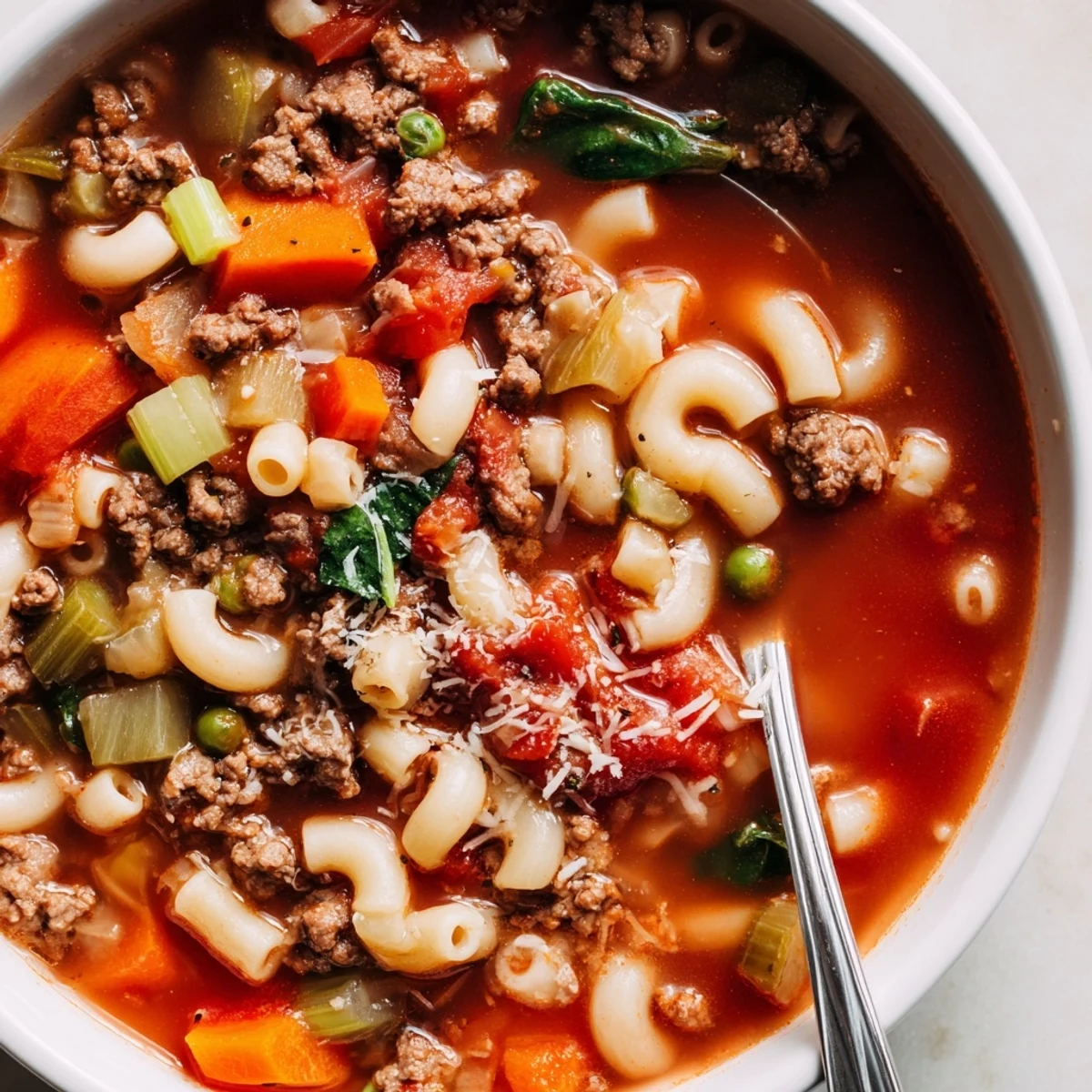 Save
Save Here’s hoping this pot of soup brings warmth to your kitchen and laughter to your table—just as it has for mine.
Recipe FAQs
- → Can I substitute a different ground meat?
-
Yes. Swap ground beef for ground turkey or chicken for a leaner result; cook until browned and adjust seasoning and broth as needed to maintain flavor and moisture.
- → Which pasta shapes work best?
-
Small shapes like ditalini, small shells or elbows work well because they hold broth and mix easily with the vegetables. Slightly undercook pasta if you plan to store leftovers to prevent mush.
- → How can I thicken the broth if it’s thin?
-
Simmer uncovered to reduce and concentrate flavors, or whisk a cornstarch slurry into a bit of cold water and stir it in until the broth thickens. A spoonful of tomato paste also adds body.
- → What’s the best way to store and reheat leftovers?
-
Cool within two hours, refrigerate up to 3–4 days or freeze up to 3 months. Reheat gently on the stove over medium-low heat, adding a splash of broth if the pasta has absorbed too much liquid.
- → How can I make a vegetarian version?
-
Use plant-based crumbles or a mix of sautéed mushrooms and lentils, and substitute vegetable broth. Boost umami with soy sauce, miso, or a splash of Worcestershire (vegetarian version) to replace beefy depth.
- → Any seasoning tips to brighten the flavors?
-
Taste and adjust salt after the pasta cooks, as starch can mute seasoning. Finish with freshly grated Parmesan and a squeeze of lemon or a few fresh herbs to lift the flavors.