
 Save
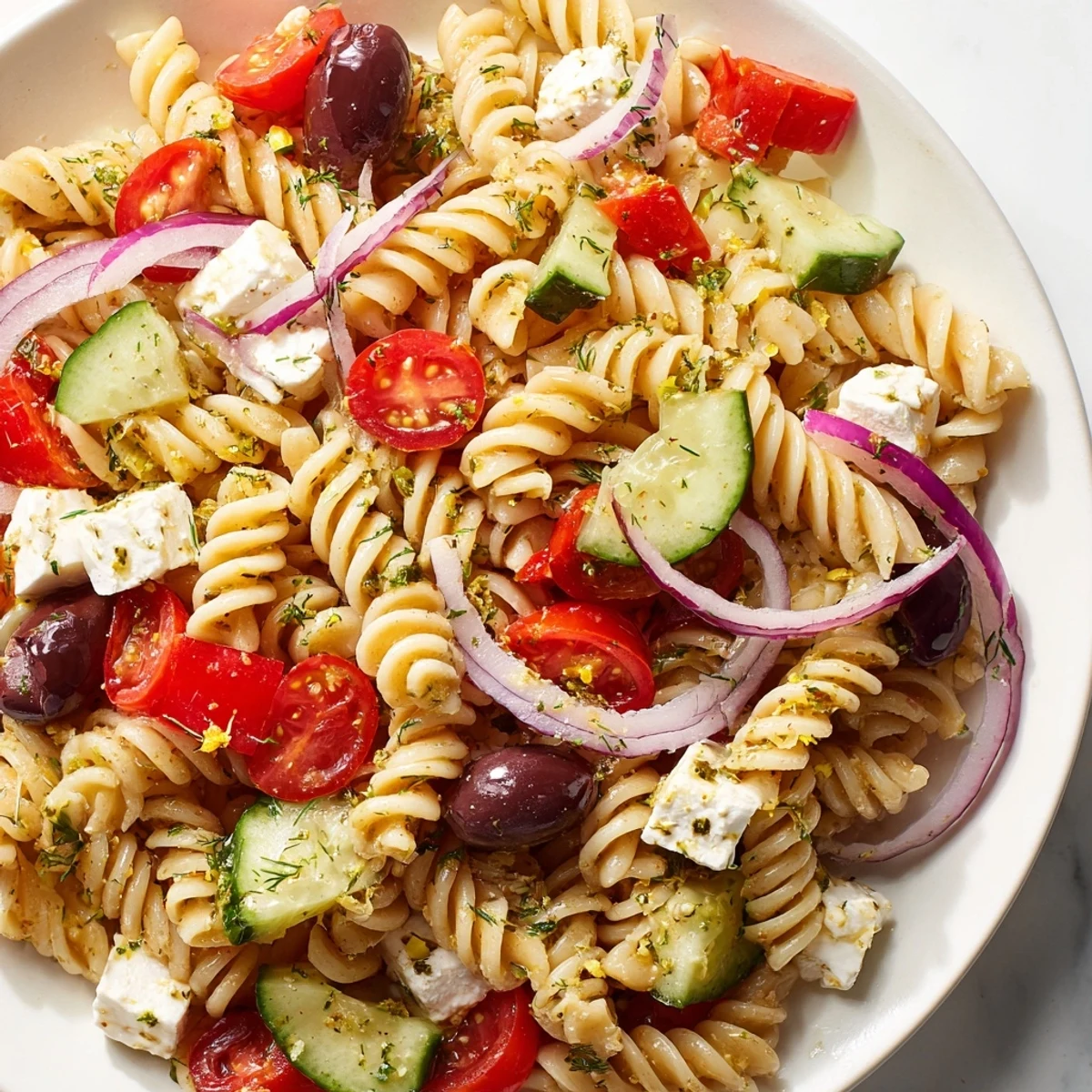
Save This Greek pasta salad brings together al dente short pasta with crisp cucumbers, juicy cherry tomatoes, tangy feta cheese, and briny Kalamata olives in a bright lemon-oregano dressing.
Ready in just 30 minutes with only 10 minutes of cooking, it's an effortless dish perfect for potlucks, picnics, or a light vegetarian lunch.
The homemade dressing—extra virgin olive oil, red wine vinegar, garlic, and lemon zest—ties everything together with authentic Mediterranean flavor.
The screen door slammed shut behind me as I carried a bowl of this Greek pasta salad to a friends rooftop potluck one July evening and someone actually stopped mid sentence to ask what smelled so good. That tangy lemon oregano dressing has a way of traveling on warm air and making people curious. It has been my go to dish for gatherings ever since because it asks for almost nothing in effort but gives back everything in flavor.
My neighbor Elena once watched me toss this together in ten minutes flat and refused to believe there was no secret ingredient beyond patience and decent olive oil.
Ingredients
- 300 g short pasta (penne, rotini, or fusilli): The ridges on rotini catch every bit of dressing so I always reach for it first.
- 1 English cucumber, diced: English cucumbers have fewer seeds and less water which keeps the salad from getting soggy.
- 1 red bell pepper, diced: Cut it small so every forkful gets a sweet crunch.
- 200 g cherry tomatoes, halved: Cherry tomatoes hold their shape better than larger ones which break down and make everything watery.
- 1 small red onion, thinly sliced: Soak the slices in cold water for five minutes if you find raw onion too sharp.
- 100 g Kalamata olives, pitted and halved: Do not skip pitting them yourself because pre pitted olives lose a lot of texture and flavor.
- 150 g feta cheese, cubed or crumbled: A block of feta cubed into chunks gives you creamy pockets throughout rather than an even salty dust.
- 2 tbsp fresh parsley, chopped: Flat leaf parsley adds a fresh grassy note that balances the briny olives.
- 1 tbsp fresh dill, chopped: Optional but it brings a subtle brightness that makes the whole salad taste more Greek.
- 4 tbsp extra virgin olive oil: Use the good stuff here because the dressing is raw and the flavor shines through.
- 2 tbsp red wine vinegar: The acidity cuts through the richness of the feta and oil perfectly.
- 1 tsp dried oregano: Rub it between your palms before adding to release the essential oils.
- 1 garlic clove, minced: One clove is enough because raw garlic can quickly overwhelm a cold salad.
- Salt and pepper to taste: Feta and olives are already salty so taste before adding more salt.
- Zest of 1 lemon: This is the quiet hero that makes the dressing taste sunny and alive.
Instructions
- Cook and cool the pasta:
- Boil the pasta in well salted water until just al dente then drain and rinse under cold running water until completely cool so it stops cooking and does not turn mushy.
- Bring the salad together:
- In your largest bowl combine the cooled pasta with the diced cucumber, red bell pepper, halved cherry tomatoes, sliced red onion, and halved Kalamata olives.
- Whisk the dressing:
- In a small bowl combine the olive oil, red wine vinegar, dried oregano, minced garlic, salt, pepper, and lemon zest then whisk until the mixture looks slightly thickened and emulsified.
- Dress everything generously:
- Pour the dressing over the salad and toss with a large spoon until every piece of pasta and vegetable glistens evenly.
- Add the finishing touches:
- Gently fold in the feta cheese, chopped parsley, and dill with a light hand so the feta cubes stay intact rather than crumbling into nothing.
- Taste and chill:
- Give it a final taste and adjust the salt or vinegar if needed then refrigerate for at least fifteen minutes so the flavors settle and marry.
 Save
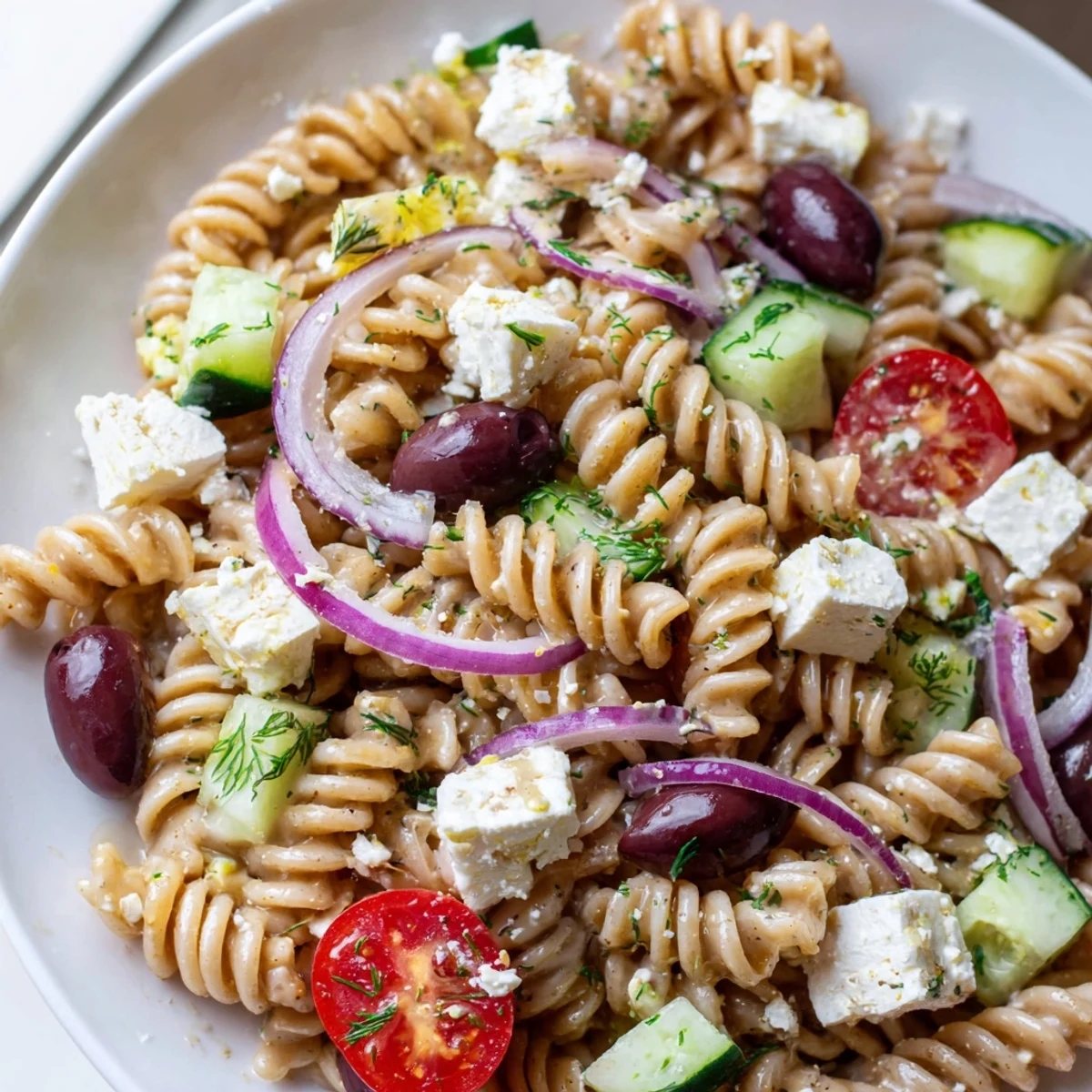
Save There is something deeply satisfying about pulling a colorful bowl of this from the fridge when friends drop by unexpectedly and watching them hover around the kitchen counter eating straight from the serving spoon.
Making It Your Own
Toss in a handful of chickpeas or some grilled chicken strips if you want to make it a full meal rather than a side dish. Artichoke hearts and sun dried tomatoes also slide right in without changing the character of the salad.
Serving and Storing
This salad is at its best served chilled alongside crusty bread and a glass of something crisp and dry like a Sauvignon Blanc. It keeps beautifully in the refrigerator for up to a full day though the vegetables will soften slightly overnight.
Tools and Allergen Notes
You do not need much beyond a large pot, a colander, a big bowl, and a knife to pull this off on any weeknight.
- If gluten is a concern use a chickpea or rice based pasta and the rest of the recipe stays exactly the same.
- Check the labels on your olives and feta because some brands hide unexpected allergens or additives.
- A fork works just as well as a whisk if you do not have one handy.
 Save
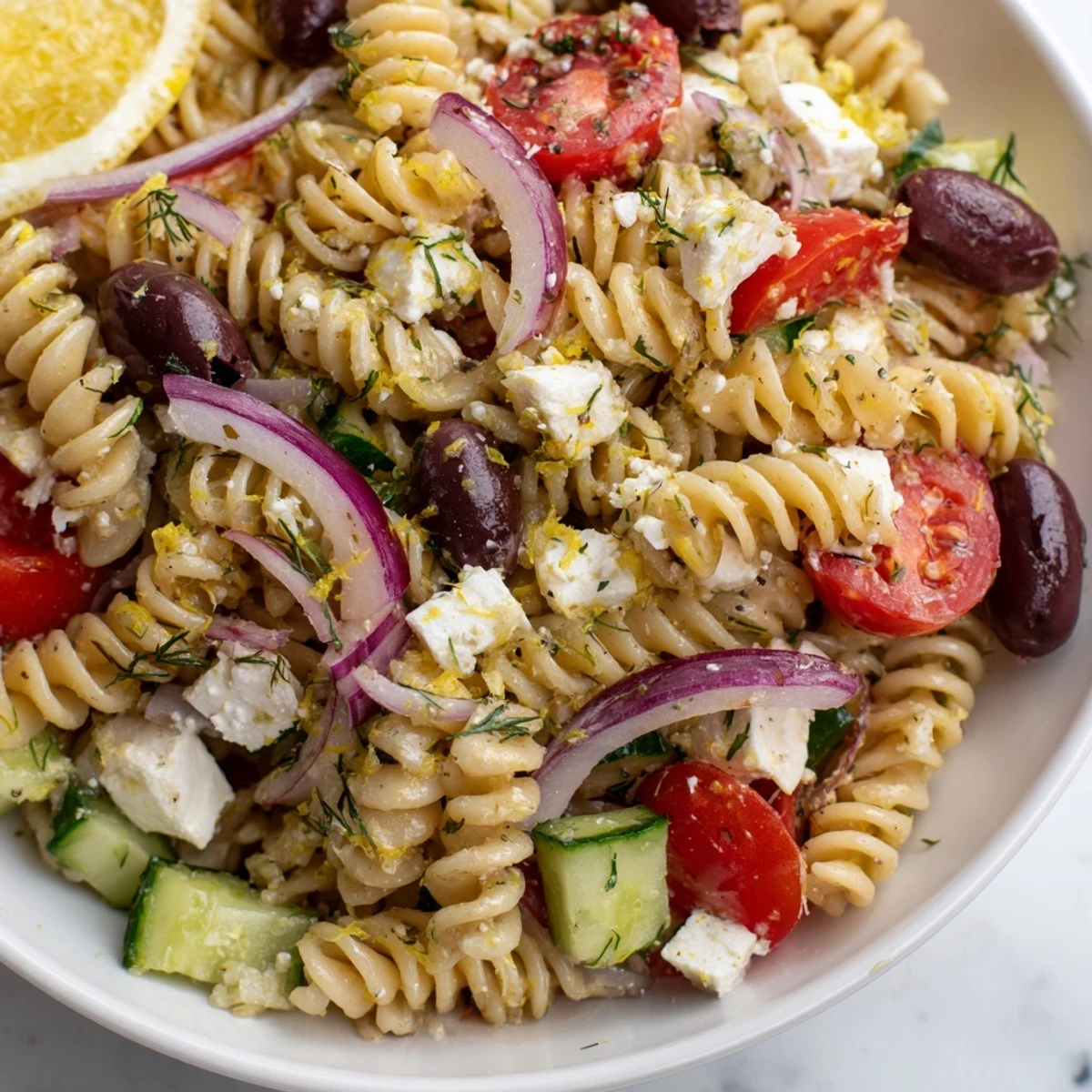
Save Keep this recipe close because it will rescue you from more last minute dinner dilemmas than almost anything else in your repertoire. A bowl of it on a summer table is really all you need.
Recipe FAQs
- → Can I make Greek pasta salad ahead of time?
-
Yes, this salad actually tastes better when made ahead. You can prepare it up to 24 hours in advance and store it covered in the refrigerator. The flavors meld together beautifully as it chills.
- → What type of pasta works best?
-
Short pasta shapes like penne, rotini, or fusilli are ideal because they hold the dressing well and mix evenly with the vegetables. Their ridges and curves catch every bit of the zesty vinaigrette.
- → How should I store leftover pasta salad?
-
Store leftovers in an airtight container in the refrigerator for up to 3 days. Give it a good toss before serving again, and you may want to add a small drizzle of olive oil and a squeeze of lemon to refresh the flavors.
- → Can I add protein to make it more filling?
-
Absolutely. Grilled chicken breast, chickpeas, or even canned tuna pair wonderfully with the Greek flavors. For a heartier dish, add about 200 g of cooked protein per batch.
- → Is there a dairy-free alternative to feta?
-
You can substitute feta with dairy-free cheese alternatives or increase the olives and add capers for a similar briny, salty kick. Marinated tofu cubes also work well as a protein-rich, dairy-free option.
- → Why should I rinse the pasta in cold water?
-
Rinsing cooked pasta under cold water stops the cooking process immediately, keeping it perfectly al dente. It also cools the pasta down so it won't wilt the fresh vegetables or melt the feta when mixed together.