 Save
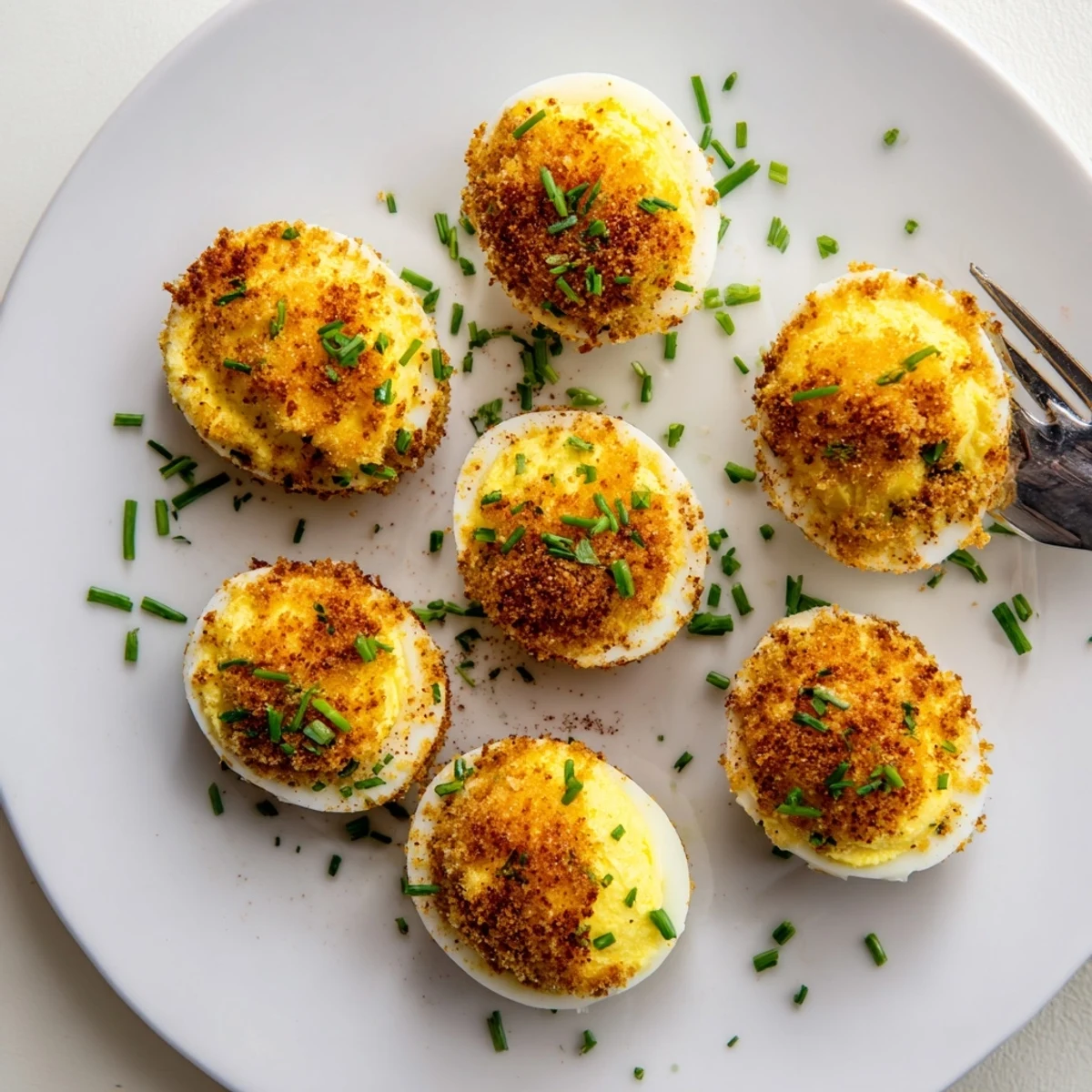
Save These fried deviled eggs transform the classic party appetizer with a crispy panko crust and golden exterior. The method starts with perfectly hard-boiled eggs, sliced and filled with a creamy yolk mixture blended with mayonnaise, Dijon mustard, white wine vinegar, and fresh chives. Each filled half gets dredged in flour, dipped in egg, and coated with paprika-seasoned panko breadcrumbs before a quick chill to set the coating.
Fried at 350°F until golden brown, these crispy morsels develop a satisfying crunch that contrasts beautifully with the smooth, tangy filling. The optional cayenne adds gentle warmth, while extra chives provide fresh color and onion flavor. Serve them immediately while hot and crispy for the best experience—they're guaranteed to disappear quickly from any appetizer spread.
The first time I served these at a summer potluck, my friend Sarah actually stopped mid conversation and demanded to know what kind of magic I had worked on ordinary deviled eggs. The crunch when you bite through that golden panko crust changes everything people think they know about this classic appetizer.
Last Thanksgiving I made three dozen of these, and honestly they disappeared faster than the turkey. My cousin Mark, who claims to hate deviled eggs of any kind, ate five and kept hovering around the platter until I literally had to shoo him away from the kitchen island.
Ingredients
- 6 large eggs: Use eggs that have been in your fridge at least a week, they peel so much cleaner after boiling
- 1 cup all-purpose flour: This first dusting helps the egg wash stick and creates a solid foundation for the breading
- 2 large eggs: Room temperature eggs whisk up better for dredging and create a more even coating
- 1 cup panko bread crumbs: These Japanese breadcrumbs are coarser than regular ones, giving you that restaurant quality crunch we are after
- 1/2 teaspoon paprika: Smoked paprika adds a subtle depth, but regular works perfectly fine too
- 1/2 teaspoon salt: Since the filling gets seasoned separately, go light here to avoid over salting
- 1/4 teaspoon black pepper: Freshly ground makes a noticeable difference in the breading
- 3 tablespoons mayonnaise: Real mayo, not miracle whip, gives the filling that velvety texture we want
- 1 teaspoon Dijon mustard: The sharpness cuts through the richness and adds complexity
- 1 teaspoon white wine vinegar: This brightens the whole filling and balances the heavy mayo
- 1/4 teaspoon cayenne pepper: Even if you are heat sensitive, this tiny amount provides background warmth without fire
- 1 tablespoon finely chopped chives: Fresh chives add mild onion flavor and beautiful green flecks throughout
- Vegetable oil: Canola or neutral oil works best, olive oil can burn at frying temperatures
Instructions
- Perfect your hard boiled eggs:
- Place the 6 eggs in a saucepan and cover with cold water by about an inch. Bring to a full rolling boil, then immediately reduce heat to a gentle simmer and cook for exactly 10 minutes. Meanwhile, prepare a bowl with ice and water. Transfer the eggs directly into the ice bath and let them cool completely before attempting to peel.
- Prep the whites and yolks:
- Slice each peeled egg in half lengthwise with a sharp knife, using a gentle sawing motion to keep the whites intact. Carefully pop the yolks into a medium bowl while setting the white halves aside on a plate. Take your time here, torn whites will not hold the filling properly during frying.
- Mix the silky filling:
- Mash the yolks thoroughly with a fork until completely broken down. Add the mayonnaise, Dijon mustard, white wine vinegar, cayenne pepper, chopped chives, and salt and pepper to taste. Keep mixing until absolutely smooth with no lumps remaining. The filling should be creamy and pipeable, not dry or crumbly.
- Fill the egg whites:
- Spoon the yolk mixture back into each egg white half, mounding it slightly above the edges. You can also use a piping bag fitted with a large star tip for a more polished look. If any filling falls off during breading, just pat it back gently with your fingers.
- Set up your breading station:
- Arrange three shallow dishes in a row on your counter. Place the flour in the first dish. Beat the 2 dredging eggs in the second dish until well combined. Mix the panko, paprika, salt, and black pepper in the third dish. Having this organized before you start prevents messy cross contamination.
- Bread each filled egg:
- Carefully dredge each filled egg half in the flour, shaking off any excess. Dip it into the beaten egg, letting any surplus drip away. Finally press it firmly into the panko mixture, coating completely. Place the breaded eggs on a plate and refrigerate for 10 to 15 minutes before frying, this helps the coating adhere.
- Heat the oil properly:
- Pour enough vegetable oil into a large skillet to reach about 1 inch up the sides. Heat over medium high heat until it reaches 350°F, which you can test by dropping in a small piece of bread, it should bubble and turn golden in about 30 seconds. Proper oil temperature prevents greasy results.
- Fry to golden perfection:
- Working in batches of 4 or 5 at a time, carefully place the breaded eggs in the hot oil with the filling side facing up. Fry for 2 to 3 minutes until deeply golden brown, using tongs to gently turn them for even color. Transfer to paper towels to drain while you fry the remaining eggs.
- Finish and serve immediately:
- Sprinkle the hot fried deviled eggs with extra fresh chives for color. Serve them right away while that crust is still shatteringly crisp and the filling is warm. These are worth the effort, I promise.
 Save
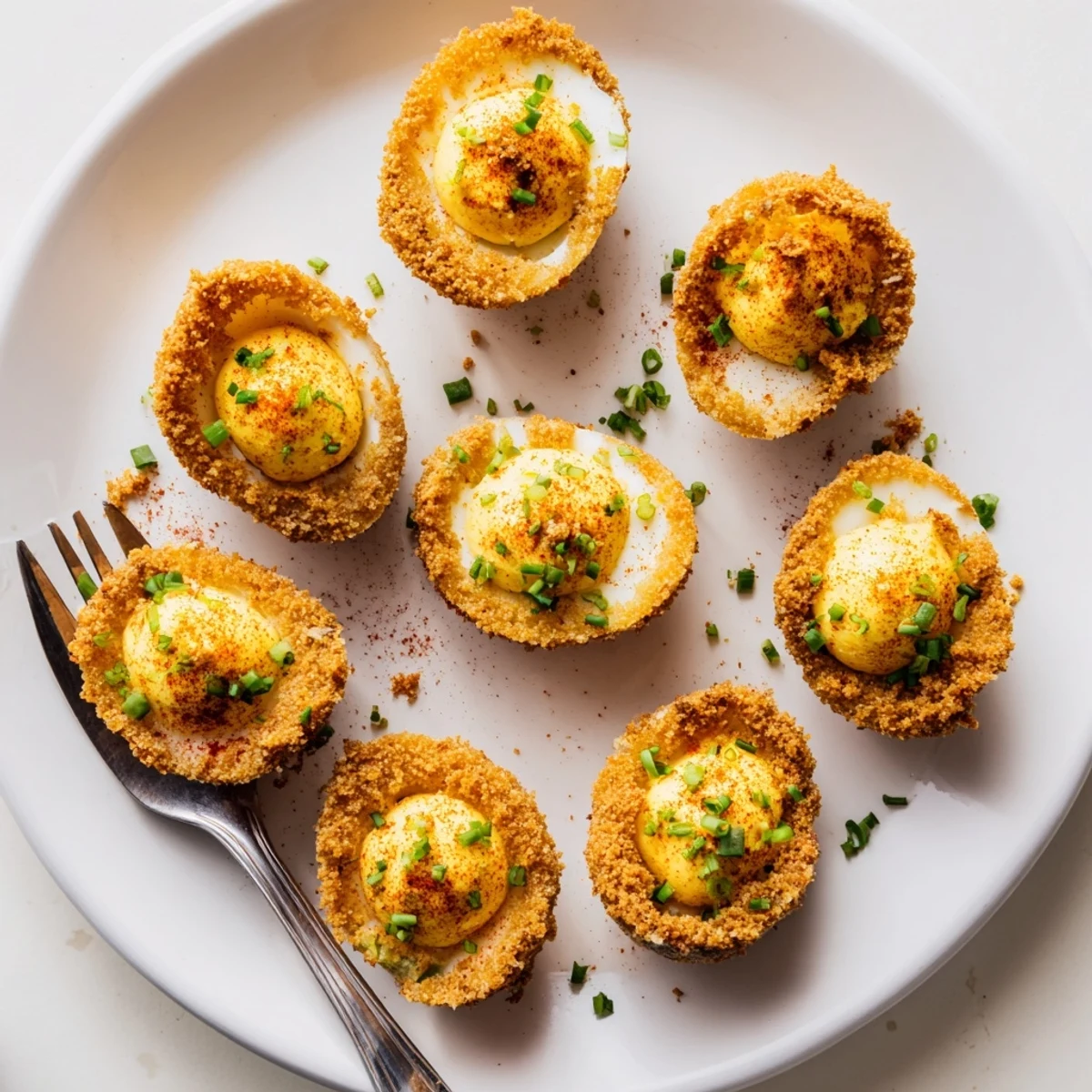
Save These have become my go to dish whenever I need to impress but do not want to spend hours in the kitchen. Something about that hot, crispy exterior meeting the cool, creamy center just makes people happy in a way that regular appetizers never quite achieve.
Make Ahead Strategy
You can boil, peel, fill, and bread the eggs up to 24 hours in advance. Store them uncovered on a baking sheet in the refrigerator so the breading does not get soggy. Fry them just before serving, and they will taste freshly made.
Oil Temperature Matters
If your oil is not hot enough, the eggs will absorb too much grease and turn heavy. But if it is too hot, the coating will burn before the inside heats through. I keep an instant read thermometer near the stove for precision frying every time.
Serving Suggestions
These fried deviled eggs work beautifully as passed appetizers at cocktail parties or as a stunning first course. Set up a small dipping station with sriracha mayo or garlic aioli on the side, though they are absolutely perfect on their own.
- A light, crisp white wine cuts through the richness beautifully
- These pair surprisingly well with cold beer for casual gatherings
- Consider making double what you think you need, they disappear fast
 Save
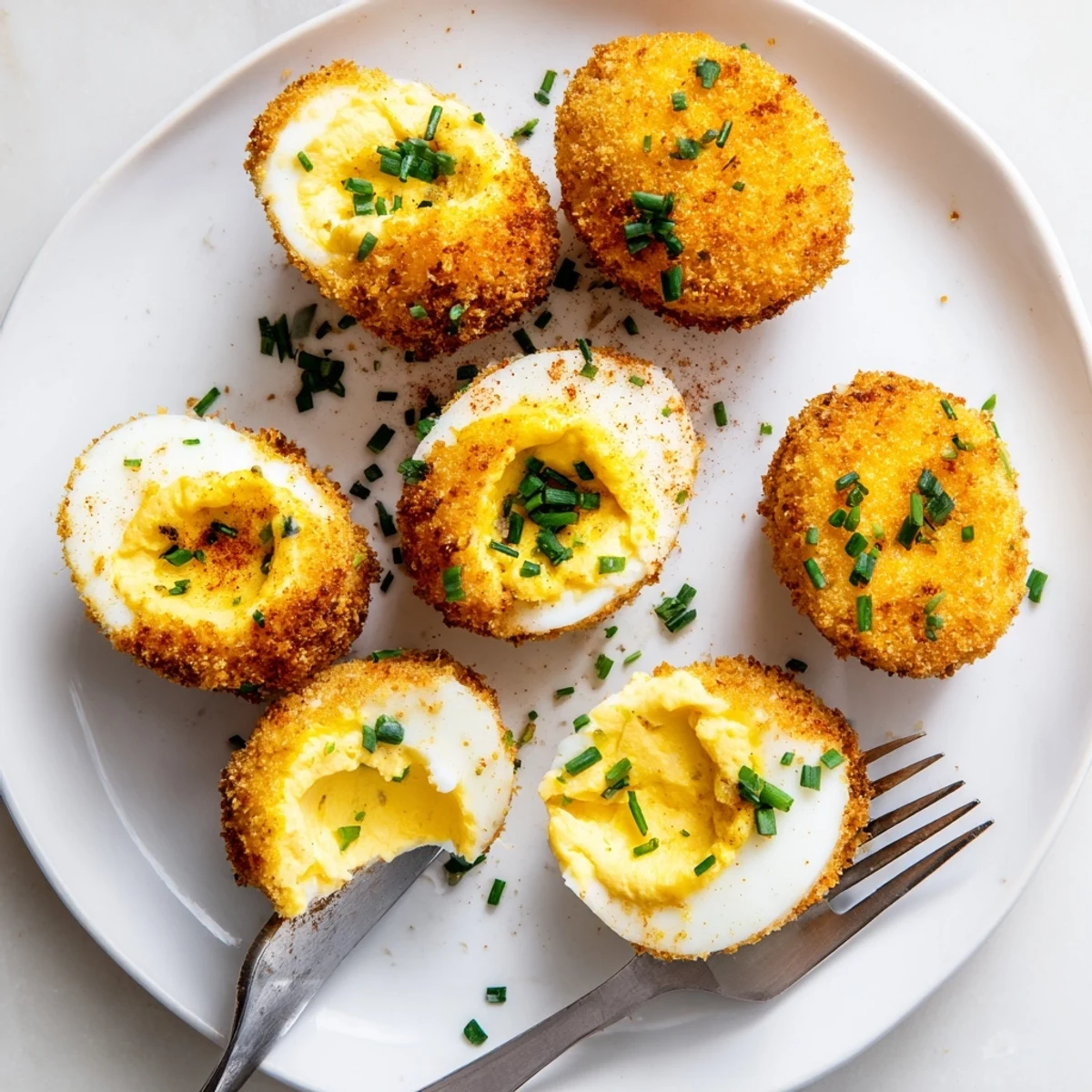
Save Every time I make these, I am reminded why the effort is worth it, watching friends take that first curious bite and seeing their eyes light up. That moment of surprise and delight is what cooking is all about.
Recipe FAQs
- → How do I prevent the filling from leaking during frying?
-
Chill the filled and breaded eggs for 10–15 minutes before frying. This helps set the coating and keeps the filling secure. Fry filling side up and avoid overcrowding the pan.
- → Can I make these ahead of time?
-
You can boil the eggs, prepare the filling, and bread them up to a day in advance. Store breaded halves in the refrigerator and fry just before serving for optimal crispiness.
- → What's the best oil temperature for frying?
-
Maintain oil at 350°F (175°C) for best results. Too hot and the coating burns before the inside heats through; too cool and they become greasy rather than crispy.
- → Can I bake instead of fry?
-
Baking at 400°F for 12–15 minutes works, though the texture won't be as crispy or golden. Spray with oil before baking to help the breading brown and crisp.
- → How do I store leftovers?
-
Refrigerate in an airtight container for up to 2 days. Reheat in a 375°F oven for 5–7 minutes to restore crispiness. Avoid microwaving as it makes the coating soggy.
- → Can I use gluten-free breadcrumbs?
-
Yes, substitute gluten-free breadcrumbs or crushed gluten-free crackers for the panko. The coating may be slightly less crunchy but still delicious.