
 Save
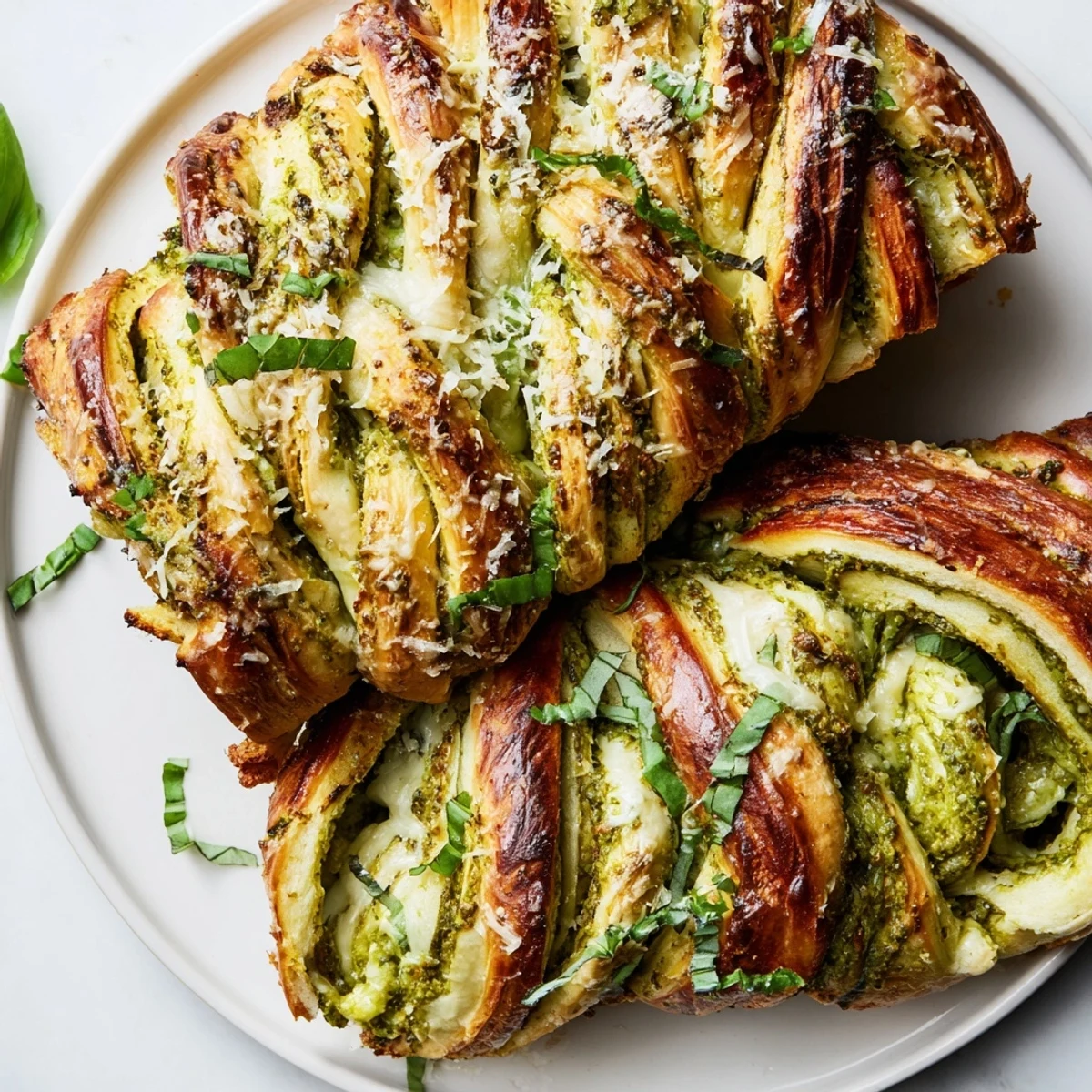
Save This cheesy braided pesto bread combines a soft homemade dough with layers of fragrant basil pesto, shredded mozzarella and grated parmesan. The dough is rolled flat, filled, then sliced and braided for an eye-catching presentation that bakes up golden and irresistible.
It takes about 25 minutes to prepare and 30 minutes in the oven, with an hour of rising time in between. Serve it warm alongside soup, on a cheese board, or as a crowd-pleasing appetizer at your next gathering.
The smell of basil and melted cheese drifting through my kitchen on a rainy Saturday afternoon convinced me that bread baking wasnt nearly as intimidating as I had built it up to be. My first attempt at braiding was messy, the cheese oozed everywhere, and honestly it still disappeared within fifteen minutes. There is something deeply satisfying about pulling a golden, pesto swirled loaf from the oven and watching peoples eyes light up before they even take a bite. This cheesy braided pesto bread has since become my unreliable showstopper, the one I make when I want to feel a little fancy without spending all day in the kitchen.
I brought this bread to a friends potluck dinner last fall, fully expecting it to be one of many side dishes on a crowded table. It was the first thing gone, and three people asked for the recipe before dessert was even served. One friend admitted she had been standing over it pulling pieces off with her fingers instead of using a plate. That moment taught me that sometimes the most memorable dishes are the ones you almost didnt bring.
Ingredients
- All purpose flour (3 cups or 375 g): Bread flour works too, but all purpose gives a tender crumb that wraps around the filling without fighting back.
- Instant dry yeast (2 1/4 tsp or 7 g): Make sure your yeast is fresh and not expired, because this loaf lives or dies by a good rise.
- Sugar (1 tsp): Just enough to wake up the yeast without making the dough sweet.
- Salt (1 tsp): Adds structure to the dough and balances the richness of the cheese and pesto.
- Olive oil (2 tbsp): Keeps the dough soft and pliable, and adds a subtle fruitiness that complements the pesto.
- Warm water (1 cup or 240 ml, about 38 degrees Celsius): Should feel like warm bath water, not hot, because scalding water kills yeast instantly.
- Basil pesto (1/2 cup or 120 g): Homemade pesto is wonderful, but a good quality store bought version saves time and tastes nearly identical once baked into bread.
- Shredded mozzarella cheese (1 1/2 cups or 170 g): Low moisture mozzarella melts more cleanly, but fresh mozzarella torn into pieces creates those irresistible gooey pockets.
- Grated parmesan cheese (1/2 cup or 50 g): Adds a salty, nutty backbone that mozzarella alone cant achieve.
- Egg (1, beaten): The egg wash creates that deep golden shine that makes people think you bought it from a bakery.
- Melted butter (1 tbsp): Brushed on right after baking for a soft, glossy finish and an extra layer of richness.
- Extra parmesan and chopped fresh basil (optional): A finishing sprinkle that takes the presentation from homemade to showpiece.
Instructions
- Wake up the yeast:
- Pour warm water into a large bowl and stir in the sugar and yeast, then wait about five minutes until the surface looks frothy and alive. If nothing happens, your yeast is dead and you need to start over with a fresh packet.
- Build the dough:
- Add the flour, salt, and olive oil to the yeasted water, mixing until everything comes together into a shaggy, sticky mass. Turn it out onto a floured counter and knead with determination for seven to ten minutes until the dough feels smooth and springs back when you poke it gently.
- Let it rise:
- Place the dough in a lightly oiled bowl, cover it with a damp towel or plastic wrap, and tuck it somewhere warm for about an hour until it has puffed up to roughly double its size. This is the part where you can tidy the kitchen or sit down with a cup of coffee.
- Roll and fill:
- Punch the dough down gently, then roll it out on a floured surface into a rectangle roughly 12 by 16 inches. Spread the pesto evenly across the surface, leaving a small border around the edges, then scatter both cheeses over the pesto in an even layer.
- Braid the loaf:
- Roll the filled dough tightly from the long side into a log, then use a sharp knife to slice it lengthwise down the middle. Turn both halves so the cut sides face up, then gently twist and braid them together, pinching the ends to seal in the cheese.
- Bake until golden:
- Carefully transfer the braid to a parchment lined baking sheet, brush the top generously with beaten egg, and slide it into an oven preheated to 190 degrees Celsius or 375 degrees Fahrenheit. Bake for 28 to 32 minutes until the crust is deeply golden and you can see cheese bubbling between the braids.
- Finish with butter:
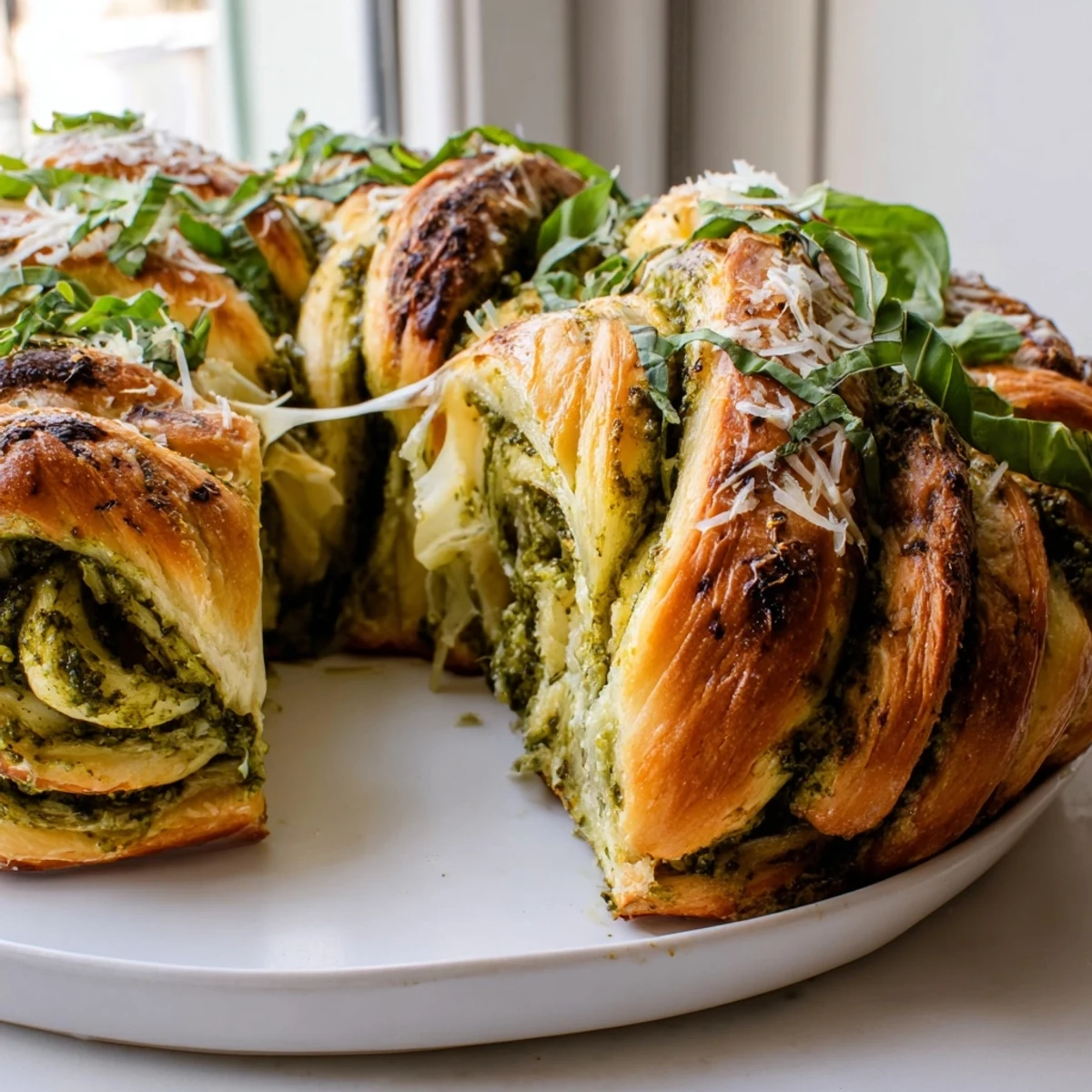
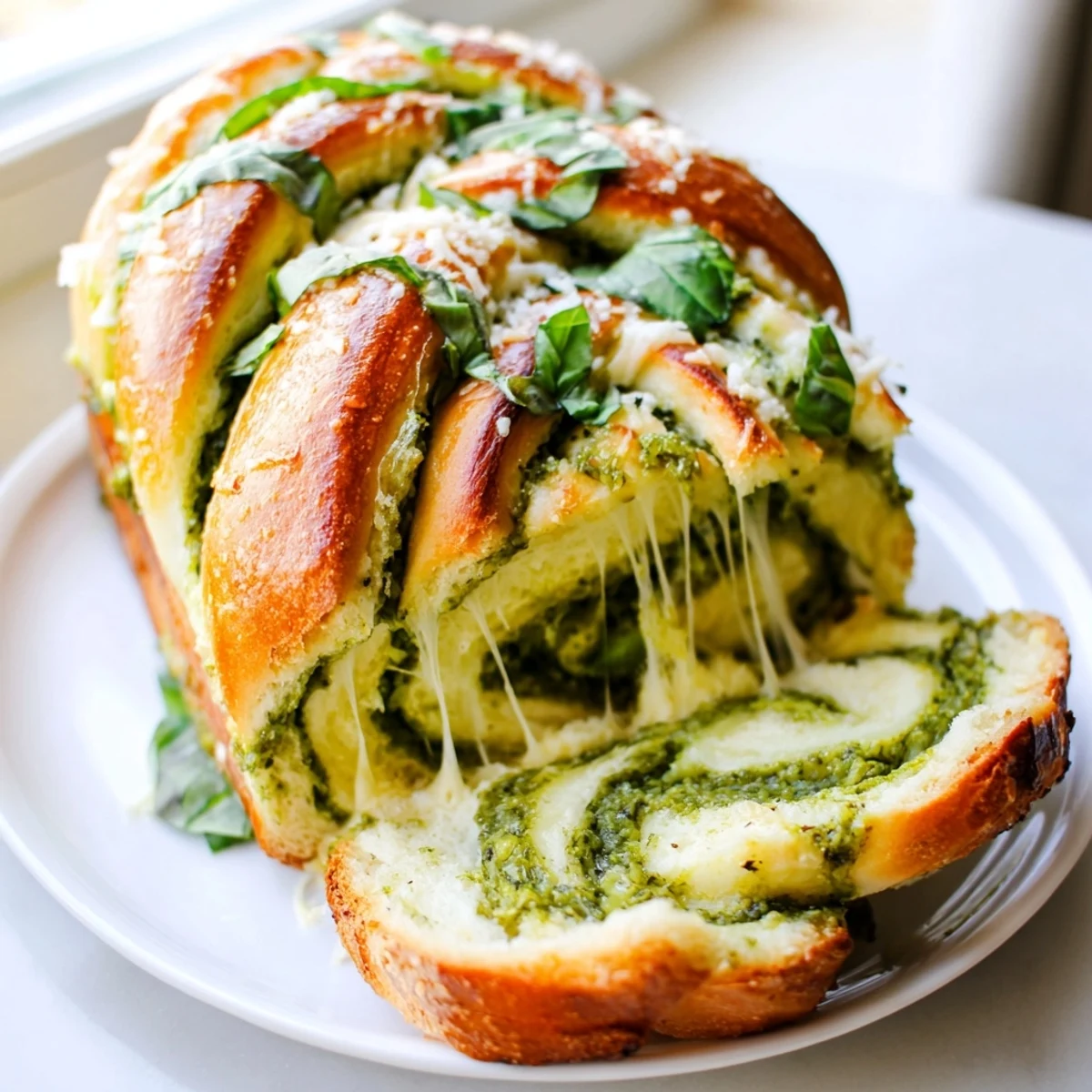
- The moment the bread comes out of the oven, brush it with melted butter and add a final sprinkle of parmesan and fresh basil if you are feeling indulgent. Let it rest for ten minutes before slicing so the cheese has time to set slightly and doesnt run everywhere.
 Save
Save I once sliced into this bread too eagerly straight from the oven and watched an entire river of mozzarella pour onto the cutting board. My dog was thrilled. I was humbled.
Swaps and Twists Worth Trying
Sun dried tomato pesto is a brilliant substitute for basil pesto when you want something a little sweeter and more intense. I have also swapped half the mozzarella for sharp provolone on a whim and ended up with a depth of flavor I did not expect. The recipe is forgiving enough to play with, which is what makes it fun.
What to Serve It With
A bowl of roasted tomato soup and a thick slice of this bread is the kind of meal that makes winter feel bearable. It also holds its own on a cheese board surrounded by olives, cured meats, and whatever crackers you have lingering in the pantry. I have even served it alongside a simple arugula salad with lemon vinaigrette for a light dinner that still feels special.
Tools and Troubleshooting
You do not need fancy equipment for this bread, but a few basics make the process smoother. A rolling pin helps get an even rectangle, and a truly sharp knife is essential for cutting clean braids without dragging the dough. A pastry brush gives you that even egg wash finish, though I have used my fingers in a pinch and it works fine.
- If the dough sticks to your counter while rolling, dust with small amounts of flour rather than adding handfuls at once.
- A bench scraper is a lifesaver for lifting and transferring the delicate braid without tearing it.
- Always check your pesto label for hidden allergens like pine nuts if you are serving a crowd.
 Save
Save Every time I make this bread, I wonder why I dont make it more often. It turns an ordinary evening into something worth remembering.
Recipe FAQs
- → Can I use store-bought pesto for this bread?
-
Yes, store-bought basil pesto works perfectly fine and saves time. If you prefer, homemade pesto will give a brighter, more vibrant flavor.
- → How do I know when the bread is fully baked?
-
The loaf should be deeply golden on top and the cheese should be visibly bubbling between the braids. A thermometer inserted into the center of the dough should read at least 190°F (88°C).
- → Can I make the dough ahead of time?
-
Yes, you can prepare the dough and let it do its first rise in the refrigerator overnight. Let it come to room temperature for about 30 minutes before rolling and filling.
- → What can I substitute for mozzarella cheese?
-
Provolone, fontina, cheddar or gouda all melt well and work nicely in this bread. You can also use a blend of several cheeses for more complex flavor.
- → How should I store leftover braided bread?
-
Wrap leftovers tightly in foil or store in an airtight container at room temperature for up to 2 days. Reheat in a 300°F (150°C) oven for about 10 minutes to restore the crust and melt the cheese again.
- → Why did my braid unravel while baking?
-
Make sure to pinch the ends firmly together before baking. Also avoid overfilling the dough with pesto and cheese, as too much filling can cause the layers to separate during baking.